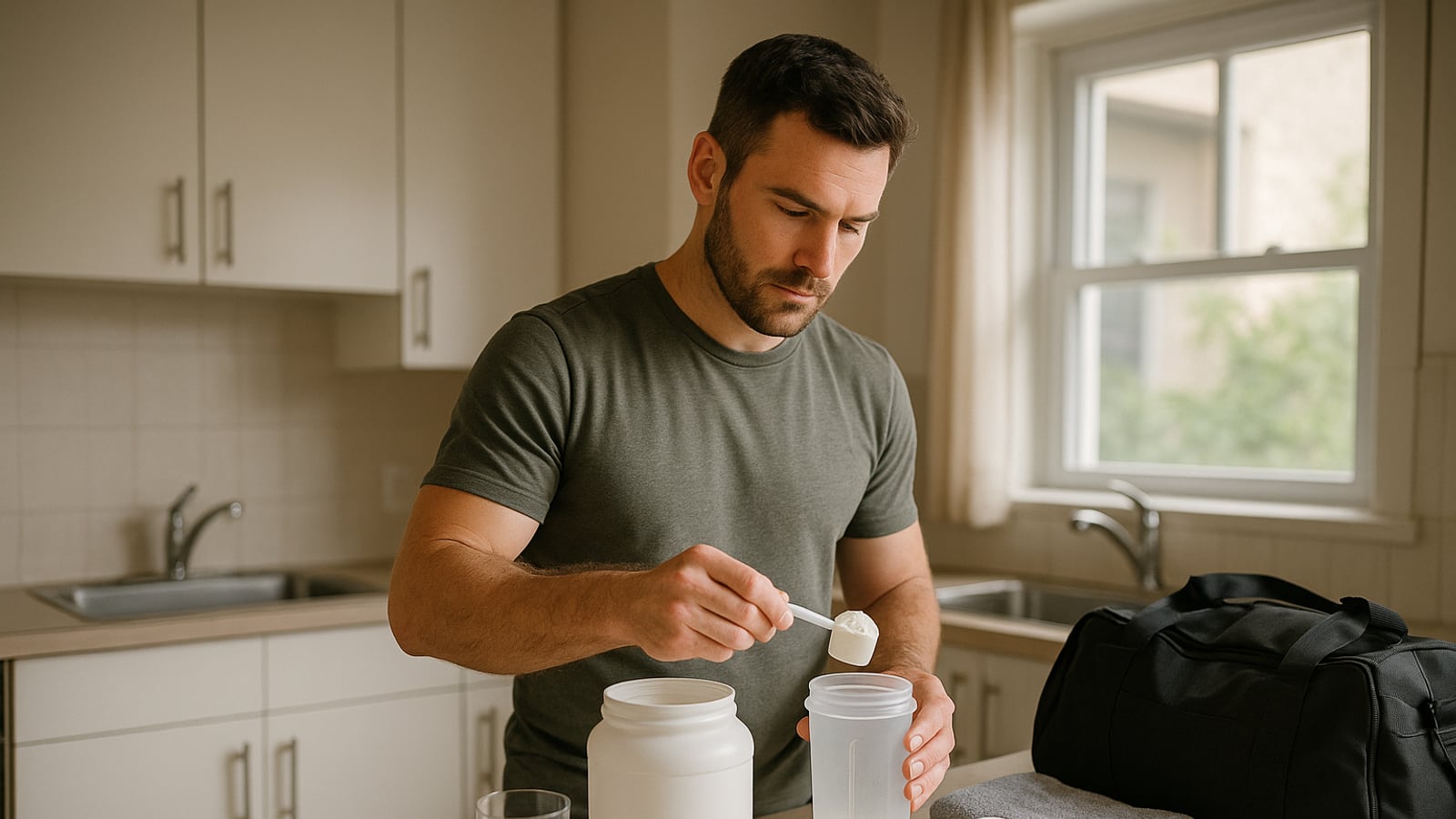
Creatine monohydrate, three to five grams a day, every day, forever. That's the whole recommendation. No loading week, no cycling off, no timing it around your session. A one-kilo tub gives you 200 days at five grams, which makes it the cheapest thing on the shelf by a distance and the only one with a pile of evidence behind it that goes back decades.
Buy monohydrate. Not HCl, not buffered, not "creatine matrix". The fancy forms exist because monohydrate is off-patent and nobody can charge a premium for it. If the label says anything other than creatine monohydrate and lists a weight in grams, you're paying for marketing.
The annoying part: a minority of people get stomach trouble from taking five grams in one hit on an empty stomach. Split it into two doses with meals and it usually goes away. You'll also gain a pound or two of water inside the muscle in the first fortnight. That's the mechanism working, not fat, but if you weigh yourself daily and panic easily, know it's coming.
Caffeine, used deliberately instead of constantly
Caffeine improves how hard you can work and how alert you feel doing it. That part isn't controversial. What ruins it's the drip feed from 6am to 4pm, which builds tolerance and turns a performance tool into a maintenance dose.
Roughly 100 to 200mg before you train does the job for most people. That's a strong coffee or one tablet. The half-life sits around five to six hours, meaning a 3pm cup still has a quarter of its punch in you at bedtime. If your training slot is 8pm because that's when the kids are finally down, skip the pre-workout entirely and accept a slightly worse session. Sleep is worth more than the extra rep.
Caffeine borrows. It doesn't create. Pay it back.
Protein powder is food, and that's the point
Whey isn't really a supplement. It's dried milk protein in a tub, and it's there because hitting a sensible protein target on a working day is harder than it sounds when lunch is whatever's left in the fridge at 1:40pm.
The figure most commonly cited for building muscle is around 1.6 grams per kilo of bodyweight per day. Above that, the returns flatten. A typical scoop gives you 20 to 25 grams, so one shake closes a gap rather than doing the whole job.
Check the back of the tub, not the front. You want protein per serving over about 20 grams and a serving size that isn't inflated with maltodextrin. If dairy doesn't agree with you, whey isolate or a pea and rice blend both work. Casein before bed is fine and not magic.
Greek yoghurt, eggs, tinned fish and chicken thighs do the same job and keep you full. Powder is for the days when cooking isn't happening.
The maybes, with the conditions attached
Vitamin D. If you live somewhere north and gray and you work indoors, your level is plausibly low from October to March. But "plausibly low" isn't a reason to take 10,000 IU on spec. Ask your GP for a blood test, and let them tell you the dose. It's fat-soluble, which means it accumulates, which means more is genuinely not better.
Omega-3. Worth it mainly if you don't eat oily fish. Read the EPA and DHA numbers on the back, not the "1000mg fish oil" on the front, because a gram of fish oil might contain 300mg of the stuff that matters. Two portions of sardines or salmon a week costs less and tastes better.
Magnesium. Cheap, low risk, modest evidence for sleep quality and cramp. Glycinate or citrate. Magnesium oxide is poorly absorbed and mostly functions as a laxative, which you will discover at an inconvenient moment.
Beta-alanine. Real effects, narrow application. It helps efforts lasting roughly one to four minutes, so rowing intervals and high-rep sets, not heavy triples. It needs daily dosing for weeks to build up, and it makes your face and forearms tingle. Most people with jobs and children don't train in that zone often enough to care.
Iron. Never on spec. Get tested first. Too much iron is a genuine problem, and the fatigue you're blaming on low iron is more likely the six hours of sleep.
Anything in this group is a maybe because the answer depends on you, and the person who can answer it has your blood results in front of them.
The shelf that isn't earning its keep
In the cupboard above my kettle there was, for about four years, a tub of something with a shirtless man on the label. Bought in a January. Used maybe six times. By the end it had set into a single solid disc you could have played frisbee with.
That tub had company.
- BCAAs. Redundant if you're eating enough protein. If you're not, fix the protein.
- Glutamine. Endlessly sold, consistently underwhelming in people who eat normally.
- Testosterone boosters. The category name is doing all the work. If you genuinely suspect low testosterone, that's a doctor and a blood panel, not a tub of tribulus.
- Fat burners. Caffeine plus a stimulant you can't pronounce, at four times the price of caffeine.
- Greens powders. Not a vegetable. A broccoli is a vegetable.
- Proprietary blends. If the label gives you one total weight for eleven ingredients, they're hiding how little of the good ones is in there. Put it down.
Collagen sits awkwardly in the middle. There's early work on tendon and joint tissue that's interesting and not settled. It won't hurt you. I wouldn't spend on it before the first three are locked in.
A basic multivitamin is fine as insurance. It isn't a performance product and it won't make your training better. Treat it like a seatbelt, not an engine.
How to buy without getting stung
Supplements aren't approved before sale the way medicines are. What's in the tub is largely the manufacturer's word. Two independent programs, NSF Certified for Sport and Informed Sport, test batches for contamination and banned substances, and their logos appear on the label. If you're drug-tested for work or sport, buy only from those lists. If you're not, it's still a reasonable proxy for a company that takes its manufacturing seriously.
Single-ingredient products. Boring packaging. Grams printed clearly.
And put them out of reach. Caffeine gummies and flavoured powders look exactly like sweets to a five-year-old, and a stimulant dose sized for an adult isn't sized for a child. Top shelf, lid on.
One more thing about money. A serious supplement habit runs to real money each month, and the whole stack will do less for your body than eight hours of sleep and two honest sessions a week. If the budget is tight, buy creatine, drink your coffee earlier, and put the rest into groceries.
The tub that works is the one still in use in March.
Marcus Vale
Editor-in-Chief
Twenty years in magazines, most of it deciding what to cut. Writes about work, discipline and the decisions that compound.

Watch
Worth an hour of your evening
More from Fitness.
From channels we rate. Plays on YouTube.
Read next