Start with a laundry basket and an hour on a Saturday. Pull every piece of clothing you own out of the wardrobe and off the floor and put it on your bed. Then sort it into three piles: things you actually wear, things that don't fit, and things you own for no reason you can explain.
Most guys your age find the first pile is about eight items. Everything else is dead weight, and it's the reason your wardrobe feels empty when it's full.
That sort costs nothing and it tells you exactly what to buy next. Not "clothes." Specifically: one pair of trousers that fit, or a jacket for when it rains, or shoes that aren't falling apart.
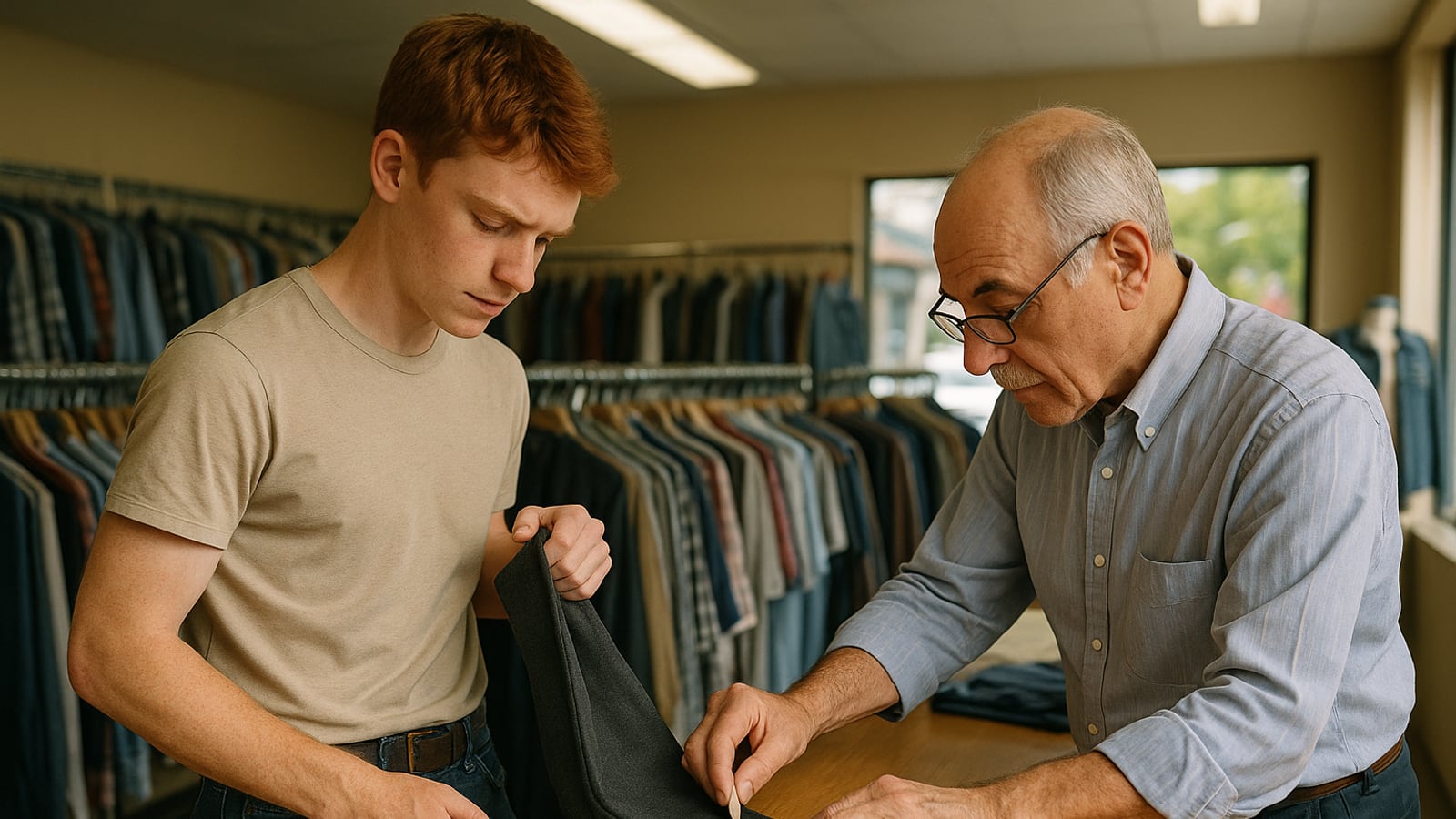
The cheapest upgrade you can make is a hem
A pair of trousers that break in a heap over your shoes looks careless. The same pair, shortened so they just touch the top of your shoe, looks deliberate. That's the whole difference, and it's an alteration a tailor does in a few days for a small fraction of what the trousers cost.
If there's a tailor or an alterations counter near you, walk in and ask what they charge to shorten trousers and take in a shirt. It'll be less than you think. If money's genuinely at zero, ask at home. Somebody in your family, or somebody at your church, can hem a pair of trousers and would probably be glad to show you how.
And learn to sew on a button. Ten minutes on a needle and thread and you never again bin a shirt because one button popped off. Same with a small hole in a seam. Clothes don't usually wear out; they fail at one point and get thrown away.
Shop secondhand, and know what to check
Charity shops, thrift stores, church rummage sales, your dad's wardrobe, an older cousin who's moved out. This is where a wardrobe gets built when you're not earning much.
The trick is knowing what's worth picking up. Five things to check, in order:
- The shoulder seam. On a jacket or a shirt, it should sit right where your shoulder ends. That's the one thing a tailor can't fix cheaply. If it's wrong, put it back.
- The fabric tag. Cotton, wool, linen, leather. These age well and feel better. Heavy polyester blends tend to pill, hold smells, and look cheap under bad lighting.
- The armpits and the collar. That's where shirts die. Yellowing or thin fabric means somebody else already got the life out of it.
- The knees and the seat on trousers, held up to the light. Thin patches mean it's nearly done.
- The zip. Run it up and down twice. A dead zip on a jacket is a repair job that costs more than the jacket did.
Go often and buy nothing most times. That's normal. Secondhand shopping is a hundred visits and twelve good finds, not one big haul.
Boring colors make a small wardrobe look big
If everything you own is navy, gray, olive, white, black and denim, then almost any two pieces you grab in the dark will work together. Eight items in those colors give you more outfits than fifteen items in bright reds and patterns.
This is the actual reason guys with small wardrobes sometimes look sharper than guys with huge ones. They're not richer. Their stuff just goes together.
Buy one or two things with color or pattern if you love them. Build the rest plain. It's not a rule about taste, it's arithmetic.
Look after what you've got
A clean, pressed, cheap shirt beats a wrinkled expensive one every single time, and nobody's ever going to know what either one cost.
- Wash on cold. It's gentler on the fabric and on the color.
- Hang dry most things. The tumble dryer is what shrinks your shirts and wears out the collars.
- Learn to iron a shirt. Collar first, then cuffs, then sleeves, then the body. Five minutes. Do it the night before.
- Get a shoe brush and a tin of polish. Brushing leather shoes for ninety seconds after you wear them roughly doubles how long they look decent.
- Trainers: warm water, a little soap, an old toothbrush on the sole edge. Take the laces out and wash them separately.
None of this is glamorous. All of it is free or close to it, and it's the difference between clothes that look two years old and clothes that look two years neglected.
One good pair of shoes, not four bad ones
Shoes are where cheap hurts most. Thin soles that split, glued construction that can't be repaired, linings that go through in a term.
If you can save for one thing, save for shoes. A pair of dark leather shoes that can be resoled will carry you through interviews, church, weddings, funerals and your first job. That's five or six years out of one purchase. Check secondhand too. Good leather shoes that have been looked after are one of the best finds on a charity shop shelf, and a cobbler can make them yours.
The outfit you can't improvise
At some point in the next two years, somebody will die, or you'll be asked to an interview with two days' notice. You don't want to be scrambling.
Own these, and keep them clean and hanging up:
- Dark trousers, plain, no rips
- A plain white or light blue collared shirt
- A belt in the same color family as your shoes
- Dark leather shoes
- One jacket or blazer, if you can find one that fits in the shoulders
That's it. Assembled secondhand, it costs about what a couple of takeaway meals do. Having it ready means that when your family needs you to show up properly, you show up properly, and nobody spends the morning of a funeral driving you to a shop.
Buy slowly, and be specific when people ask
If you've got a part-time job, don't spend a full paycheck on clothes in one afternoon. One item a month, chosen on purpose, beats a pile bought in a rush. You'll keep more of it and wear more of it.
And when a parent or a grandparent asks what you want for your birthday, be specific. "Clothes" gets you a random jumper. "A brown leather belt, medium" or "black dress shoes, size ten" gets you something you'll wear for years. People like buying things that get used.
What this is actually for
Dressing well isn't about being looked at. It's a quiet signal that you take the room seriously, that you respect whoever invited you, that somebody raised you to make an effort.
Your clothes should never be the most interesting thing about you. They should just get out of the way, so that what people remember is that you turned up on time, shook their hand, and did what you said you'd do.
That's a standard you can hit on almost no money at all. It mostly costs attention.
Tobias Reed
Style & Grooming
Spent a decade in menswear retail watching men buy the wrong size. Believes fit is ninety per cent of it and says so weekly.

Read next