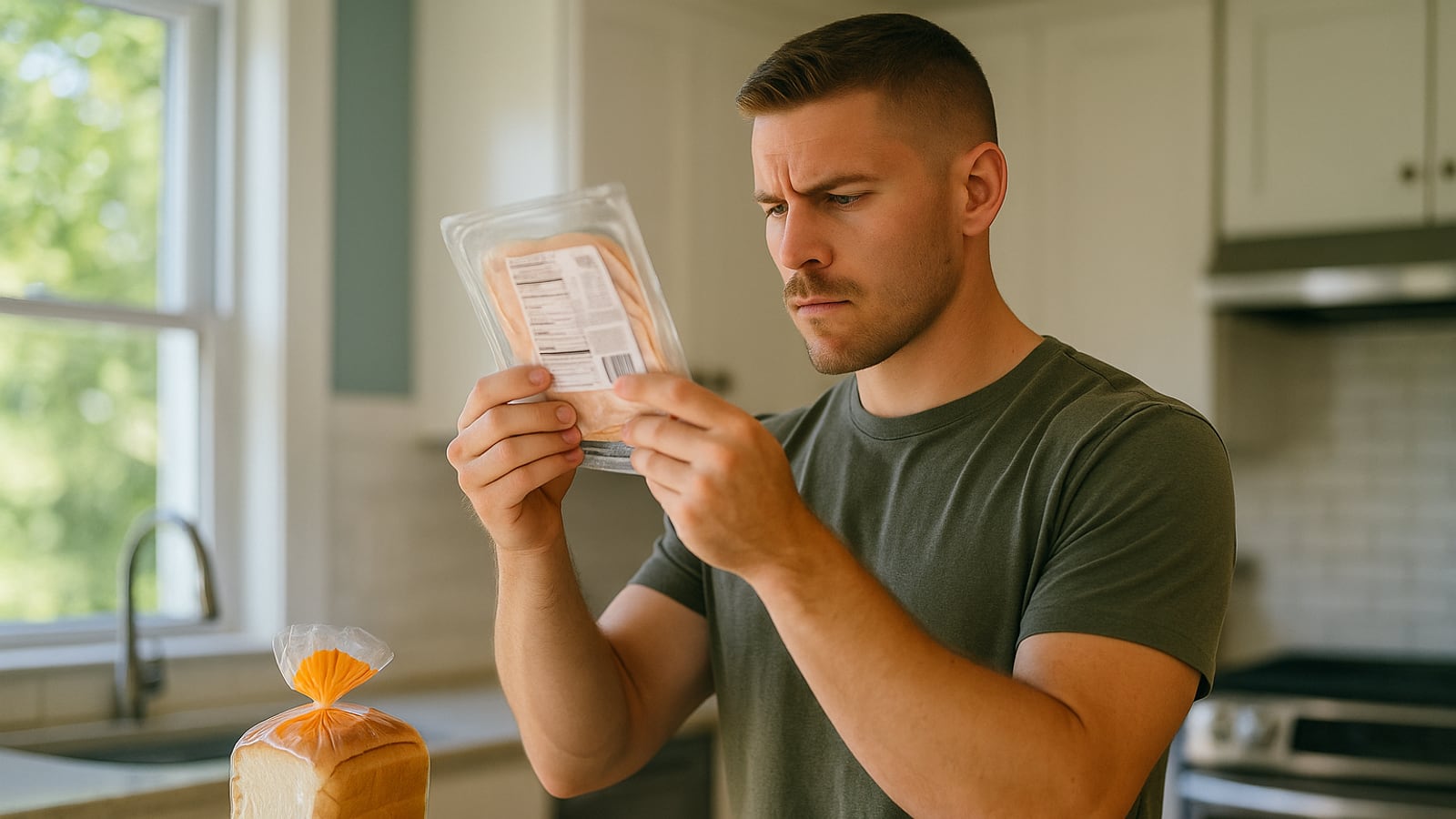
A teaspoon of table salt holds about 2,300 milligrams of sodium, which is also the Daily Value printed on every Nutrition Facts panel in your pantry. Now go look at your kitchen. When was the last time you ate a whole teaspoon of salt off a spoon? Never. And yet plenty of guys blow past that number by two in the afternoon without ever touching the shaker.
That's the part nobody explains. The salt shaker on your table is a rounding error. The real load comes in through bread, lunch meat, cheese, sauce, soup, and whatever you ordered at eleven at night after the kids finally went down.
The sandwich is the problem, not the fries
The American Heart Association calls them the Salty Six: breads and rolls, pizza, sandwiches, cold cuts and cured meats, soup, and burritos and tacos. Look at that list again. Five of the six are things a working parent eats on a Tuesday because they take four minutes.
Two slices of ordinary sandwich bread carry real sodium before anything goes between them. Add deli turkey, which is brined and tumbled and sliced into something that keeps for a week. Add a slice of American cheese, which is held together largely by salt. Add mustard, or worse, a creamy dressing. You've built a lunch that beats most bags of chips on sodium, and it looks like the responsible choice next to a guy eating leftover pizza.
The fries get blamed because you can see the salt on them. The bread gets a pass because you can't.
The two numbers that matter on the label
Flip the package over. Find sodium. You're looking at two things, and people read one of them.
Milligrams per serving. Fine. But check the serving size right above it, and check servings per container. A can of soup that says 480 mg looks reasonable until you notice the can holds two servings and you're not the kind of man who eats half a can of soup.
Percent Daily Value. The FDA's rule of thumb is simple enough to use in the aisle: 5 percent DV or less per serving is low in sodium, 20 percent or more is high. That's it. You don't need to do arithmetic with a toddler pulling on your cart. You need to see a 28 and put it back.
One more thing worth learning to spot. On packaged chicken, read the fine print under the brand name. A lot of raw chicken in the case is "enhanced," meaning it's been injected with a broth solution to keep it juicy, and the package will say so with a percentage. Unenhanced chicken breast has almost no sodium. Enhanced chicken can have several hundred milligrams before you've touched it with seasoning. Same price, same bird, wildly different starting line.
Where it actually stacks up in a normal day
Coffee, no sodium. Then breakfast: two frozen waffles, or a bowl of cereal, both of which carry more than you'd guess. Lunch is the sandwich. Dinner is where it compounds, because "homemade" isn't the same as low sodium.
You cook chicken and rice on a weeknight. Good. Then you cook the rice in broth, add a jar of sauce, splash in soy sauce because it needs something, and serve it with a side of canned corn. Every one of those four moves is a salt delivery system. The chicken was the innocent part.
Restaurant food is a category of its own. A bowl of ramen, a burrito the size of a forearm, a plate of Chinese takeout, a deli sandwich from a good deli. Any one of them can carry a full day's sodium in a single sitting, sometimes closer to two. That isn't an argument for never eating out. It's an argument for knowing that Friday dinner out is your sodium budget, and planning the rest of the day around it rather than pretending it didn't happen.
The swaps that survive contact with real life
Sustainable beats optimal. You're not going to cook everything from scratch, and I'm not going to pretend you should. Pick two changes and let them run for a month.
- Rinse your canned beans and vegetables. Dump them in a colander, run cold water over them for thirty seconds, shake. Takes a real bite out of the sodium and costs you nothing but a colander to wash. This is the highest-return thirty seconds in your kitchen.
- Buy unsalted or no-salt-added versions of the things you use in volume. Canned tomatoes, broth, canned beans, nuts. You're adding seasoning at the stove anyway, so you control it instead of inheriting it.
- Change the bread before you change the protein. Most people try to give up deli meat and fail by Thursday. Find a bread you like that runs lower in sodium per slice and you've cut the same amount without noticing.
- Move the salt to the surface. Salt you can taste is salt you don't need much of. A pinch of flaky salt on top of a finished dish registers on your tongue far more than the same amount stirred into a pot of soup.
- Cut the condiment, not the meal. Soy sauce, teriyaki, ketchup, ranch, jarred pickles, olives, bottled marinades. Halving what you pour is easier than reengineering dinner.
And eat more potassium-rich food. Potatoes, bananas, beans, leafy greens, plain yogurt, oranges. Dietary guidance has pushed potassium up for years because most Americans don't get enough of it, and it works with sodium rather than against it. Vegetables are the boring answer. They're still the answer.
Where this advice doesn't hold
If you frame roofs in Georgia in August, or you run long in summer heat, or you're the guy whose shirt dries stiff and white after a session, cutting sodium hard isn't your move. You're losing it by the quart. Salt your food, drink accordingly, and don't let a headline written for sedentary office workers put you on the ground at mile nine.
Same goes if you've had a bout of stomach illness, or you work in a foundry, or you're on a medication that changes how your body handles fluid. Sodium isn't a villain. It's an electrolyte you can't live without, and the bloodwork of a man who cut too far isn't pretty either.
Which is the part where I stop guessing about you. If you're on blood pressure medication, if you've got kidney trouble in your chart, or if somebody has already told you to watch your salt, take this to your doctor or a registered dietitian and get a number that belongs to you. Salt substitutes in particular aren't a free swap for everyone, because most of them are potassium chloride, and potassium isn't something to start freelancing with if your kidneys or your prescriptions have an opinion about it.
Start with the one you eat five days a week
Don't audit your whole pantry. You'll quit by Wednesday and the pantry will win.
Find the single item you eat most often. For most guys it's bread, deli meat, or a canned soup that's become a habit. Read the panel on the one you buy, then read the panel on the one next to it. Sometimes the difference between two nearly identical products is a third of the sodium and forty cents.
Buy the other one. Then go do something more interesting with your Saturday.
Cal Brennan
Fitness
Strength coach. Trains fathers, tradesmen and desk workers, which means programmes that survive a bad week.
Watch
Worth an hour of your evening
More from Fitness.
From channels we rate. Plays on YouTube.
Read next