Book the room before you book the speaker. Otherwise you'll spend six weeks chasing a calendar and the whole thing dies in a group text.
That's the first practical thing. The second is harder, and it's the reason most of these nights fizzle: an awareness event that only raises awareness is a failure. People walk out scared, hug their kids tighter, and do nothing different on Monday. You held a meeting. Congratulations.
The goal is different. Every person who walks out should have one specific thing they've signed up for, and the hotline number saved in their phone. That's it. Build the whole evening backward from those two outcomes and the planning gets simple.
Ninety days out, pick the date and the room
Tuesday or Thursday, 6:30 p.m. Not Sunday night, when you're competing with your own church's programming and everybody's already tired. Not a weekend.
Pick a room that seats about 120 and plan for 60. A half-full fellowship hall feels warm. A quarter-full sanctuary feels like a funeral for an event nobody attended.
Budget roughly $300. Coffee and cookies, printed flyers, gas money or an honorarium for a speaker who's driving in, and two paid childcare workers. Childcare isn't optional. If parents can't come, you've built an event for people without kids, which is exactly backward.
Put one name on the whole thing. Committees of six produce nothing. One coordinator, two helpers, done.
Pick your local partner before you pick your speaker
This is where most churches go sideways. Somebody finds a compelling national ministry online, books a speaker, and hosts an evening about a problem happening somewhere else to somebody else's children.
Call your county first. Ask the sheriff's office or the police department whether they have a detective who works these cases, or whether the county sits under a regional task force. Ask your local child advocacy center. Ask the family shelter, the foster care licensing agency, the school resource officer you already know.
Then ask each of them the same question: what do these cases actually look like here, in this county?
The answer usually surprises church people. It's rarely the story from the movie. It's often someone the child already knows. It's often a kid already in a hard situation, already on an app, already being talked to by an adult who's patient and strategic. Your people need to hear the local version of the truth from someone who's worked it, not the version that's been forwarded around Facebook.
Vetting a speaker in one phone call
Ask these, plainly:
- Who do you currently work with in this state, by name?
- If someone at this event is worried about a specific child, what exactly do you want them to do that night?
- Do you take donations at events, and can you send me your most recent Form 990?
- What do you tell people NOT to do?
That last one is the tell. A good speaker will immediately say something like: don't run your own surveillance, don't follow a vehicle, don't confront anybody, don't post a stranger's photo online. Anyone who encourages amateur investigation is disqualified on the spot. You'll get your congregation hurt, and worse, you'll blow up an actual case a detective has been building for eight months.
Same standard for the organization you highlight. If a group only exists online, has no local referral relationships, and won't send you a 990, put it aside. There's real work being done twenty minutes from your building by people who badly need volunteers.
The run of show, to the minute
Seventy-five minutes. Hard stop.
- 6:30 Doors, coffee, sign-in table with the pens already out
- 6:45 Host opens, four minutes, says plainly what the night is and isn't
- 6:50 Local investigator or task force officer, 15 minutes
- 7:10 Service provider from the shelter or advocacy center, 15 minutes
- 7:30 Survivor advocate or a short, screened video, 12 minutes
- 7:45 Panel Q&A, 20 minutes, questions on index cards only
- 8:05 The ask. Ten minutes. Named sign-ups, tables in the back
- 8:15 Dismissed. Tables stay staffed until 8:45
Index cards. I'll say it twice. Open mic hands the room to the one guy who wants to talk about a rumor he read, and you will never get it back. Cards let your moderator group the real questions and quietly skip the theories.
Decide what the teenagers hear, and where
Two different events. Really.
The adult night is for parents, grandparents, youth workers and anybody who supervises kids. Set it at 13 and up with a parent, and say so on the flyer.
The student version belongs at the school, in daylight, run through the counselor's office and tied to whatever digital safety curriculum the district already uses. Approach the principal, not the PTA group chat. Offer it free, offer it short, and let the school pick the content. Schools say yes to help and no to agendas, and they can smell the difference from the parking lot.
Tell your speakers, both nights: no graphic detail. None. A story can be true and still be told with restraint. Anything that would make a mother in the third row want to leave the room has failed as communication.
Somebody in that room has lived it
Plan for this before the doors open.
Have two people available and identified by name from the platform, sitting in the back, who can step out into the hallway with someone. Print a half-sheet card with the National Human Trafficking Hotline, 1-888-373-7888, text 233733, plus your county child abuse reporting line and the local shelter's number. Put it on every chair. People fold those into a wallet and keep them for years.
Tell your pastor and your counseling contacts the date, so they aren't blindsided by a Thursday phone call.
Learn to do good; seek justice, correct oppression; bring justice to the fatherless, plead the widow's cause. Isaiah wrote that to people who were very good at holding religious gatherings. The gathering wasn't the problem. Going home unchanged was.
The ask has to be small and specific
"Get involved" isn't an ask. These are asks:
- Sign up for the foster care information session on the 14th
- Take respite care training so a foster family can get one weekend off
- Fill 40 duffel bags for kids entering emergency placement, Saturday at 9
- Serve a Wednesday shift at the shelter's front desk
- Pay for one background-checked mentor to be trained
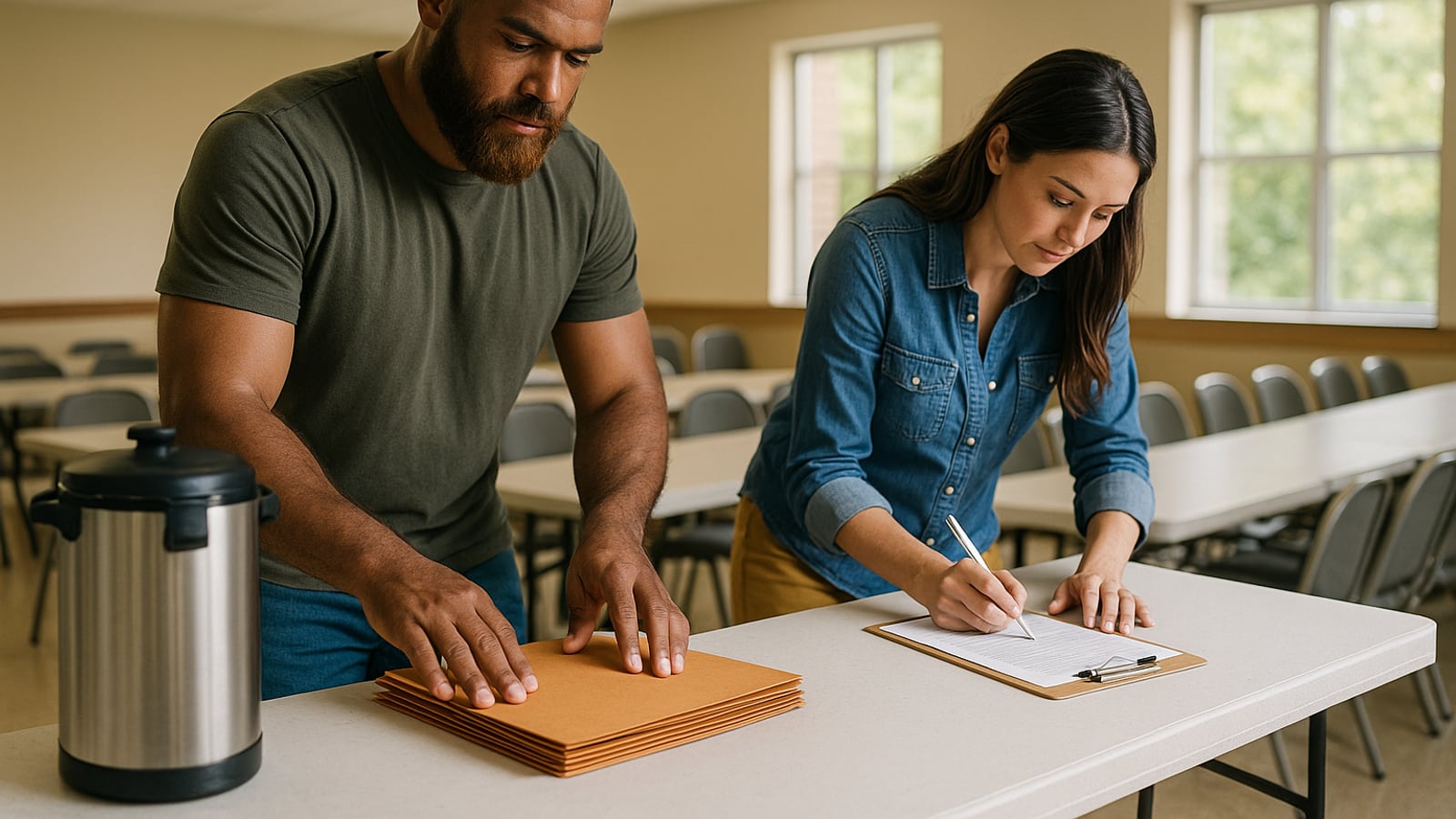
Clipboards. Real dates. A human standing behind each table who will call the person who signs.
And one ask for everybody: take out your phone, right now, while I'm talking, and save the hotline number. Watch a room of sixty people do that together. It's the most useful minute of the night.
Thirty days later, send one email
Not a newsletter. One email, from the coordinator, with the names of people who followed through and what they did. Forty duffel bags, twelve trained, three families in the licensing class.
Then put next year's date at the bottom.
The quiet reality is that this work is unglamorous after the event ends. It's paperwork, background checks, a bedroom you clear out, a Saturday you gave up. Proverbs says to speak up for those who can't speak for themselves. Speaking is the cheap part, and we're all fluent in it.
Open your mouth in the fellowship hall on a Tuesday. Then open your calendar.
Cal Brennan
Fitness
Strength coach. Trains fathers, tradesmen and desk workers, which means programmes that survive a bad week.

Watch
Worth an hour of your evening
More from Christian Bro.
From channels we rate. Plays on YouTube.
Read next