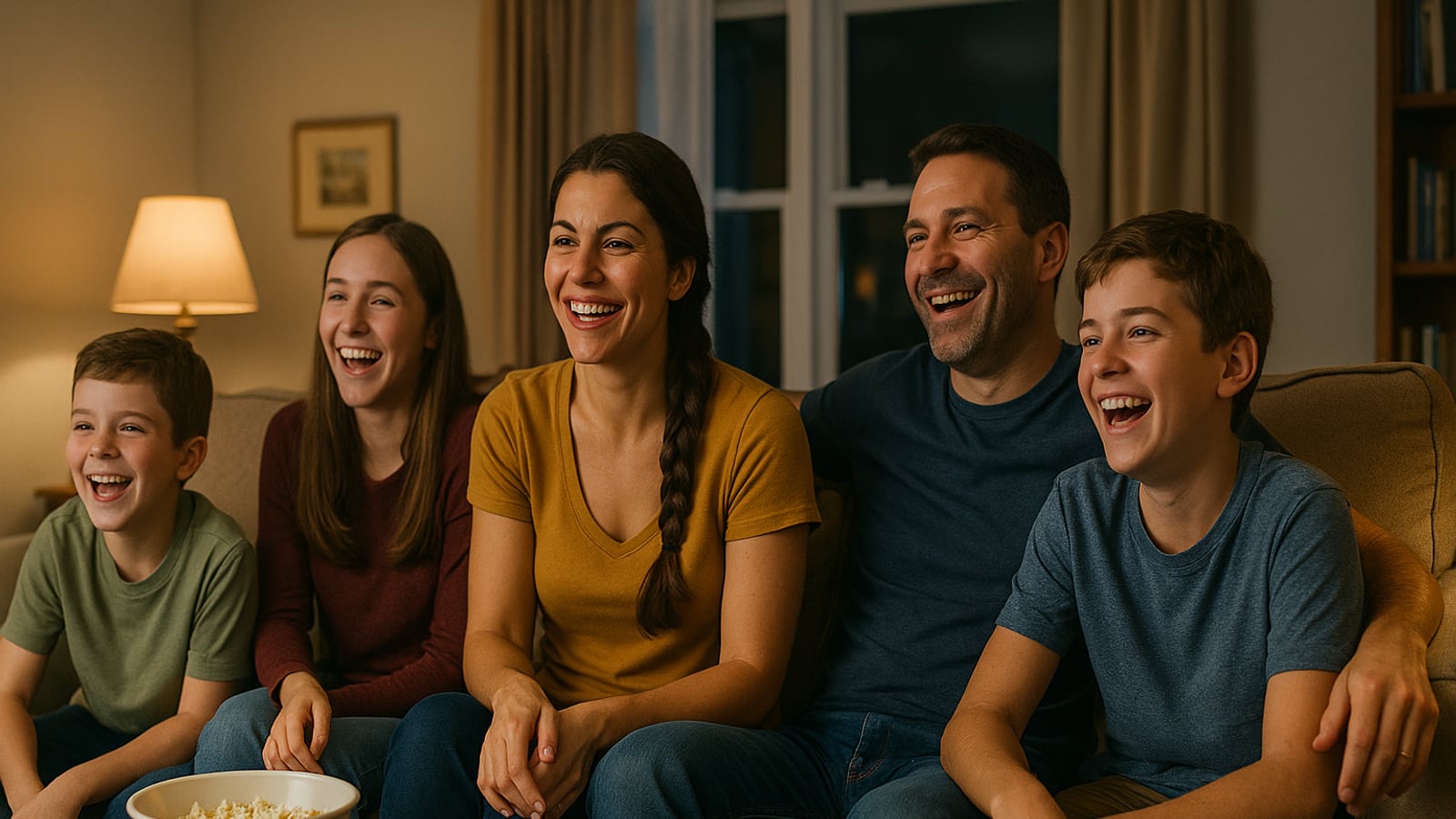
Cue up The Court Jester around the one-hour mark and watch a twelve-year-old come apart over a tongue twister written in 1955. The pellet with the poison's in the vessel with the pestle, the chalice from the palace has the brew that's true. Then the vessel breaks and it all changes to the flagon with the dragon, and Danny Kaye has to relearn the whole thing in about four seconds while a knight tries to kill him.
No profanity. Nothing suggestive. Still the funniest sixty seconds in any movie you'll watch this month.
That's the whole argument. Clean comedy doesn't fail because it's clean. It fails when it's built to avoid offending anybody, which is a different design goal entirely, and one that produces the kind of movie where a golden retriever plays basketball. Funny comes from stakes, timing, and a character who wants something badly and is bad at getting it. Filth is a shortcut for writers who can't build any of that.
The ones that never miss
The Court Jester (1955). Danny Kaye, Basil Rathbone, a plot about a hidden infant king that nobody in the household will care about, and roughly nine minutes of physical comedy per ten minutes of runtime. Swordplay, hypnosis gags, a snapping finger that turns Kaye into a master duelist and back. Works from about age eight. No content concerns worth naming.
The Princess Bride (1987). Rated PG. Sword fighting, a torture machine that's played more creepy than graphic, and a giant rat. If your kid handles the Fire Swamp, everything else is fine. The line delivery holds up better than almost any comedy of its decade, and a nine-year-old and a forty-five-year-old laugh at completely different jokes in the same scene.
Paddington 2 (2017). PG. A bear, a pop-up book, Hugh Grant committing fully to a washed-up actor with a costume room. Real jokes with real construction, a prison sequence that's funnier than it has any right to be, and a sincerity about family that isn't winking at you. Some peril and a train chase. That's it.
Wallace and Gromit: The Curse of the Were-Rabbit (2005). G. Stop-motion, monster-movie parody, a dog who never speaks and gets more laughs than the people. If you've only got eighty-five minutes, this is the pick.
Cary Grant did this better than we do
If you own a house, put on Mr. Blandings Builds His Dream House (1948) and prepare to feel personally attacked. Grant and Myrna Loy buy a wreck in Connecticut, get talked into a teardown, and watch the budget go somewhere no one can explain. The paint-color scene, where Loy describes exactly the shade of green she wants and the painters translate it into something else entirely, is the most accurate depiction of a contractor conversation ever filmed. No content concerns. Black and white, which costs you about four minutes of kid resistance before they forget.
Arsenic and Old Lace (1944) is Grant again, this time discovering that his sweet elderly aunts have been poisoning lonely old men and burying them in the cellar. It's about murder and it's bloodless, silly, and stagey. Older kids find it hilarious. Younger ones find it confusing. The content concern is the subject matter itself, not anything you see.
It's a Mad, Mad, Mad, Mad World (1963) runs long, and I mean long, but a house full of cousins will watch the whole thing. A dozen comedians tearing across California after buried money, destroying property at scale. Some cartoon-level violence and a lot of shouting.
Great, with an asterisk
Not every good comedy is a free pass, and the honest thing is to say which part you're accepting.
Galaxy Quest (1999). PG. Still the best affectionate parody of anything. Mild language, one profanity cut off mid-word as a joke, sci-fi violence including a crew member who dies. Alan Rickman playing a classically trained actor trapped in a rubber forehead is worth the price by itself. Fine from about ten.
What's Up, Doc? (1972). Rated G, and it earns it, but there are a handful of double meanings in the dialog that adults will catch and kids won't. The hotel fire, the four identical plaid bags, and a chase down San Francisco hills with a pane of glass you can see coming from a mile away and still enjoy. Ryan O'Neal's slow burn is the engine.
Groundhog Day (1993). PG, and the best-written comedy on this list, but be clear-eyed about it. Bill Murray's character spends a stretch of the film manipulating women, and there's a sequence of repeated suicides played for dark laughs. Nothing explicit. It's also one of the most genuinely moral movies Hollywood ever made, because the man only escapes once he stops using people. Teens and up, and worth talking about afterward.
Clue (1985). PG. Six murders, a lot of running, and blackmail motives that are adult in nature though nothing is shown or described in detail. Some language. Tim Curry explaining the entire plot at double speed is a genuine feat.
The TV rotation
For a Tuesday night when nobody wants to commit to two hours:
- The Dick Van Dyke Show (1961–66). Still funny, and a rare sitcom where the marriage is the source of the comedy rather than the punching bag. The ottoman gag never gets old.
- Get Smart (1965–70). Shoe phone, cone of silence, Don Adams missing by exactly one inch every time. Spy violence at the level of a cap gun.
- Bluey. Seven-minute episodes, and the writing is sharp enough that fathers watch it after the kids go up. The dad in it's a genuinely good one, which isn't nothing.
- Fawlty Towers (1975, 1979). Twelve episodes, all of them tight. One caveat you should know about going in: the episode "The Germans" features an elderly character using racial slurs, written as a joke at his expense, but they're there and they're ugly. Skip it or watch it with older teens and say something about it.
- Abbott Elementary. Network sitcom, TV-PG, mild language, and one of the few current comedies where the characters like each other.
What the app won't tell you
Streaming ratings are close to useless for older titles. Anything made before 1968 has no MPAA rating at all, and the ones the platforms slap on in retrospect are guesswork. A "TV-PG" from 1998 and a "TV-PG" from last year aren't the same standard.
So do this. Before a movie you haven't seen goes on for the family, pull up a parent guide site on your phone and read the specific-scene notes, not the summary. Two minutes. It'll tell you there's one scene at the forty-minute mark you'd rather skip, and you can get up for popcorn right then.
Second thing: don't preview a comedy for your kids and then explain it. Comedy dies under explanation. Either it's appropriate and you play it, or it isn't and you pick something else.
Phones in a bowl on the counter. Lights actually off. One movie, all the way through, no pausing to look up which other thing that actor was in.
The test of whether you picked right isn't whether anybody laughed on the couch. It's whether somebody quotes it at dinner on Thursday.
Marcus Vale
Editor-in-Chief
Twenty years in magazines, most of it deciding what to cut. Writes about work, discipline and the decisions that compound.

Watch
Worth an hour of your evening
More from Movies & TV.
From channels we rate. Plays on YouTube.
Read next