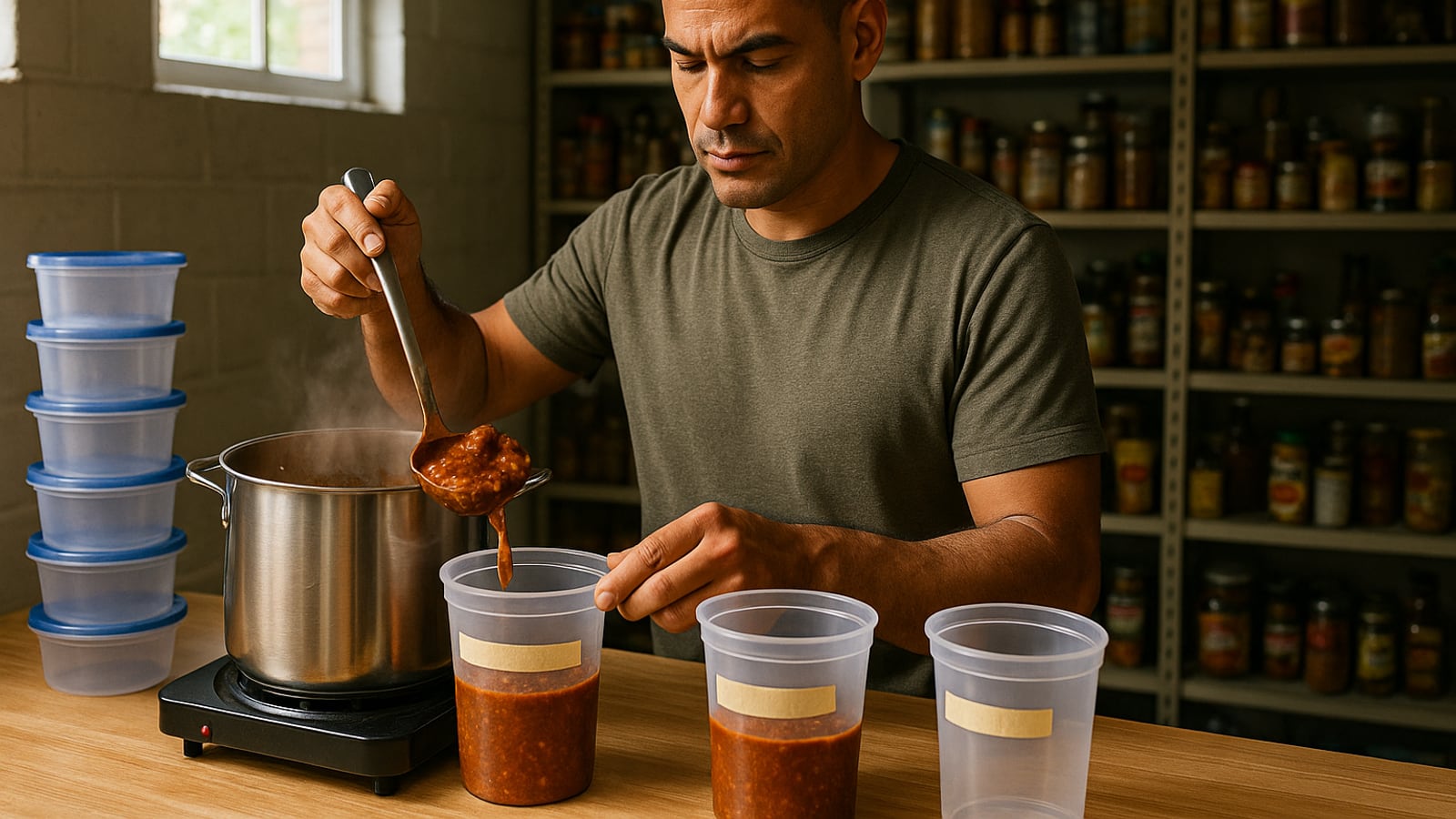
Cook it Friday night. Eat a bowl if you must, because you'll want to. But the pot you're actually making is for Monday, and almost everything that decides whether Monday's bowl is great happens in the first forty minutes at the stove.
Four pounds of chuck, cut into three-quarter-inch cubes. A handful of dried chiles instead of a jar of powder. Enough fat that you feel slightly uneasy about it. That's the shape of a chili built to sit.
Why the third day is better
Three things happen in the fridge. Collagen from the chuck keeps setting up, so the liquid goes from soupy to something that coats a spoon without any thickener at all. The fat, which sat on top as a slick on night one, gets broken up and redistributed when you stir the cold pot and reheat it, and fat is where chile flavor lives. And the sharp, raw edges of the spices soften. Fresh cumin on night one has a top note that's almost harsh. By Monday it's gone and what's left is the deeper, earthier part underneath.
None of that rescues a badly built pot. It just finishes a well-built one.
Skip the ground beef, or don't rely on it
Ground beef goes grainy on reheat. The little particles have nothing left to give up and they dry into something sandy. Cubed chuck does the opposite. By day three it's shredding at the edges and still juicy in the middle.
If you love the texture of ground, do half and half. Two pounds of cubed chuck for structure, a pound of coarse ground for body. That works. What doesn't work is four pounds of 90/10 ground beef, which is the most common chili on earth and also the one that tastes like a school cafeteria on Wednesday.
Cut the chuck yourself from a whole roast. Pre-cubed stew meat is usually round, it's leaner, and it goes stringy.
Dried chiles, and the twenty minutes they cost you
Chili powder in a jar is ground chile plus cumin plus oregano plus anticaking agent, and it was ground a long time ago. It gives you color and dust.
Buy dried whole chiles instead. Six anchos for sweetness and raisin depth, four guajillos for brightness and red color, two or three chiles de árbol if you want actual heat. Stem them, shake most of the seeds out, and toast them in a dry pan about thirty seconds a side until they smell toasty and go slightly pliable. Burnt chile tastes like an ashtray and there's no fixing it, so pull them early.
Cover them in hot water for twenty minutes, then blend with a cup of the soaking liquid until smooth. You now have a chile paste, and it's the single biggest upgrade available to you.
Taste the soaking water before you use it. Some batches are bitter. If it's, use stock instead.
Sear properly or don't bother searing
Pat the beef dry. Salt it. Work in batches small enough that the cubes aren't touching, which with a 7-quart Dutch oven means four batches, not two.
Crowding is where people lose it. The meat dumps water, the pan temperature crashes, and you end up gray-braising four pounds of chuck in its own juice. Gray meat makes gray chili, and no amount of time in the fridge builds a flavor that was never created.
That brown crust on the bottom of the pot is the point of the whole exercise. Deglaze with beer or stock and scrape every bit of it up.
Go lighter on liquid than feels right
The instinct is to cover everything. Resist it. Liquid should come about three-quarters of the way up the solids, no more, because the beef will release plenty and you're cooking with the lid mostly on.
Tomato is optional and easy to overdo. A small can of crushed tomato adds acidity and roundness. A big can turns the whole thing into spiced bolognese, and canned tomato gets tinnier and sharper by day three, not better.
Simmer at the barest bubble for two and a half to three hours. If you see a rolling boil, the heat's too high and the beef will tighten.
Season for Monday, not Friday
Under-salt by maybe a fifth. Chili concentrates as it sits and reheats, and a pot seasoned perfectly on Friday will taste over-salted on Monday.
Hold back anything fresh and sharp. Lime juice, vinegar, chopped onion, fresh cilantro. All of those fade or turn dull in the fridge. Add them at the bowl, every single day.
Masa harina is the traditional thickener and it works, but add it at the end of reheating, not on day one. Stirred in early, it keeps swelling and by Wednesday you've got a paste.
Beans have a schedule problem
Set aside the argument about whether they belong. The practical issue is that beans that were perfect on Friday are mush on Monday. They absorb liquid, the skins split, and they start to break down into the sauce.
Two options. Cook the chili without beans, and stir a drained can of pintos into whatever portion you're reheating that day, five minutes before you eat. Or accept that days two and three will be thicker and softer, which some people genuinely prefer. I'd take the first option. It costs nothing and it gives you control.
Cooling is where people actually get this wrong
A hot 7-quart pot put straight into the fridge is a bad idea. The middle stays warm for hours, and the pot also warms everything sitting near it.
Divide it into shallow containers, no more than about two inches deep, and get it into the fridge once it's stopped steaming hard. If you want it faster, sit the pot in a sink of ice water and stir it for ten minutes first. Standard food safety guidance puts the risky temperature band between about 40°F and 140°F, and the aim is to get through it quickly rather than hang around in it. The USDA has plain-language guidance on cooling and storing cooked food, and it's worth reading once so you're not guessing.
Fridge life is a few days, not a week. If you're building toward Monday from a Friday cook, you're right at the edge of the useful window. Freeze anything beyond that.
Reheating without wrecking it
Low heat, in a pan, stirring. Not a rolling boil, and not the microwave on full power, which heats unevenly and toughens the beef.
Add a splash of stock or water. It'll have thickened more than you expect. Then taste it again, because it needs salt more often than not, and finish with acid. Half a lime over a bowl of three-day chili does something that no amount of extra simmering will.
Toppings go on at the table. Sour cream, grated cheddar, raw white onion, a few crushed saltines if that's how you grew up eating it.
What day three is really for
Eggs. Take the last of it, spoon it over two fried eggs on a warm tortilla, and you'll understand why people make pots this big.
Cook enough that somebody can show up unannounced on Sunday and there's a bowl for them.
Dean Shaw
Gear & Garage
Tests things until they break, then reports what broke first. Trucks, tools, watches, and the cheap version that costs more.
Watch
Worth an hour of your evening
More from Food.
From channels we rate. Plays on YouTube.