
Eat enough to still be running in the fourth quarter
The hollow feeling late in a game usually isn't fitness. It's fuel, and it's fixable with a bagel and a plan.
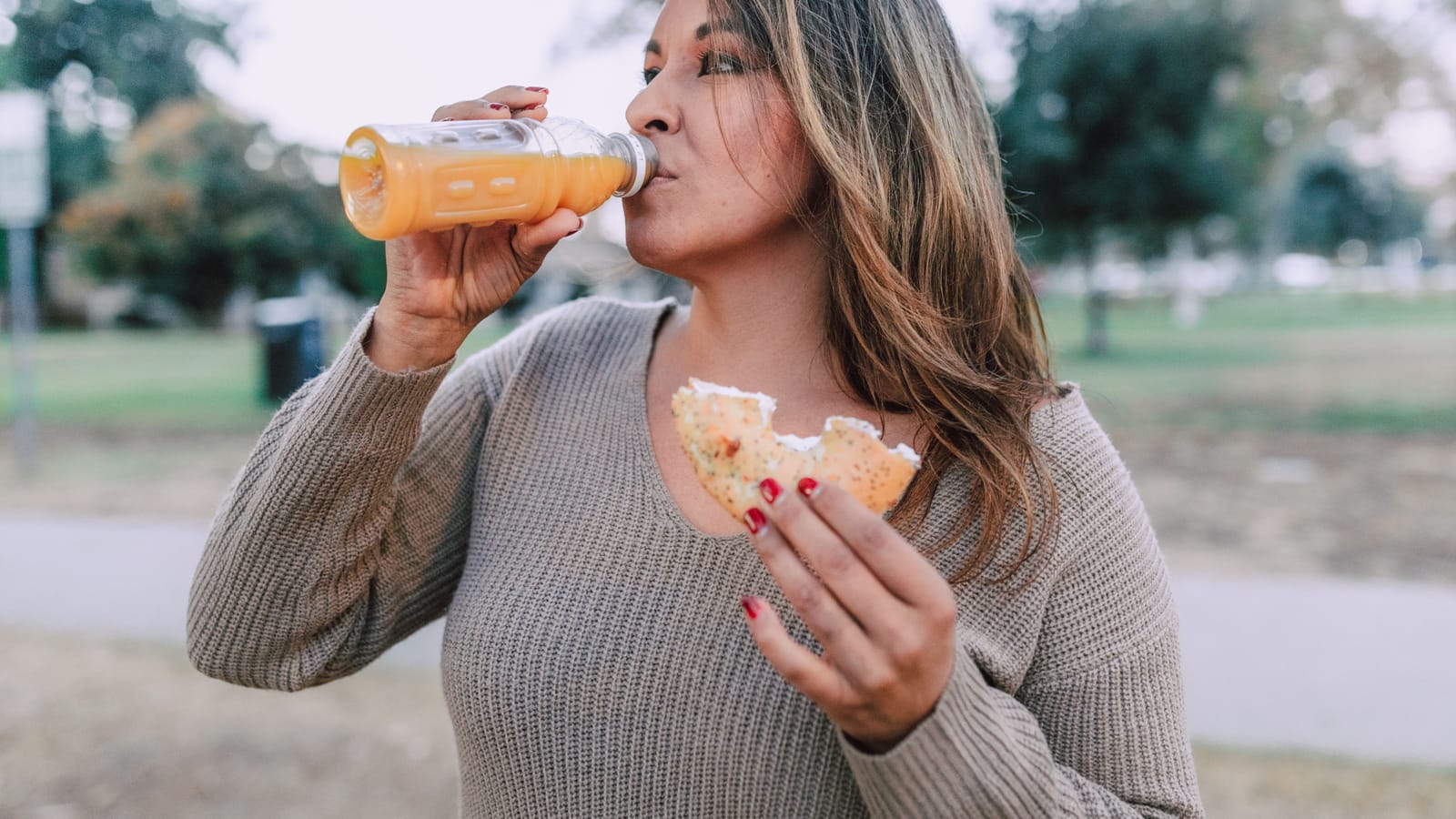
There's a specific feeling somewhere around minute 55 of a game where your legs still work but your brain stops sending good instructions. Passes go a half-step behind the runner. You stop calling for the ball. Coach thinks you're tired. You think you're out of shape.
A lot of the time you're just out of food.
This isn't a diet article. There's no plan here to eat less of anything. The whole problem for most girls who train hard is the opposite: a school day that hands you twenty minutes for lunch, a practice that starts at 3:45, and a dinner that lands at 8:00 after you've already done three hours of sprinting on a granola bar you ate in the hallway.
What running on empty actually looks like
It's rarely dramatic. You don't collapse. You just get a little worse at everything.
Your hands get cold in the dugout. You snap at your sister on the ride home over nothing. That shin soreness from two weeks ago is still there. You're nailing the first half of practice and mailing in the second. You feel dizzy for a second when you stand up fast after stretching.
Those are the normal, boring signs that your body is being asked to do more work than it's been given groceries for. Not a character flaw. Not a toughness problem. An input problem.
And the fix isn't glamorous. It's a peanut butter sandwich at 3:15.
Before practice, aim for a big meal early and a small one close
The general rule athletes work with: a real meal two to three hours out, and something small and easy about thirty to sixty minutes before you start moving.
The small one matters more than people think. Rice cakes with peanut butter. A banana. A handful of pretzels and a few crackers. Half a bagel. Apple slices. It doesn't have to be impressive. It has to be in your bag.
Here's the trade-off nobody warns you about: eat too much too close and you'll feel like a bowling ball for the first fifteen minutes. That's real. It's also why you experiment on a random Tuesday practice, not on the morning of districts. Try the same pre-game snack three or four times at practice and see how your stomach handles it. Some people can eat a burrito an hour out. Some people need forty-five minutes and a banana. Both are normal. Find out which one you're while the stakes are low.
The 3:15 hole in your day
For most girls in a sport, the biggest gap in the whole week is between the last bell and the first whistle.
Lunch was at 11:20. Practice ends at 5:45. That's more than six hours of nothing, and two of those hours involve sprinting.
Pack the bridge snack on Sunday night, not at 7:40 a.m. when you're already late. Put five of them in a gallon bag in your locker or the side pocket of your sports bag and refill on the weekend. Things that survive a backpack:
- Trail mix or nuts with dried fruit
- Beef jerky or a meat stick
- Crackers and a cheese stick
- A bagel with peanut butter, wrapped in foil
- Granola bars, the kind with actual calories in them
- A banana, if you're not the person who forgets it for a week
Eat it. Don't save it. It's not a treat you have to earn.
Early morning practice is its own animal
If you're in the pool or on the track at 6:00 a.m., you're not going to eat a big breakfast and you shouldn't try.
Get something small in you anyway. Toast with jam. A few sips of juice and a handful of cereal. Half a banana. You slept eight hours without eating, and asking your body to do hard conditioning on top of that's like asking a car to merge on fumes.
Then eat a genuine breakfast after. First period can wait thirty seconds while you finish a yogurt.
The window after you stop moving
Somewhere in the first hour after hard training, your body is unusually good at rebuilding what you just tore up. Feed it then.
Chocolate milk is the classic for a reason. It's cheap, it doesn't require preparation, it's got carbs and protein, and it goes down easy when you're too wiped out to chew. A turkey sandwich works. So does a bowl of cereal, or leftovers eaten cold out of the container standing at the counter.
This snack doesn't replace dinner. It holds the line until dinner. If you're getting home at 7:00 and eating at 8:30, that gap is where recovery goes to die.
Water, and the thing about the bus
Fill a bottle in the morning and empty it before practice starts. Refill it. Drink during breaks even when you're not thirsty, because thirst shows up late.
On tournament days and long meets, this is where everyone falls apart. You've got four games or six heats spread over nine hours, and it's tempting to just not eat because you're nervous and there's a concession stand and nothing sounds good.
Plan for it like a road trip. Pack a cooler. Sandwiches, fruit, pretzels, crackers, water, a few things with salt in them if it's hot. Eat something small after every single event, even if it's five crackers. The girl who's still sharp in game four is almost never the most naturally gifted one. She's the one who ate between games two and three.
If you're exhausted for weeks, that's a doctor conversation
Being tired after a hard week is normal. Being flattened for a month straight, out of breath on stairs you used to run up, is worth mentioning to your parents and your doctor. Ask them about it. Girls who train hard sometimes need bloodwork, and that's a quick, ordinary thing to check. Your athletic trainer at school is also a good first stop. So is the school nurse.
If you want an actual eating plan built for your sport and your body, ask your parents about a registered dietitian. General articles like this one are a starting point, not a prescription.
When food starts feeling like math
Locker rooms are full of talk about what girls are or aren't eating, and apps that count things, and people online who have made a whole personality out of it.
You're not a project to be shrunk. You're an athlete building an engine.
If you've started skipping meals on purpose, or eating and then feeling awful about it, or your whole brain has become a running total of what you had today, tell someone this week. Your mom. Your coach. The school nurse. A youth leader. Pick the adult you'd actually be able to look at while you said it, and say it. You won't be in trouble, and you won't be the first athlete they've helped with exactly this.
The strongest thing you can do for your sport isn't restraint. It's showing up Monday with a bag full of food and enough in the tank to finish what you started.
Nina Castellan
BRO for Her
Runs the women-facing desk. Same standard, same tools, written for a different reader — not a softer one.

Read next