
Learn a trade while you're still in high school
You can leave graduation with a credential, a set of hours and a boss who knows your name. Most of it gets decided at scheduling.
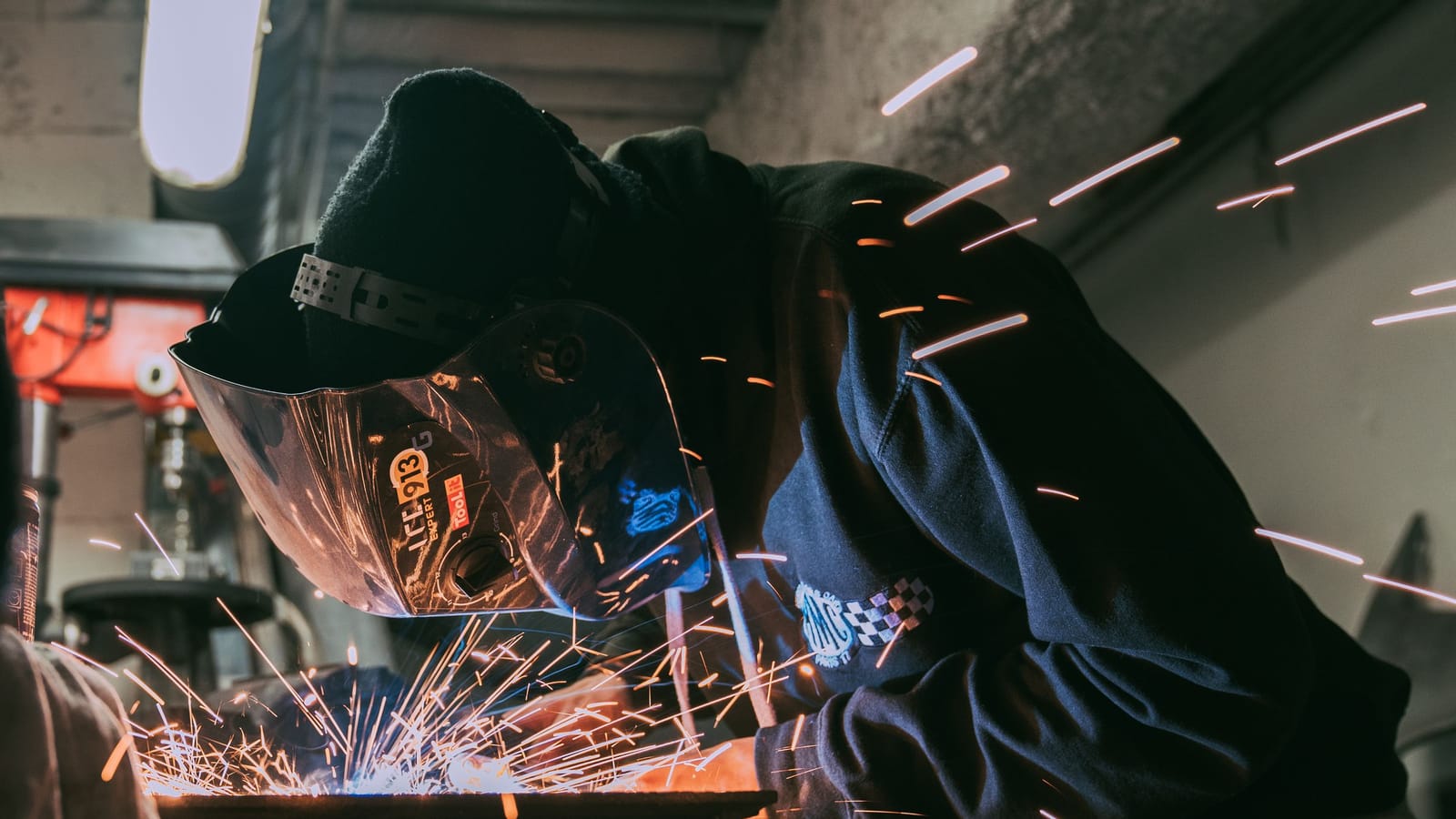
Go to the counseling office Monday morning and ask one question: what career and technical courses can I take next year, and can I start as a sophomore? Most schools offer more than students realize. Welding, automotive, construction, HVAC, electrical, CNC machining, diesel. A lot of it runs at a shared career center across town, which is exactly why nobody mentions it in your building.
Ask now because of scheduling. A trade block usually eats two class periods, sometimes three once you count the bus ride. That means something else comes out of your day. Maybe it's a study hall, maybe it's a second elective, maybe it's the class period you were using to sleep. You want to know that in February, not the week before school starts when every section is full.
What you can actually walk out with
A diploma is the floor. The point of doing this in high school is leaving with paper that means something to a contractor.
Depending on your program, that can include an OSHA 10 card, an NCCER Core credential, entry-level ASE certification for automotive, welding qualifications through a school's AWS-aligned program, or EPA 608 certification if you're going toward HVAC. Some districts run pre-apprenticeship programs that count toward the first stretch of a real apprenticeship. Some run dual enrollment with the community college, so you finish twelfth grade with college credits already on a transcript.
Ask your CTE teacher, by name, which credentials their students actually earned last year. Not which ones are listed in the brochure. Which ones people passed.
That's the question that separates a serious program from a room with tools in it.
The teacher matters more than the trade
A great welding instructor will make you better at showing up, measuring twice and finishing work than a mediocre electrical instructor will. Sit in on a class if they'll let you. Look at whether the shop is clean, whether the students are working or standing around, whether the equipment is plugged in and running.
Talk to a senior in the program. Ask what they'd change. Seniors tell the truth in a way that brochures never do.
If your school's program is weak, that's real, and pretending otherwise wastes two years. Look at the regional career center, a summer program at the community college, or a union hall's pre-apprenticeship. Several trades run introductory programs open to high school students, and they're usually free or close to it.
Get onto a real job site before you graduate
Classroom hours aren't the same as work. You need to be on a site with adults who are trying to finish something by Friday.
The way in is boring and it works. Tell everyone your parents know that you're looking for summer work as a helper. Your uncle's neighbor is a plumber. Somebody at church runs a remodel crew. The counter at the electrical supply house at seven in the morning is full of contractors picking up material, and if you walk in with your dad and ask a guy whether he needs somebody to carry and sweep this summer, you'll get a real answer.
Loop your parents in on all of it before you show up anywhere. They should know the company, the name of the person you're working for and the phone number. If somebody wants you on a site and doesn't want your parents to know who they are, that's your answer about the job.
There are also legal limits on what a worker under 18 can do. Power equipment, roofs, ladders over a certain height, hours during the school week. The rules vary by state and by trade, and they're not suggestions. Ask your school's work-based learning coordinator or the company's office manager before your first shift, and let the adults sort it out in writing.
What a good sixteen-year-old helper looks like
Show up ten minutes early and be standing there with your boots already on.
Phone stays in the truck or in your bag. Not in your pocket. Not on silent in your pocket. In the bag.
When you finish a task, say "what's next" out loud to the person who gave it to you. Don't wait to be found.
Carry the heavy end of everything. Learn every guy's name in the first two days and use it.
Sweep without being asked. The crew notices the kid who cleans up, because most of them hate doing it and all of them know the job goes faster on a clean floor.
Here's the mistake I'd fix if I were doing it again: when somebody sends you to the truck for a wrench, ask what size, then bring that one and the next size up. You'll be wrong about half the time and you'll have already solved it. The first summer I did this I made three trips for one fitting and the foreman stopped sending me for anything.
The math isn't optional
A lot of guys go toward a trade because they're tired of school. Then they hit conduit bending and discover they need trigonometry. Framing runs on fractions and the Pythagorean theorem. Pipefitting runs on offsets and angles. Machining runs on tolerances measured in thousandths, and a decimal in the wrong place scraps a part that cost real money.
Take the math. Take the good version of it, not the easy version. Every trade pays more the further you get from the shovel end, and the path away from the shovel end is estimating, layout, blueprints and running the job. All of that's arithmetic and reading.
Physics helps too, and so does a class where you have to write. Foremen write emails. Owners write bids.
The honest trade-offs
Some trades are harder on your body than others. Roofing and concrete flatwork are brutal in a way that HVAC service or electrical work isn't. That doesn't mean don't do them. It means go in knowing, and build a plan to be running work by your thirties instead of still carrying every bundle yourself at fifty.
You'll also make money earlier than your friends who go straight to a four-year degree, and that's a real fork in the road. Money at nineteen is dangerous mostly because of what people buy with it. A truck payment, then a bigger truck payment. If you want help sorting out what to do with a first real paycheck, sit down with a credit union loan officer or an accountant your family trusts and ask them to show you the numbers.
And you don't have to choose forever at sixteen. Guys go from the tools into engineering, into sales for the manufacturer, into running their own company. A welding certificate has never once closed a door.
Why this is worth doing now
Because the thing that gets you hired at eighteen isn't the credential. It's a phone number. It's a guy who ran a crew you worked on for two summers who'll pick up when a contractor calls and say, "Yeah, he showed up every day, he never sat down, put him on."
You build that at sixteen or you don't build it at all.
A few years from now you'll stand in a room you helped wire, flip the breaker, and the lights will come on. Nobody in that building will ask what your GPA was.
Ade Fisher
Young Men
Teaches the trades intake at a community college. Writes the manual he wishes his students arrived with.

Read next