
What a 16-ounce energy drink does to your heart and your sleep
The buzz lasts an hour. The caffeine hangs around most of the day, and that's the part nobody warns you about.
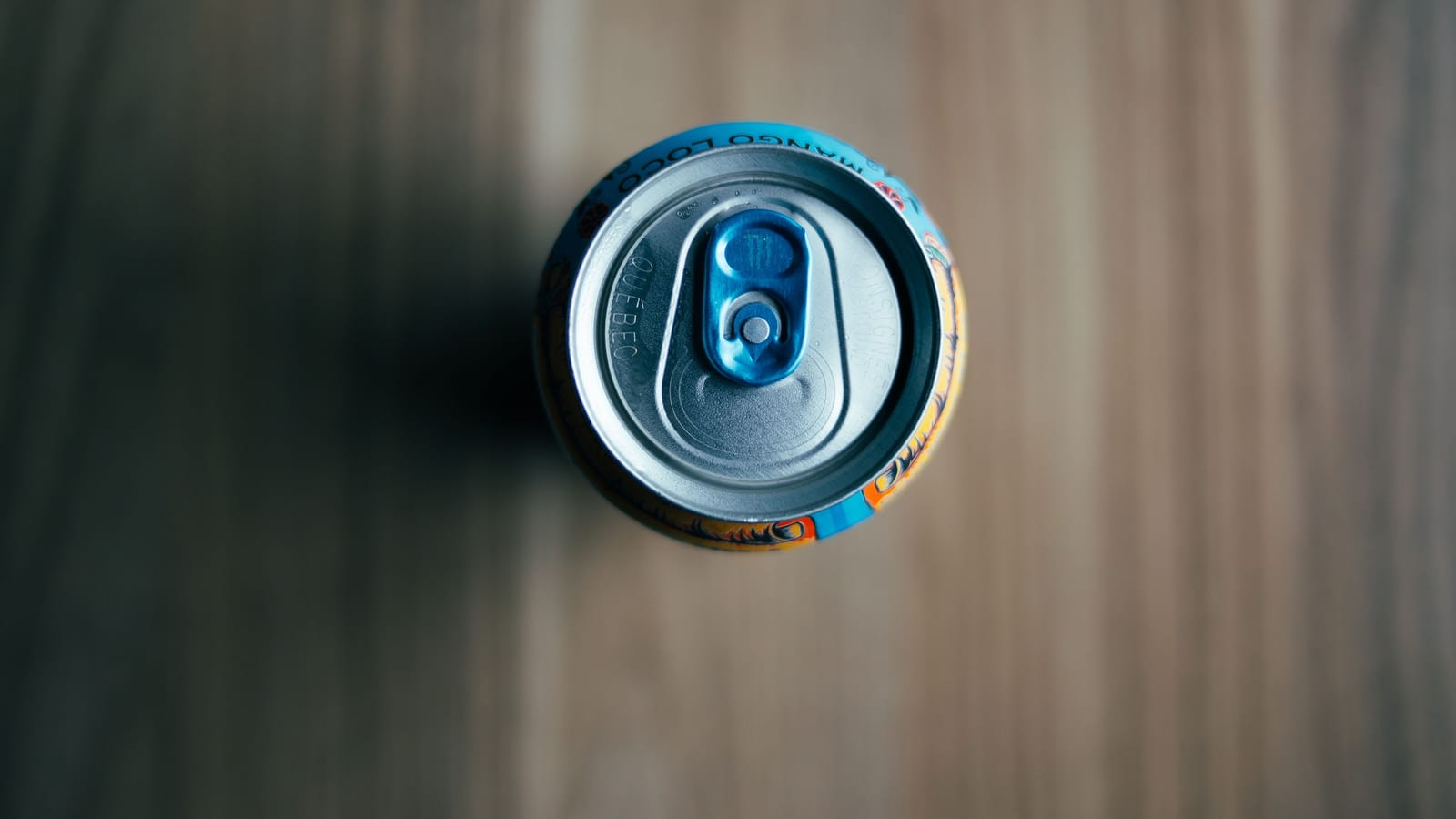
Pick up the can and read the small print on the back. Most 16-ounce energy drinks list somewhere around 160 milligrams of caffeine. Some of the bigger or "extra strength" ones list a lot more. That number is the whole story, and almost nobody reads it.
Caffeine doesn't just leave when the buzz wears off. Your body clears about half of it in roughly five to six hours. So the can you drank at 4 p.m. before practice still has about 80 milligrams working on you at 10 p.m., and a chunk of it is still in there at 3 a.m. You feel normal. Your nervous system doesn't agree.
That's why you can lie down at 11, tired down to your bones, and stare at the ceiling for ninety minutes with your brain running highlight reels of things you said in seventh grade.
What it actually does to your heart
Caffeine is a stimulant. It bumps up your heart rate and your blood pressure. That's not a scare tactic, it's just what the drug does, and it's why it works.
At a normal dose most people feel it as alertness. Push the dose up and you start feeling it as something else: a fluttery, skipping sensation in your chest, hands that won't stay steady, a jaw that's clenched for no reason. Some guys get a wave of anxiety out of nowhere and can't figure out why they suddenly feel like they're in trouble.
If you've got any heart condition, or anybody in your family does, this matters more for you than it does for the guy next to you. Same if you're on ADHD medication, an inhaler, or anything a doctor prescribed. Stimulants stack with stimulants. Ask your doctor or your pharmacist before you add one on top of the other. That's a two-minute question and it's free.
The American Academy of Pediatrics has said for years that energy drinks have no place in the diet of kids and teenagers at all. You can disagree with where they draw the line. What you can't do is pretend the line isn't there.
The stack is what gets you
Nobody has one energy drink and falls over. What happens is arithmetic.
A can with breakfast. A large soda with lunch. Somebody's pre-workout scoop before lifting, because it was sitting right there. Another can at 7 p.m. because you've got a chapter of biology to get through and a group chat that won't shut up. Add it up and you're way past what an adult twice your size would drink on purpose.
Count it for one day. Just once. Write the numbers off the labels on your phone, add them, and look at the total. Most guys who do this are genuinely surprised, and the surprise does more work than any lecture.
Pre-workout is the sneaky one. A single scoop can carry as much caffeine as two cans, and the label is designed for a 220-pound powerlifter, not a sophomore. If you're going to use it, half a scoop and read the container.
Why the sleep part costs you more than the heart part
Teenagers need somewhere in the range of eight to ten hours. Not because somebody's being strict about it, but because that's when your body actually builds the thing you worked for. Muscle repairs at night. Memory gets filed at night. Your reaction time on the field, your mood, your ability to sit through a class without your eyes sliding off the page. All downstream of sleep.
Caffeine doesn't just delay sleep. It shallows it out. You can get seven hours on paper and wake up feeling like you got four, because the deep stages got chopped up.
Then the loop starts. Bad sleep means you're dragging at 7 a.m., so you grab a can, so you sleep badly again, so you grab two. Four days in you're irritable, your grades are sliding, and you're convinced you're just a person who's tired all the time. You're not. You're a person with a chemical schedule problem.
I've watched a kid blame a whole bad semester on his teachers when the real culprit was a fridge shelf.
The 2 p.m. rule
If you want one change that fixes most of this, it's a cutoff time.
Nothing with caffeine after 2 p.m. Not a can, not a soda, not coffee, not the gum. Give yourself about nine hours between your last dose and your pillow. Do it for a week and see what your Thursday feels like.
The first two or three days can stink if you've been drinking a lot. Headache, foggy head, short fuse. That's a real withdrawal and it passes. If you're worried about how rough it feels, taper instead of quitting cold: cut to one can a day for a week, then half, then done.
And be honest about what you're actually solving. Most of the time the can isn't fixing tiredness, it's fixing boredom, or a long assignment you don't want to start, or the fact that you stayed up until 1 a.m. watching clips you won't remember tomorrow.
What to do instead when you're genuinely wrecked
None of this works if the alternative is nothing. So:
- Water first. Dehydration feels almost exactly like fatigue. A big glass before you decide anything.
- Go outside for ten minutes. Daylight on your face in the morning sets your body clock better than any drink does. This one sounds soft and it isn't.
- Eat something real. Eggs, a sandwich, leftovers. Running on nothing since lunch is its own kind of tired.
- Move for five minutes. Push-ups, a lap around the block. Blood moving beats a stimulant for the 3 p.m. slump.
- Nap twenty minutes, not ninety. Set an alarm. Past about half an hour you wake up worse than you went down.
Coffee exists too, and a small one is a more honest product. You know what you're getting, it's not carbonated syrup, and you can't slam it in forty seconds the way you can slam a cold can.
The part where you talk to somebody
If you get chest pain, a heart that's racing or skipping while you're sitting still, dizziness, or you feel like you might pass out, tell a parent today. Not tomorrow. If it's happening right now and it's bad, that's an emergency room, and nobody's going to be angry with you about a can. Teenagers skip this step because they think they'll get chewed out. Your parents would rather hear it early than find out late, every single time.
If you think you're drinking more than you can stop drinking, say that out loud to your mom, your dad, or the school nurse. Wanting help with a habit isn't weakness, it's maintenance.
Keep the can if you want it. Just make it a decision you made with the label in your hand, at a time of day you picked on purpose, instead of a reflex you can't account for. A guy who runs his own schedule is a different animal from a guy whose schedule runs on aluminum.
Ade Fisher
Young Men
Teaches the trades intake at a community college. Writes the manual he wishes his students arrived with.

Read next