
Quick answer: Nicotine doesn't calm you down. It relieves the jittery, irritable feeling that nicotine withdrawal causes in the first place. And a teenage brain gets hooked faster and harder than an adult one, while your heart and lungs quietly lose ground in every practice.
The guy who says "it just helps me relax" is telling the truth about how it feels. He's wrong about why.
The loop nobody explains
Nicotine hits your brain within seconds. It triggers a release of dopamine, the chemical that says good, do that again. You feel a small lift. Then it wears off, often inside an hour or two.
When it wears off, your brain doesn't go back to normal. It drops a little below normal. You get restless. Short-tempered. You can't focus on the chemistry worksheet. Your leg bounces under the desk.
Then you hit the vape and all of that goes away, and you think, see, this helps with stress.
It helped with the stress it made. That's the whole business model. A kid who never started doesn't feel that dip, so he doesn't need the fix. Over weeks, the dips come faster and feel worse, and you need more to get back to even. That's what addiction is. It isn't a moral failure or a weak personality. It's chemistry doing exactly what it was designed to do.
Your brain is still being built
The part of your brain behind your forehead, the prefrontal cortex, handles impulse control, planning, and weighing consequences. It keeps developing until your mid-twenties. The U.S. Surgeon General's 2016 report on e-cigarettes and young people warned that nicotine exposure during these years can harm that development, with effects on attention, learning, and impulse control.
Think about what that means in practice. The drug that's hardest to quit goes after the exact part of your brain you'd use to quit it.
Teenage brains also wire habits in fast. That's great when the habit is shooting free throws or practicing guitar. It's terrible when the habit is reaching for a device every forty minutes. The same speed that lets you get good at things lets nicotine dig in deep.
And there's the mood piece. Plenty of guys start vaping because they already feel anxious or low. Nicotine makes that worse over time, because now you've got your original stress plus the withdrawal cycle stacked on top.
What it does on the field
Here's where it gets personal if you play anything.
Your blood vessels tighten. Nicotine is a vasoconstrictor. It narrows blood vessels and raises your heart rate and blood pressure. Your muscles run on oxygen delivered by blood. Narrower pipes, less delivery.
Your lungs take the hit. Vape aerosol isn't water vapor. According to the CDC, it can contain ultrafine particles, flavoring chemicals like diacetyl that have been linked to serious lung disease, and heavy metals such as nickel, tin, and lead. You're breathing that into the same lungs you need for a fourth-quarter sprint or the last 400 of a 1600.
Your sleep gets worse. Nicotine is a stimulant, and withdrawal can wake you up at night. Sleep is when your body repairs muscle and locks in skill. Bad sleep means slower recovery, slower reactions, and more days where your legs feel like concrete. If your nights are already short, what six hours of screens does to your sleep, focus and mood is worth a read, because the two problems feed each other.
You can lose your spot. Most high school athletic codes treat vaping like any other tobacco violation. That can mean suspended games or losing eligibility. Read your school's code. Coaches notice, too. A guy slipping out to the bathroom between drills isn't fooling anybody.
Picture the last five minutes of a close game. Everybody's tired. The guy who can still think clearly and still has gas is the one who makes the play. You don't want to spend those five minutes wondering if you'd be faster if you'd never started.
"It's just flavored air"
It's not, and the flavors are part of the trick. Mango and mint make it taste harmless. Many vapes now use nicotine salts, which let manufacturers pack in a lot of nicotine without the harsh throat burn that used to warn people off. The CDC has noted that some pods contain about as much nicotine as a pack of 20 cigarettes.
A disposable that lasts you a few days could be putting more nicotine in you than a pack-a-day smoker gets. Most guys have no idea.
And legally, in the United States, you have to be 21 to buy any tobacco product, vapes included. Canada sets it at 18 or 19 depending on the province. If somebody's selling to you, they're already breaking the law. That tells you something about how much they care what happens to you.
If you already vape
Good news first: your body starts recovering fast once you stop. The bad news is the first stretch is uncomfortable, and you should know that going in so it doesn't blindside you.
Withdrawal usually looks like irritability, cravings, trouble concentrating, and restless sleep. It tends to be worst in the first several days and eases over the following weeks. It passes. Every craving you ride out without using makes the next one weaker.
What actually works:
- Tell a parent. This is the step guys dread and the one that changes everything. Most parents would much rather hear it from you than find a device in the laundry. You won't be in trouble for asking for help getting out. You'll be the guy who handled it.
- See your doctor or school nurse. Say it straight: "I vape and I want to quit." They've heard it many times. They can talk about options that fit your situation.
- Use a free program built for your age. Truth Initiative runs "This is Quitting." Text DITCHVAPE to 88709 in the U.S. It sends short daily messages and support. In the U.S., 1-800-QUIT-NOW also connects you to your state's quitline.
- Pick a quit date and get rid of everything. Every device, every pod, every charger. "I'll just keep one for emergencies" is how most quits fail.
- Know your triggers. For most guys it's the car, the bus stop, a certain group after school, or right after a stressful class. Plan something for those exact moments. Gum, a walk, a text to a friend who's in on it.
- Move. A hard workout knocks a craving down better than almost anything. You get your own dopamine the honest way.
If you slip, don't throw the whole thing out. One slip isn't a failure. Get rid of it and start the count over the same day.
When your friends pass it to you
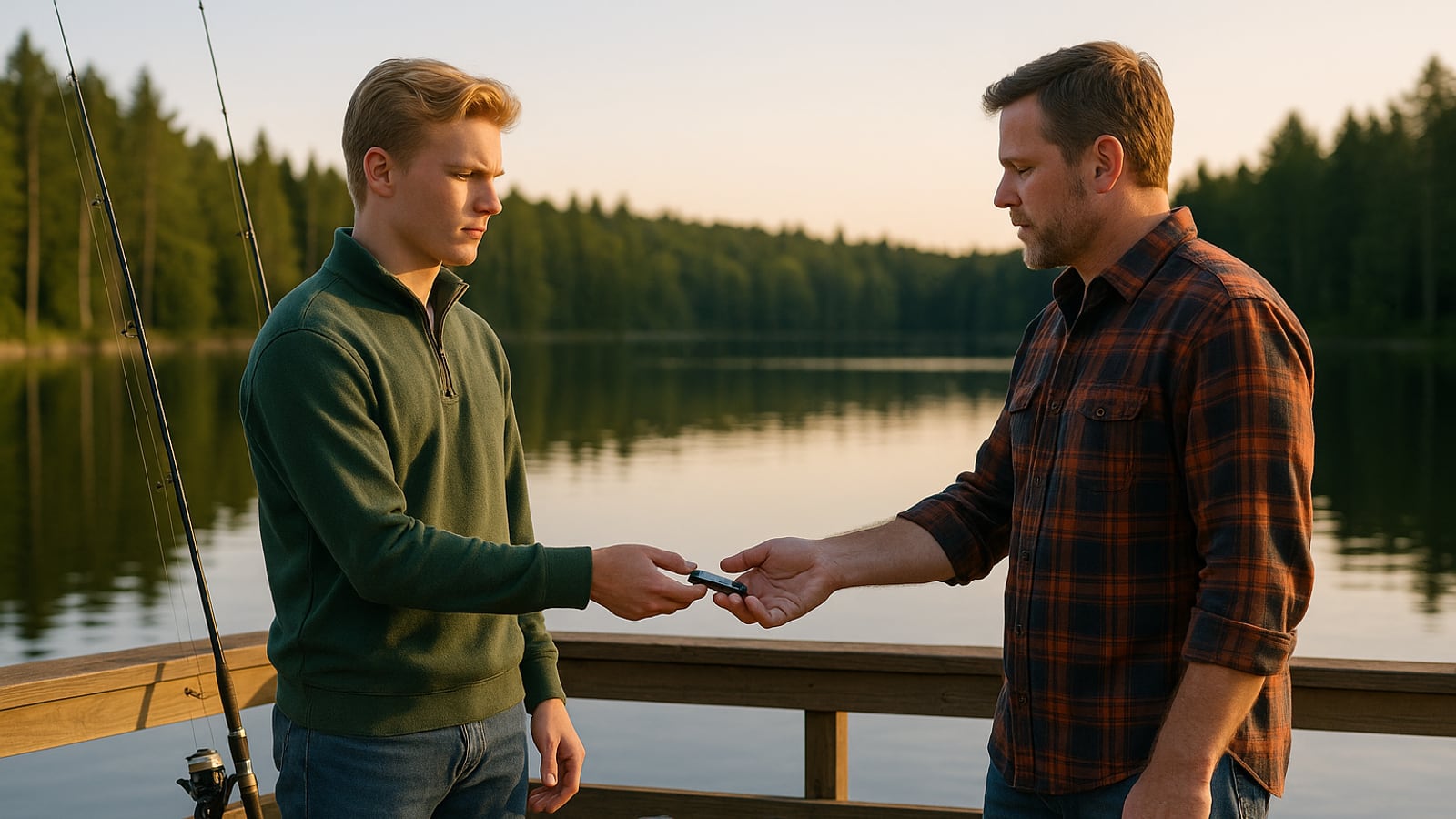
The hardest part isn't knowing the facts. It's the moment someone holds one out and five guys are watching.
You don't need a speech. You need one line you've already practiced:
- "Nah, I've got practice."
- "I'm good."
- "Coach tests us." (Even if he doesn't, it ends the conversation.)
Say it once, in a normal voice, and change the subject. Real friends drop it. If a group keeps pushing after you've said no, that tells you what kind of friends they are.
There's a reason reliable men are built at fifteen, not at thirty. The guy who can say no to something at a party is the same guy who can be counted on when it's his team, his job, and eventually his family relying on him. That backbone starts small, in moments exactly like this one.
The trade, in plain terms
Nicotine offers you ten minutes of feeling normal. In exchange, it takes a brain that's still being built, lungs you need for everything you love doing, and a little bit of your freedom every single day.
Nobody who's hooked ever planned to be. Every one of them thought they'd just try it once.
You get to be the guy who never has to quit, or the guy who quit and got his edge back. Both are strong. Start today.
Ade Fisher
Young Men
Teaches the trades intake at a community college. Writes the manual he wishes his students arrived with.

Read next