

Patch the hole in the wall, then own up to it
A fist-sized hole is a one-weekend fix with a putty knife, joint compound and sandpaper. The part nobody mentions is the thirty seconds after.
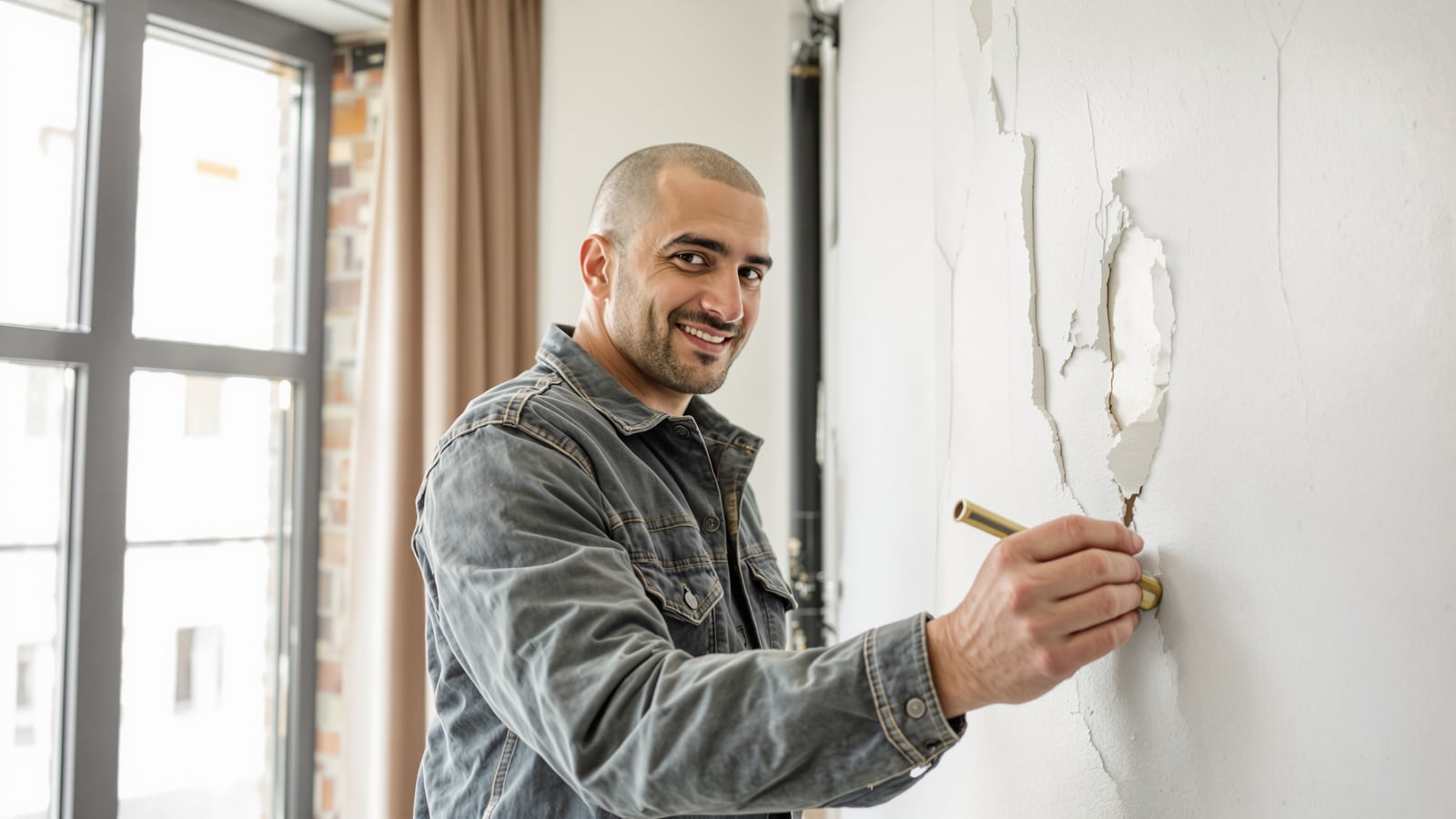
Quick answer: Small hole, use spackle. Hole up to about the size of your hand, use a self-adhesive mesh patch and three thin coats of joint compound, sanded smooth, primed, then painted. Then tell whoever owns the place. A good patch plus an honest sentence beats a hidden hole every time.
Size the hole first
The repair depends on what you're looking at.
- Nail holes and dings smaller than a dime: lightweight spackle and a small putty knife. One or two passes.
- Doorknob dents and holes up to about six inches: a mesh patch with an adhesive back, plus joint compound. This is most of what happens to bedroom walls.
- Anything bigger, or a hole where you can see the wall cavity and wiring: this needs a new piece of drywall and backing boards. Don't wing it. Show the owner and let them decide who fixes it.
The rest of this covers the middle one, because it's the one you'll actually do.
What to buy
One trip to the hardware store covers all of it:
- A self-adhesive drywall patch, four or six inches square
- A tub of pre-mixed joint compound (the lightweight kind sands easiest)
- A 6-inch putty knife and a 10- or 12-inch taping knife
- A sanding sponge, 120 to 150 grit
- A small can of primer
- A utility knife
- A dust mask
Get the wide knife. It's the thing beginners skip, and it's the reason their patches look like a bandage on a wall. A narrow knife can't feather an edge out far enough to disappear.
Prep: where most patches are already lost
Knock out any loose chunks. Run the utility knife around the edge and slice off ragged, torn paper so the hole has a clean rim. Wipe or vacuum the dust off, because compound won't stick to dust.
Center the mesh patch over the hole and press it flat, working from the middle out. The mesh should lie against the wall like a sticker. If a corner lifts, press it down now, not after you've covered it.
Coat one: fill the mesh
Load the 6-inch knife and drag compound across the patch, pressing it into the mesh. Then scrape it almost clean. You want the mesh covered and the edges of the patch buried, but the layer should be thin.
Thick is the classic mistake. A glob dries slow, cracks, and shrinks into a dent. Three thin coats beat one fat one.
Let it dry. Thin coats take a few hours, sometimes overnight if the room is damp. It's dry when it's uniformly white with no gray patches. Don't speed it up with a hair dryer pointed at it from two inches away. That's how you get cracks.
Coat two and three: feather it out
Switch to the wide knife. Lay compound over the patch and extend it two to three inches past the edge of the mesh in every direction. Hold the knife at a low angle and pull. Put a little more pressure on the outside edge of the blade so the compound thins to nothing at the border.
That's feathering. The patch shouldn't have an edge. It should rise gently out of the wall like a very low hill.
Let it dry. Do the third coat wider again, by another inch or two. Between coats, knock off any ridges or crumbs with the knife so you're not building on lumps.
Sand it, then prove it
Put your mask on. Sand with the sponge and a light hand, in wide circles, the same way you'd wax a car. You're smoothing, not removing. Push too hard and you'll dig into the mesh and have to start over.
Then do the test. Turn off the overhead light and hold a flashlight flat against the wall, aimed sideways across the patch. Every ridge and low spot throws a shadow. Fix those. Then close your eyes and run your palm across it. Your hand finds what your eyes miss. If you can't feel where the patch starts, nobody will see it.
Wipe the dust off with a damp rag. A dry one just moves it around.
If the house is old, built before 1978, the paint on the wall may contain lead. Sanding it makes dust, so ask a parent or the owner before you do anything beyond a small, damp-wiped patch.
Prime, or the patch will glow
Joint compound drinks paint differently than the wall around it. Skip primer and the patch shows through as a dull square, even if the surface is perfect. Painters call it flashing. One coat of primer, let it dry, and you've fixed it.
Paint it so it disappears
Matching paint is the second place patches get caught.
- Ask if there's a leftover can in the garage or closet. Check the label for the color name and sheen.
- If not, scrape a quarter-sized chip off somewhere hidden, like inside a closet, and take it to the paint counter. They can scan and match it.
- Match the sheen too. Flat, eggshell and satin look different in the light even in the same color. A flat patch on an eggshell wall shows up at an angle.
Then paint the patch and a few inches beyond it, blending outward. If the wall is old and faded, the fresh paint will still stand out. In that case, paint the whole wall from one corner to the next. You'll never see a line that stops at a corner.
If the wall has a bumpy texture, a hardware store sells spray texture in a can. Practice on cardboard first.
Now the part that matters more than the patch
Here's the conversation. Tell the landlord, or your parent if they're the one who deals with the landlord, before they find it:
"I put a hole in the wall next to the door. I patched and painted it. Take a look and tell me if you want anything done differently."
That takes about ten seconds and it does a lot. It tells them the damage is handled. It tells them you're the kind of tenant who says so. It keeps a small repair from becoming a deposit argument at move-out, because walls get looked at then and a good patch can still be found by someone who knows where to look.
And if it's a fist hole, not a doorknob one, take a breath on that. The wall isn't the real problem. Tell a parent, a coach, or an adult you trust that you're having a hard time keeping your temper. Fixing drywall is easy. Fixing that's the harder skill, and a better one to learn at sixteen than thirty.
It's the same habit as being reliable in the house you already live in: you break it, you fix it, you say so. That's what reliable men are built from, and it starts with a putty knife.
Leave the wall better than you found it. Then leave the room cleaner, too.
Cal Brennan
Fitness
Strength coach. Trains fathers, tradesmen and desk workers, which means programs that survive a bad week.

Read next