
Quick answer: Know two ways out of your unit and count the steps to each. Keep three days of water and food in one bin. Keep a headlamp by the bed. Carry renters insurance. Learn the names of the people on your floor.
Tonight, turn off the hallway light and walk to the stairwell. Count the doors you pass. Count the steps down to the street. Do it again with your eyes closed.
It sounds like overkill until the lights go out and the hallway fills with smoke or darkness. Nobody finds a stairwell door by memory of a floor plan they've never studied. You find it by having already done it.
That's the real difference between preparing in a house and preparing in an apartment. In a house, you control most of the variables. In an apartment, the building is half of your plan, and you didn't build it. So you learn it.
Two ways out
Ready.gov's fire guidance is simple: know at least two ways out of every place you sleep. In an apartment, that usually means the front door and a second route. That might be a different stairwell at the other end of the hall, or a balcony in a ground-floor unit.
Find the second stairwell this week. Many people have lived in a building for years and never opened the far door. Check that it opens, that it isn't chained or blocked, and where it lets out.
Don't use the elevator in a fire. Power can fail, and an elevator can stop between floors.
Keep the hallway clear too. The bike, the stroller and the stack of boxes outside your door are somebody else's obstacle in the dark. Leave the path better than you found it.
When you can't get out
Sometimes the hallway is the problem. Fire and emergency guidance for apartment residents is to feel the door with the back of your hand before you open it. If it's hot, or smoke is coming under it, stay put.
Then:
- Call 911 and tell them your unit number and exactly where you are.
- Stuff wet towels or clothing into the gaps around the door.
- Get to a window or balcony where firefighters can see you.
This isn't the instinct most people have, which is to run. But a hallway full of smoke is more dangerous than a closed door. Closed doors slow fire down. It's one reason you never prop yours open.
Check that your smoke alarms work, too. Most states require landlords to provide them, and many require them to be working at move-in. If yours chirps, is missing, or is dead, ask in writing and keep a copy. Be polite. Be firm. Follow up. If you get a runaround, a local tenants' association or an attorney can tell you what your state requires.
Three days in a small space
Ready.gov recommends a gallon of water per person per day, for at least three days. For two people that's six gallons. Water weighs about 8.3 pounds a gallon, so you're storing roughly fifty pounds.
That's the part that surprises renters. It's heavy, and it takes room.
Don't buy a bunker's worth of anything. Buy for three days and store it flat.
- Water: Cases of bottled water slide under a bed or into the bottom of a closet. A case of 24 half-liter bottles is a little over three gallons.
- Food: Canned and boxed food you'd actually eat. Add a manual can opener. If you can't cook, pick things that don't need it.
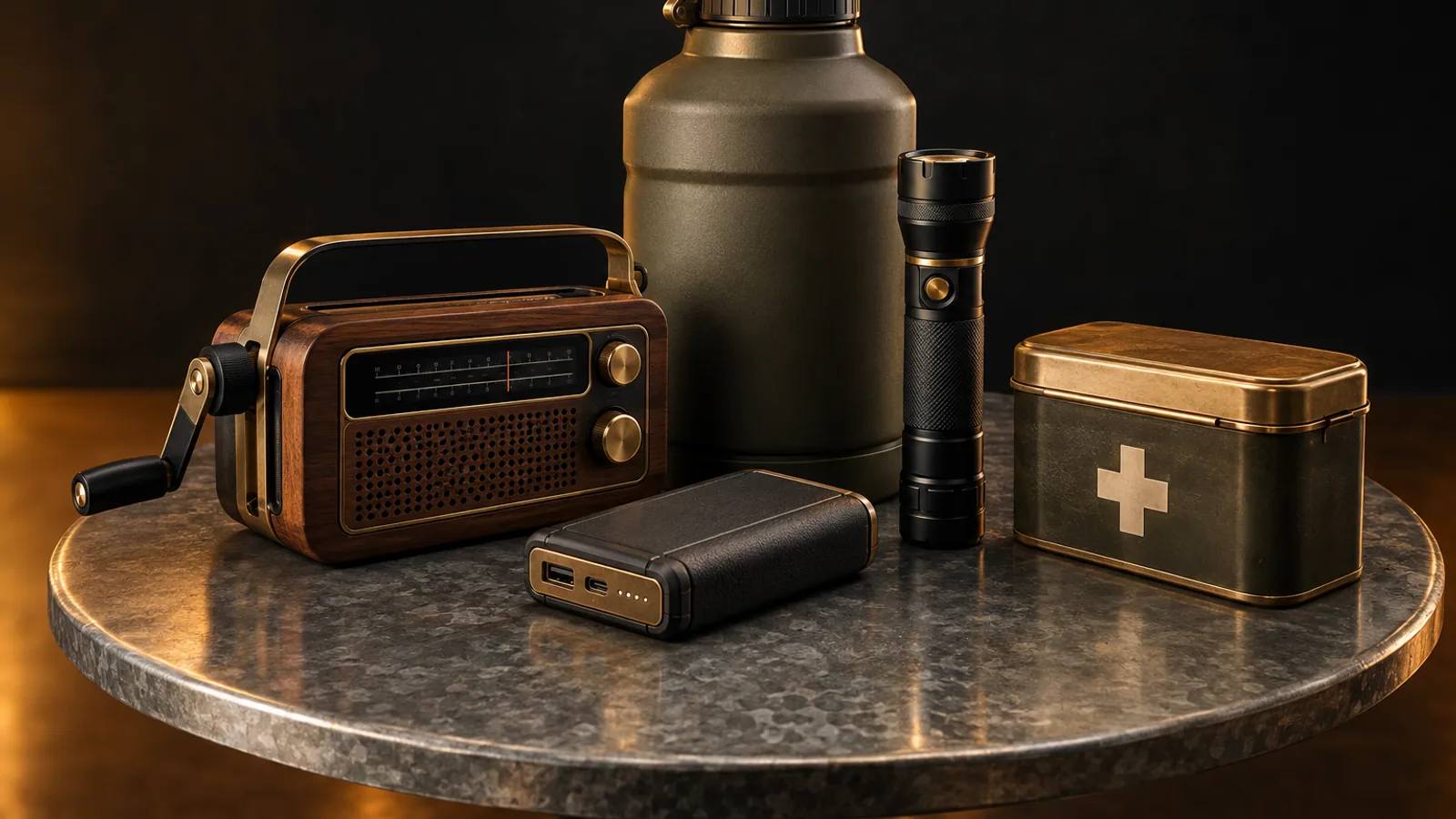
- Light: A headlamp beats a flashlight, because your hands stay free on the stairs.
- Radio: A battery or hand-crank radio. The radio piece covers why.
- Meds and chargers: A week of any daily prescription if your pharmacy allows it, plus a charged power bank.
Put it all in one bin, label it, and put it somewhere you can reach in the dark. For a fuller list, see the seventy-two hour kit. Once a year, eat the food and replace it. It's the cheapest rotation system there is.
When the power goes out on the eighth floor
An outage in an apartment building has quirks a house doesn't. Elevators stop. In many tall buildings the pumps that push water to upper floors need power, so the taps may slow or quit. The stairwell goes dark, and it's a long way down.
So your headlamp lives by the bed, not in a drawer. And fill the bathtub if you have warning of a storm. That water won't be for drinking, but it'll flush a toilet.
Three things never belong in an apartment during an outage:
- Candles. Use battery lights. A candle in a dark apartment is a fire waiting for a draft.
- A charcoal or gas grill on the balcony. Many leases and fire codes ban this anyway, and for good reason.
- A generator, anywhere. Not on the balcony, not near a window. Carbon monoxide travels through walls and vents, and neighbors breathe it too. The generator rules apply tenfold when people live on the other side of your wall.
If you live alone, there's more to think through in what to do before the power goes out.
Storms and floods
If a tornado warning is issued, the official guidance from FEMA and the National Weather Service is to get to the lowest floor, into an interior room or hallway, away from windows. If you're on the ninth floor, that means going down, not hiding in your bathroom. Ask your building manager now whether the building has a designated shelter area. If it doesn't, find the lowest interior hallway or stairwell and know how to reach it. The tornado shelter piece goes through every kind of home.
If you're on the ground floor or in a basement unit, flooding is your problem. Know your local evacuation routes, and move valuables off the floor.
The paper side
Renters insurance covers your belongings, usually not the building. Flood damage is typically excluded from standard policies. The National Flood Insurance Program does offer contents coverage to renters, so ask an agent about it if you're in a flood zone.
Walk through your place with your phone and film every room, opening closets and drawers. It takes ten minutes. Store the video somewhere that isn't in the apartment. If you ever file a claim, you'll be glad you did.
Policy specifics are a question for a licensed agent. Ask before you need them.
The people on the other side of the wall
Thin walls work both ways. You hear them, and they can hear you if you shout for help.
Knock on the doors on either side of yours. Trade phone numbers. Find out who's elderly, who has small kids, who works nights and who has a medical need. In an emergency, you'll be the first person they reach, and they'll be yours. No building manager gets there faster.
Bring something the first time, even if it's only a pack of batteries. The old rule applies here as everywhere. Show up before you're asked, and leave things better than you found them.
Count the steps tonight. It takes four minutes, and it's the one part of the plan nobody can take away from you.
Nina Castellan
BRO for Her
Runs the women-facing desk. Same standard, same tools, written for a different reader — not a softer one.

Watch
Worth an hour of your evening
More from Preparedness.
From channels we rate. Plays on YouTube.
Read next