

GuideEvergreen guide
One hundred things to know before something breaks at home
Shutoffs, tools, leaks, paint and ladders. A hundred lines that save you money and a Saturday, and tell you when to hand the job to a pro.
By Marcus Vale · Editor-in-Chief7 min read
Quick answer: Learn where your shutoffs are, own ten decent tools, fix small things the week you notice them, and hire a licensed pro for gas, main electrical and anything structural.
Before you touch anything
- Find your main water shutoff. Turn it off and on twice a year so it works when you need it.
- Label every breaker in the panel. Do it now, not mid-emergency.
- Know where the gas shutoff is. If you smell gas, leave the house first and call the gas company from outside.
- Kill the breaker, then confirm with a non-contact tester. Test the tester on a live outlet first.
- Photograph everything before you take it apart. Your phone remembers better than you do.
- Keep screws in a muffin tin, in order.
- Look up the model number and read the manual. Most are free online.
- Measure twice, cut once. It's old because it's true.
- Wear safety glasses. You only get two eyes.
- Know your limits. Gas lines, the main panel, structural walls and roof work are for licensed pros.
The tools worth owning
- A 25-foot tape measure with a wide blade that stands out on its own.
- A 16-ounce claw hammer.
- A ratcheting screwdriver with a decent bit set.
- An adjustable wrench, plus a set of combination wrenches.
- Slip-joint, needle-nose and locking pliers. Three tools, three jobs.
- A cordless drill with two batteries, so one is always charging.
- A 24-inch level. Your eye lies. The bubble doesn't.
- A utility knife with spare blades. A dull blade cuts you more than a sharp one.
- Buy the tool when the job asks for it. A garage full of gadgets is a hobby, not a toolbox.
- Return a borrowed tool cleaner and sharper than it came. Better yet, own one.
Plumbing
- A running toilet is usually the flapper. It's a cheap rubber part and a ten-minute fix.
- Toilets get a flange plunger. Sinks get a cup plunger. They're different tools.
- A hand-crank drain snake clears most hair clogs. Try it first.
- Go easy on chemical drain cleaners. They're hard on you and on the pipe you'll eventually open.
- A dripping faucet is usually a worn cartridge, washer or O-ring. Shut off the supply first.
- Every fixture has its own shutoff valve. Turn each one yearly so it doesn't seize.
- Wrap Teflon tape clockwise, the same direction you tighten.
- Supply lines get hand tight plus a quarter turn. More cracks things.
- Flush the water heater tank yearly to clear sediment. Check the manual first.
- Frozen pipe? Open the faucet and warm it slowly with a hair dryer. Never a flame.
- Before a hard freeze, disconnect the hoses and shut off the outdoor spigot from inside.
- Set a bowl under any slow drip and check it daily. Slow leaks rot cabinets.
Electrical
- Dead outlet? Find the GFCI reset button first. It's often in a bathroom or garage.
- When a breaker trips, unplug what was running and reset it. If it trips again, call an electrician.
- Swapping a switch or light fixture is a fair weekend job once the power's off and verified.
- Check the maximum wattage printed on the fixture before you screw in a bulb.
- Twist wire nuts clockwise, then tug every wire. A loose one is a fire waiting.
- Black is hot, white is neutral, bare or green is ground. Old houses break the pattern, and that's when you call someone.
- Aluminum wiring, cloth-wrapped wire or a warm panel means a licensed electrician.
- Pick extension cords by gauge and length. Never run one under a rug.
- Test smoke and carbon monoxide alarms monthly. Check the date on the back and replace the unit when it's expired.
- Lights flickering house-wide, a burning smell or a buzzing panel? Stop and call a pro.
Walls and paint
- Nail hole: spackle, light sand, touch-up paint. Two minutes.
- For a bigger hole, buy a mesh patch kit and use joint compound.
- Three thin coats beat one fat one. Sand lightly between.
- Find the stud before you hang anything heavy. Studs usually sit 16 inches apart.
- No stud? Use an anchor rated for the weight. Plastic ones are for picture frames.
- Painting is mostly prep. Wash, patch, sand, tape. The paint is the easy part.
- Buy a good brush. Cheap ones leave bristles in your wall.
- Cut in the edges first, then roll. Keep a wet edge.
- Save a labeled jar of every color: room, brand, color code.
- Tape both sides of a caulk line, smooth it with a wet finger, pull the tape while it's wet.
- Silicone for wet areas. Paintable acrylic latex everywhere else.
- In a house built before 1978, test for lead paint before you sand.
Doors, windows and floors
- A squeaky hinge needs the pin pulled, wiped and lightly lubricated. Not a quart of spray.
- A sticking door usually has a loose hinge. Tighten the screws before you plane anything.
- Replace a stripped hinge screw with a three-inch one that bites the stud.
- Close a door on a dollar bill. If it slides out easy, the weatherstripping is done.
- A stuck window needs the paint seam scored with a knife and the track waxed.
- Re-screening a window takes a spline roller, new mesh and twenty minutes.
- A squeaky floor needs a screw through the subfloor into the joist. Don't add more nails.
- Felt pads under every chair leg. It's the cheapest floor repair there is.
- A sagging cabinet door is almost always an adjustable hinge.
- Never touch garage door springs or cables. Hire it out, every time.
Outside
- Clean the gutters in spring and fall. Point downspouts several feet from the foundation.
- The ground should slope away from the house. If it doesn't, water finds the basement.
- Check your roof with binoculars after a storm. Don't climb up wet or in a hurry.
- Set a ladder one foot out for every four feet up.
- Never stand on the top two rungs. The ladder isn't built for it and neither are you.
- Look up for power lines before you raise a ladder.
- Disconnect the spark plug before you touch a mower blade.
- Change the mower oil and sharpen the blade every season.
- Seal gaps where pipes and wires enter the house. Mice don't need much of an invitation.
- Walk the property each season with a notepad. Small problems look small in writing.
Heating, cooling and appliances
- Change the furnace filter on schedule. Write the date on it in marker.
- Clean the dryer vent yearly. Lint fires are real.
- Vacuum the fridge coils once a year. It runs easier and lasts longer.
- Clean the dishwasher filter. Most people don't know it has one.
- Set the water heater to 120 degrees. It saves energy and prevents scalds.
- Disposal jammed? Power off, then turn it with the hex key from underneath. Never your hand.
- Check the thermostat batteries when you change clocks.
- Keep a folder of model numbers, serial numbers and warranties.
- Before you pay for a repair call, check the plug, the breaker, the filter and the reset button.
- Replace rubber washer hoses with braided steel and check them for bulges. A burst hose floods a floor fast.
The habits that make a man handy
- Fix small things the week you notice them. They don't get cheaper.
- Keep a home notebook: paint colors, filter sizes, bulb types, shutoff locations.
- Watch the whole video before you start. Then rewatch the part you're about to do.
- Quit when you're tired. Most mistakes happen in the last twenty minutes of a long day.
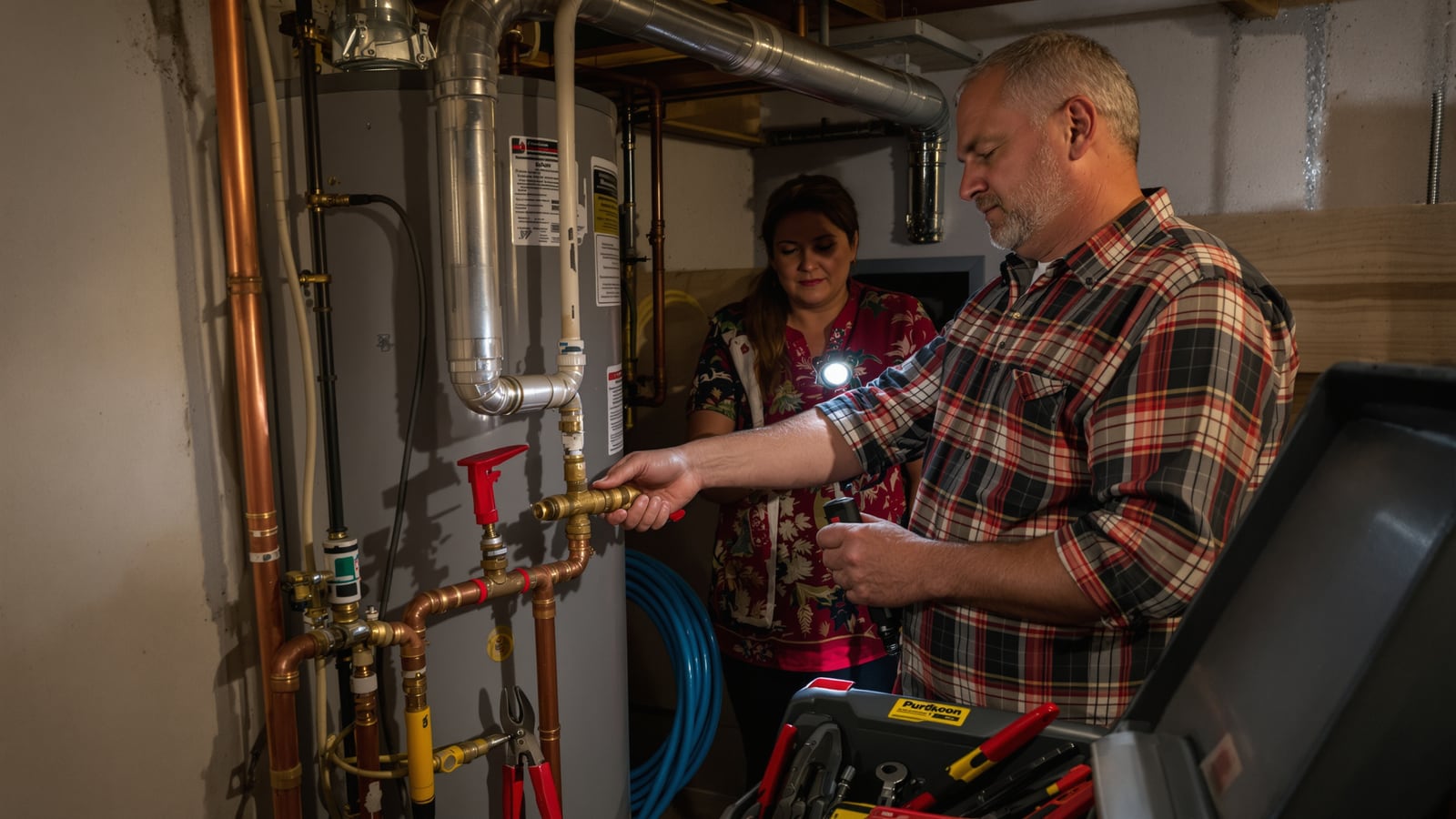
- Hand your kid the flashlight. A son or daughter holding the light learns more than any lecture could teach.
- Clean up as you go. Leave the room better than you found it.
- Get three written quotes, and hire licensed, insured people who explain the job.
- Help a neighbor with the two-man job, and don't take their money.
- Double your time estimate. Then tell your wife the doubled number.
- If you break it, tell her before she finds it. It's the same rule as everything else in a marriage. For more, see 100 Things Every Newlywed Couple Should Talk About.
- Ask for a second pair of hands when the job needs one.
- Buy good materials once. Cheap caulk costs you twice.
- A flashlight, a headlamp, duct tape, zip ties, a bucket and a stud finder live in one bin where everyone can find them.
- Know when to stop. A repair that got worse is now a pro's job, and that's no shame.
- Teach someone. A skill that dies with you isn't much of an inheritance. 100 Things Every Man Should Do Before He Turns Forty has more on that.
- Keep the house sound so the people inside never have to think about it. That's the whole job.
Marcus Vale
Editor-in-Chief
Twenty years in magazines, most of it deciding what to cut. Writes about work, discipline and the decisions that compound.

Watch
Worth an hour of your evening
More from 100 Things.
From channels we rate. Plays on YouTube.
Read next
GuideHomeWes Dunbar6 min
Ten tools that cover ninety percent of household repairs
GuideGearWes Dunbar6 min
The brush you keep and the roller cover you don't
GuideSkillsWes Dunbar5 min
Snake the shower drain before you pay somebody to
GuideBRO for HerNina Castellan6 min