

Frontier memoirs that read like the men were still talking
Six memoirs by the cowboys, freighters and ranchers who did the work, plus how to read a man who's grading his own life.
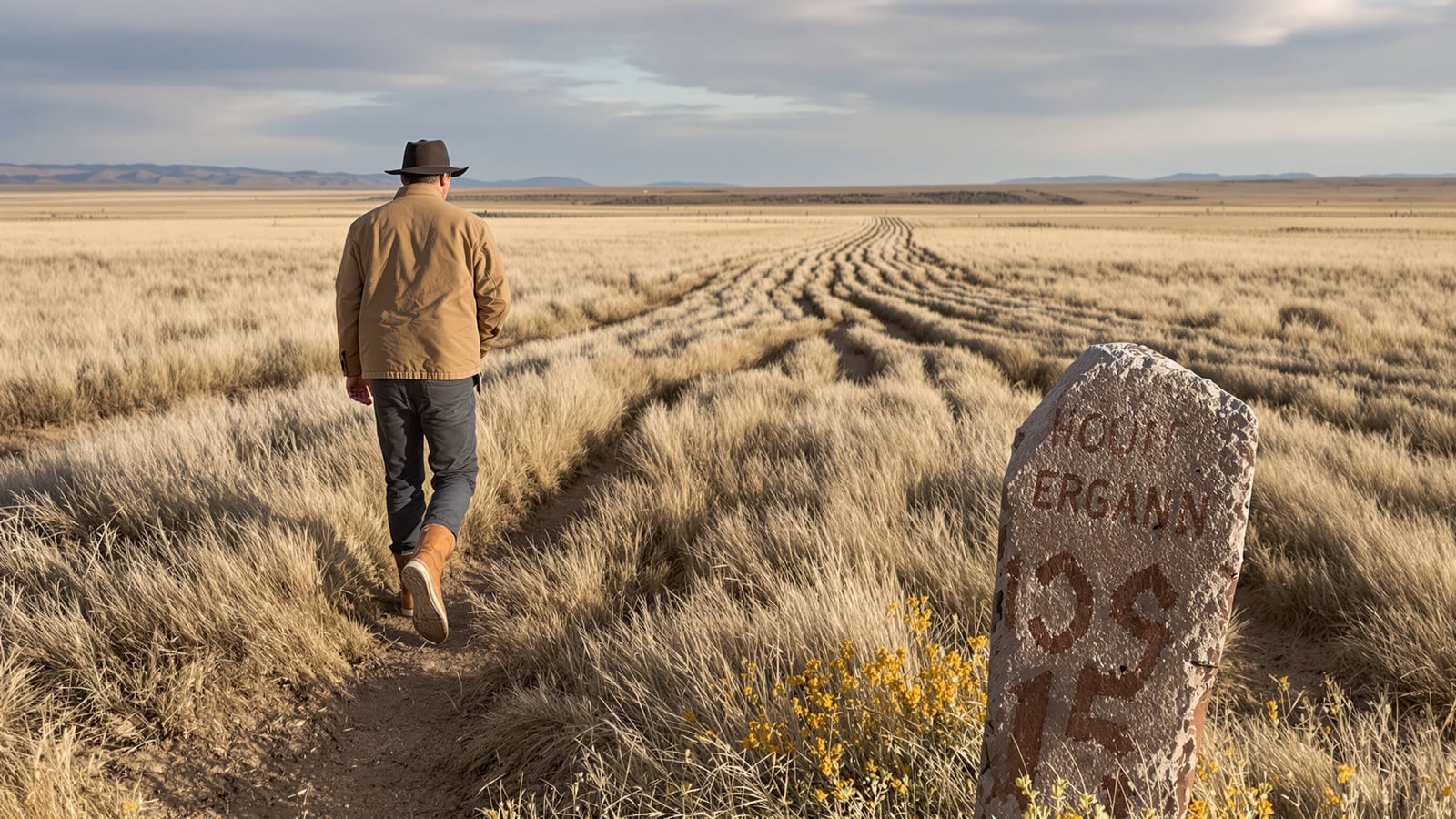
Quick answer: Start with Ezra Meeker's Ox-Team for the trail, We Pointed Them North for the cowboy, and Alexander Majors's Seventy Years on the Frontier for how a man ran a huge business with no phone and no bank down the street. Read one chapter at a time.
Ezra Meeker crossed the Oregon Trail in 1852 at twenty-two, behind oxen. In 1906, at seventy-six, he did it again, heading east in an ox wagon, because the trail was vanishing under fences and farms and nobody was marking it. Then he wrote the whole thing down.
That's the kind of man you meet in a frontier memoir. Not the movie version. The version who counts water.
What the movies leave out
Most of these books are about logistics. Grass, water, weather, debts, and whether the animals will last another forty miles. Gunfights are rare. Creditors are everywhere.
That's the pleasure. You watch men solve problems with no help coming, and you learn what they thought was worth bragging about. It was almost never the shooting. It was getting the herd there, the wagons through, the ranch through one more winter.
The six worth your time
Ox-Team: or the Old Oregon Trail, 1852-1906, by Ezra Meeker. The best place to start. Meeker walks the trail young, settles in Washington, builds a hop-farming fortune, and loses a good deal of it. Then he spends his old age driving oxen across the country to get the trail remembered. It's clean, plain and stubborn. It suits any reader, including a teenager. The last stretch, where an old man campaigns for something that earns him nothing, is the part you'll quote to your kids.
Seventy Years on the Frontier, by Alexander Majors. Majors ran freight wagons across the plains and helped launch the Pony Express in 1860, and the firm went broke. He was edited into print when he was nearly eighty. The detail men remember is his pledge. He made his drivers promise not to swear, gamble, or abuse the animals. Whether every man kept it is another question. But a boss who sets the standard in writing before the first mile is worth studying. Good for anyone who manages people. Some frontier violence, nothing gratuitous.
We Pointed Them North, by E.C. "Teddy Blue" Abbott and Helena Huntington Smith. Abbott was English-born, raised in Nebraska, drove Texas cattle north, and ended up in Montana married into a founding family there. Published in 1939, it's the funniest book on this list and the one with the most voice. It's also the roughest. Mature content flag: he's frank about drinking and about the cowtown vices, and a few chapters aren't for younger readers. A grown man can handle it. Skip ahead when it gets coarse; the trail chapters carry the book.
A Texas Cowboy, by Charles A. Siringo. One of the first cowboy memoirs ever published, in 1885. It's quick and cheerful and moves like a campfire story. Take it as one, because Siringo wasn't above polishing his own legend. Flag: violence, drinking, and the casual attitudes of the era. Fine for older teens with a parent's nod.
Fifty Years on the Old Frontier, by James H. Cook. Cook was a cowboy, guide and scout who became a rancher in western Nebraska. It's less flashy than Siringo and more useful. You learn how a ranch was actually started and held together, and how a man's word worked as currency. Flag: hunting and frontier conflict, told matter-of-factly.
Ranch Life and the Hunting-Trail, by Theodore Roosevelt. The odd one out, since Roosevelt was a wealthy Easterner. But he went to the Dakota Badlands in 1883 and did the work, and he wrote about it with real respect for the men beside him. It's a good book about earning your place among people who don't care who your father was. Hunting scenes throughout.
Read them like a skeptic
These are men describing their own lives, usually decades later. Memory flatters. Some had a co-writer who liked a good story more than a precise one. Nat Love's The Life and Adventures of Nat Love, from 1907, is a real and worthwhile account by a former slave who became a cowboy. But historians dispute some of its bigger claims, and the swagger is part of the book. Read it for the life and the voice, not as a court record.
Two habits help:
- Notice what he brags about. It tells you what the men around him valued.
- Notice what he skips. Failure, debt and dead partners get a sentence, if they get one at all.
Some of these authors write about Native peoples in harsh or one-sided ways. That's testimony about what the writer believed, not a final verdict on anybody. Reading it that way is plain good history.
Make it a habit instead of a project
These books suit a short attention span, and that's a point in their favor. Most are built from short episodes. A cattle drive, a river crossing, a bad winter. You can stop at the end of one and lose nothing.
Try twenty pages before bed, phone in another room. Keep the book where you'd normally reach for the screen. If you finish Ox-Team in a month, you've done better than most men do with any book all year.
You don't need to buy them. Most of the older titles are in the public domain and free online, and a library will get you the rest, including the 1939 Abbott book through interlibrary loan. If you haven't used yours lately, find out what a library card is actually worth.
When you want the same country told as fiction, the Westerns worth reading when it gets dark at five will keep you company. And if these memoirs leave you hungry for men who lived what they wrote, war memoirs from the men who were actually there is the next shelf over.
Pick one. Read twenty pages tonight. Meeker covered two thousand miles at the speed of an ox. You can manage twenty pages.
Marcus Vale
Editor-in-Chief
Twenty years in magazines, most of it deciding what to cut. Writes about work, discipline and the decisions that compound.

Watch
Worth an hour of your evening
More from Books.
From channels we rate. Plays on YouTube.
Read next