The sticker price is just the down payment
A $6,500 machine can cost you more than a $10,500 one by year four. Here's the math to run before you sign anything.
Quick answer: Before you buy any machine, price it over the years you'll own it. Add purchase price, repairs, fuel or consumables, and downtime, then subtract what you'll sell it for. Compare that number. The sticker is the smallest honest figure on the page.
The mower that won the bid
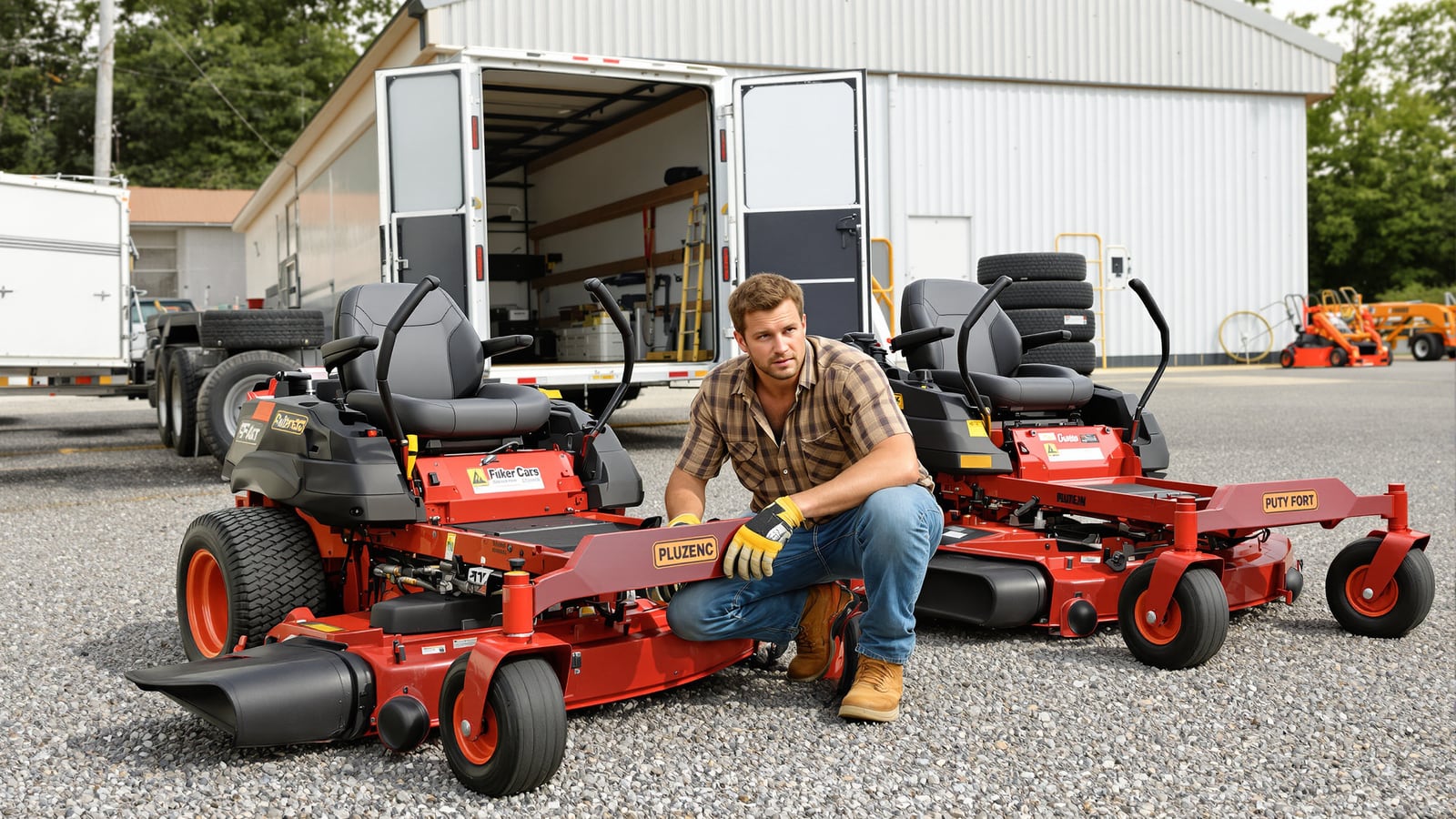
Say you run a lawn crew and you need a commercial zero-turn. One costs $6,500. The other costs $10,500. The first one saves you $4,000 today, and today is when you're staring at the bank balance.
Now run both over four years.
The figures below are made up to show the method. Swap in your own numbers from your own books and a straight talk with your dealer or mechanic.
Cheaper mower:
- Purchase: $6,500
- Resale after four years: $1,000
- Repairs: $1,500 a year, so $6,000
- Downtime: four days a year at $500 of lost margin each day, so $8,000
- Four-year cost: $19,500
Pricier mower:
- Purchase: $10,500
- Resale after four years: $4,000
- Repairs: $900 a year, so $3,600
- Downtime: two days a year, so $4,000
- Four-year cost: $14,100
The "cheap" one costs you $5,400 more. And you spent the whole time with a crew standing around waiting on a part.
Your numbers will differ. The shape of the result won't.
The five lines nobody writes down
Most owners price the purchase and stop. A real ownership cost has five lines.
- Purchase price, including delivery, setup, and the accessories you'll need on day one. The blades, the trailer hitch, the extra battery.
- Running cost. Fuel, power, filters, ink, belts, anything that gets used up. A machine that burns an extra gallon a day adds up over a season.
- Repairs and upkeep. Ask what the common failures are and what the parts cost. Ask how long parts take to arrive.
- Downtime. The line most people skip, and usually the biggest.
- Resale or trade-in value. Subtract it. Some brands hold their value and some are worth scrap in five years.
If you financed it, add the interest. A 7 percent loan on a machine that's already costing you in repairs is a second leak in the same boat.
Downtime is the real bill
A broken machine doesn't cost you the repair. It costs you the day.
Count it from the job side. Two guys on the clock, a customer waiting, a route that slides to Thursday, and a client who starts wondering whether you're reliable. A shop with a down press, a restaurant with a dead walk-in, a contractor with a trencher stuck in the yard. Same math every time.
So ask yourself one question about every machine: What does one lost day cost me? Revenue is the wrong answer. Use the margin you lose plus the wages you still pay. That's your daily downtime number, and it's the figure that makes the cheaper machine look expensive.
Then ask the dealer or the guy who owns three of them: how many days a year does this thing sit? Nobody can promise you a number. But a man who has run one for four years will tell you straight.
When cheap is actually right
Don't overcorrect. The expensive option loses sometimes.
- Low hours. If you'll run it fifty hours a year, a $10,500 machine never pays back its extra price. A used or budget model is the sensible buy.
- A short horizon. If the contract ends in eight months or you aren't sure the line of work will stick, buy light.
- Tight cash. Sometimes you can't spend the extra $4,000 without starving payroll. That's a real constraint, and it beats a spreadsheet. A sound business that's alive next year is worth more than the perfect machine you couldn't afford.
- Rent first. If you don't know how many hours the job needs, rent the thing for a month. You'll learn more than any brochure tells you, and you won't own a mistake.
Refuse one thing, though: borrowing to buy the cheap machine and then borrowing again to patch it. That's how an operator ends up working for the lender.
What to do before you sign
Run this checklist on any purchase over a few thousand dollars.
- Write down all five lines for both options. Paper or spreadsheet, it doesn't matter.
- Call two people who own the exact model. Ask what broke and how long it took to fix.
- Find the nearest repair shop or parts counter. A machine you can't get serviced within a day or two carries a downtime penalty built in.
- Put a number on one lost day.
- Check whether a backup exists. If you own two of the same machine, one breakdown is an inconvenience. If you own one, it's a crisis.
- Look at what the used market pays for the three-year-old version. That's your resale line, written by strangers with no reason to flatter you.
Take care of it, and it pays you back
Maintenance is the cheapest line in the whole equation, and it's the only one you fully control. Sharpen the blades on schedule. Change the oil when the book says to, not when you remember. Wash it when the last job is done. A machine that's cleaned and checked every evening will show you the cracked belt on Tuesday instead of letting it snap on Friday morning in front of a customer.
The same goes for borrowed or rented gear. Return it cleaner than it came, with a full tank, and the rental yard will remember you the next time you're desperate for the last unit in stock. That's worth money too, though it never shows up on the invoice.
If you're still working out which of your numbers to watch, read your own profit and loss in ten minutes a month is a good place to find where repair and fuel costs are quietly piling up. And the weekly numbers that keep a small business out of trouble will catch a downtime problem before it becomes a pattern.
The cheapest machine in the yard is rarely the one with the lowest price on it. It's the one that shows up to work every morning.
Ray Okonkwo
Money & Business
Former commercial banker turned small-business owner. Covers salary, credit, margins and the arithmetic nobody does before signing.

Watch
Watch how it's done
Picked for this article.
From channels we rate. Plays on YouTube.
Kyodo Partners
The cheaper machine that costs more | Total cost of ownership, step by step
Cat® Products
Use A Total Cost Of Ownership Approach
Read next