
The minivan wins more often than you want it to
Before you spend sixty grand on a three-row SUV, go sit in the third row with a car seat already installed.
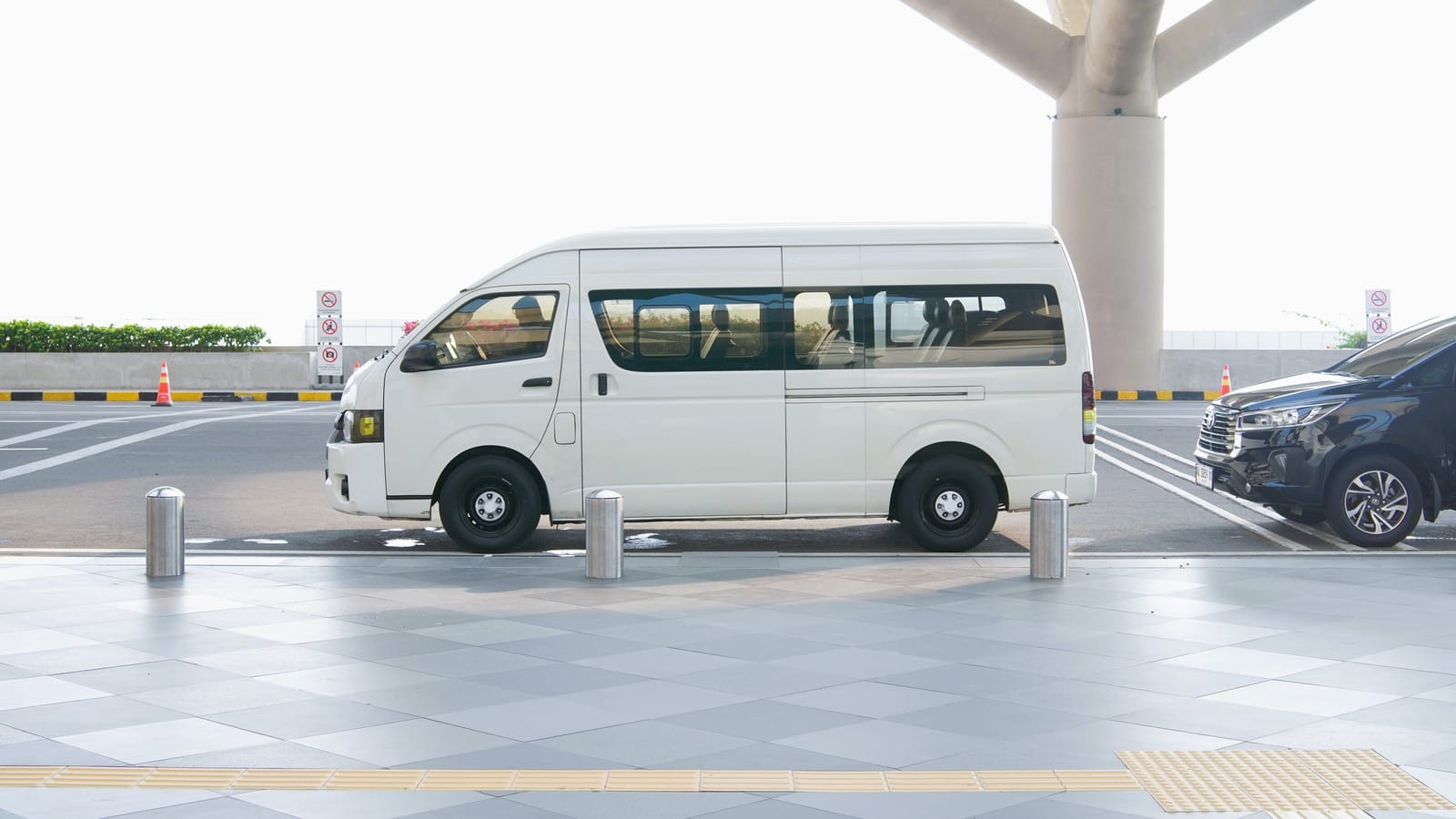
Go to the dealership with your actual car seats in the trunk. Not a tape measure, not a spec sheet on your phone. The real seats, the bulky convertible one and the infant bucket with the base, and the booster your six-year-old refuses to give up. Install them. Then climb into the third row while they're installed and see if you fit.
That twenty-minute exercise settles the minivan-versus-SUV argument faster than any review, including this one.
Most guys skip it because they already know what they want, and what they want is the SUV. I understand. I've stood in that showroom. The Telluride looks like something you'd drive to a job site and the Odyssey looks like something that comes with a coupon for oil changes. Nobody's ego has ever been improved by a sliding door.
But the family keeps growing, and physics doesn't care how you feel about it.
What the third row actually costs you
Three-row SUVs come in two flavors, and the difference is enormous.
A mid-size three-row, your Telluride, Palisade, Explorer, Grand Highlander, gives you a third row that's genuinely usable for kids and survivable for adults on a short trip. What it doesn't give you is cargo space behind that third row. Put all three rows up and you've got room for a stroller or a week of groceries. Pick one. Every family road trip in a mid-size three-row ends with a rooftop carrier strapped on or a kid holding a duffel bag on their lap for six hours.
A full-size, meaning Suburban, Expedition MAX, Wagoneer L, solves that completely. Third row up and there's still a genuine trunk back there. You'll pay for it in price, in fuel, and in the fact that it won't fit in a standard garage bay without you getting religious about how you pull in.
A minivan splits the difference and doesn't apologize. The floor sits low, the roof sits high, and behind the third row there's a deep well where the seats fold into. You get real cargo space and a third row your mother-in-law can occupy without resenting you.
The parking lot is where minivans win
Standard parking stall in America is about nine feet wide. Your SUV's rear door needs a good chunk of that to swing open far enough for a child to climb through, and if the car next to you parked close, it doesn't open far enough at all. So you hold the door with your hip, thread a wiggling toddler through a fourteen-inch gap, and lean in over the seat to buckle them while your back explains what it thinks of the arrangement.
Sliding doors need zero inches. The door goes back along the body. The opening is enormous and square. A four-year-old climbs in himself, walks between the captain's chairs to the third row, and sits down.
That's the whole pitch, and it's better than it sounds. Multiply it by twice a day, every day, for eight years.
The honest counterpoint: those sliding doors are motorized, and motorized things fail. Cables stretch, actuators quit, tracks get packed with road salt and a door starts opening halfway and sulking. It's one of the most common out-of-warranty repairs on a used van and it's not a cheap one. If you're buying used, open and close both doors ten times in the lot. Listen for grinding. Walk away from a van where one door hesitates.
Where the SUV genuinely wins
Three situations, and if you're in one of them, stop reading and buy the SUV.
You tow. Minivans are rated for roughly 3,500 pounds, which covers a small utility trailer or a couple of jet skis and nothing else. A mid-size three-row typically handles around 5,000. A full-size body-on-frame SUV gets you into boat and travel-trailer territory. If there's a camper in your future, the van can't do it and no amount of optimism changes that.
You live where the pavement ends. Ground clearance is real. Minivans have maybe six inches under them and a long front overhang that scrapes on steep driveways. If your road is gravel, rutted, or gets a foot of unplowed snow before the county shows up, that low nose will find every high spot.
You need eight seats with a full-size footprint. Some folks are past the point where a van's cargo well is enough.
Worth knowing: AWD isn't the dividing line anymore. Both the Sienna and Pacifica offer all-wheel drive. Put four proper winter tires on a front-drive van and it'll outclimb an all-season-shod SUV on a snowy hill every time. Tires, then drivetrain. That order, always.
The numbers that move the decision
The Sienna is hybrid-only and returns mileage in the mid-thirties combined. A three-row mid-size SUV lives in the low twenties. At fifteen thousand miles a year that's a meaningful gap, the kind that pays for a family vacation every couple of years.
The Pacifica has a plug-in hybrid version that covers most school runs on electricity alone. One catch worth knowing before you fall in love: the plug-in's battery lives under the floor, which means it loses the Stow 'n Go seats. Gas Pacifica, second-row seats fold into the floor and you've got a cargo van in thirty seconds. Hybrid Pacifica, you're wrestling those seats out onto the garage floor like everybody else.
The Kia Carnival splits the difference in looks, boxy enough that men who won't drive a minivan will drive it. Odyssey has the best-arranged interior of the bunch and the flexible second row that slides side to side, which matters more than you'd think when you're trying to reach a kid mid-drive.
Three car seats across
This is the test that eliminates most SUVs and most people don't run it until it's too late.
Two kids is easy in anything. The third one, or a carpool where your kid's friend needs a booster, means three restraints across one bench. Minivans generally manage it. Mid-size SUVs with captain's chairs in the second row physically can't, so the third car seat goes in the third row, which means somebody's climbing over a seat every single morning.
Check the LATCH anchor positions too, not just the width. Some vehicles put usable lower anchors only in the outboard second-row seats, which means your center seat needs a seat-belt install. That's fine and perfectly safe when it's done right, but read the manual instead of guessing. If you're unsure, most fire departments and hospitals have a certified child passenger safety tech who'll check your install for free. Twenty minutes, no charge, worth it.
Buy for the family you're going to have
The real mistake isn't picking the wrong one. It's buying for today's roster. Two kids under four feels like a small logistical problem and a mid-size SUV feels like plenty. Then there's a third, and the oldest starts hockey with a bag the size of a Labrador, and grandma moves closer and wants to come to the games.
Buy the vehicle that handles the family you'd be glad to have. Not the one that just barely handles the family you've got.
And if a sliding door is what stands between you and driving your whole family to church in one trip, the door isn't the problem.
Dean Shaw
Gear & Garage
Reads the warranty, the parts list and the long-term owner reviews before anything else. Trucks, tools, watches, and the cheap version that costs more.

Watch
Watch how it's done
Picked for this article.
From channels we rate. Plays on YouTube.
Edmunds Cars
Minivans: STILL UNDEFEATED | Minivan vs. SUV Test
The_Car_Mom
The Truth About 3rd Row Car Seats (Before You Buy an SUV)