
The Saturday morning truck detail, start to finish
Five hours, one driveway, and an order of operations that keeps you from scratching the paint you just cleaned.
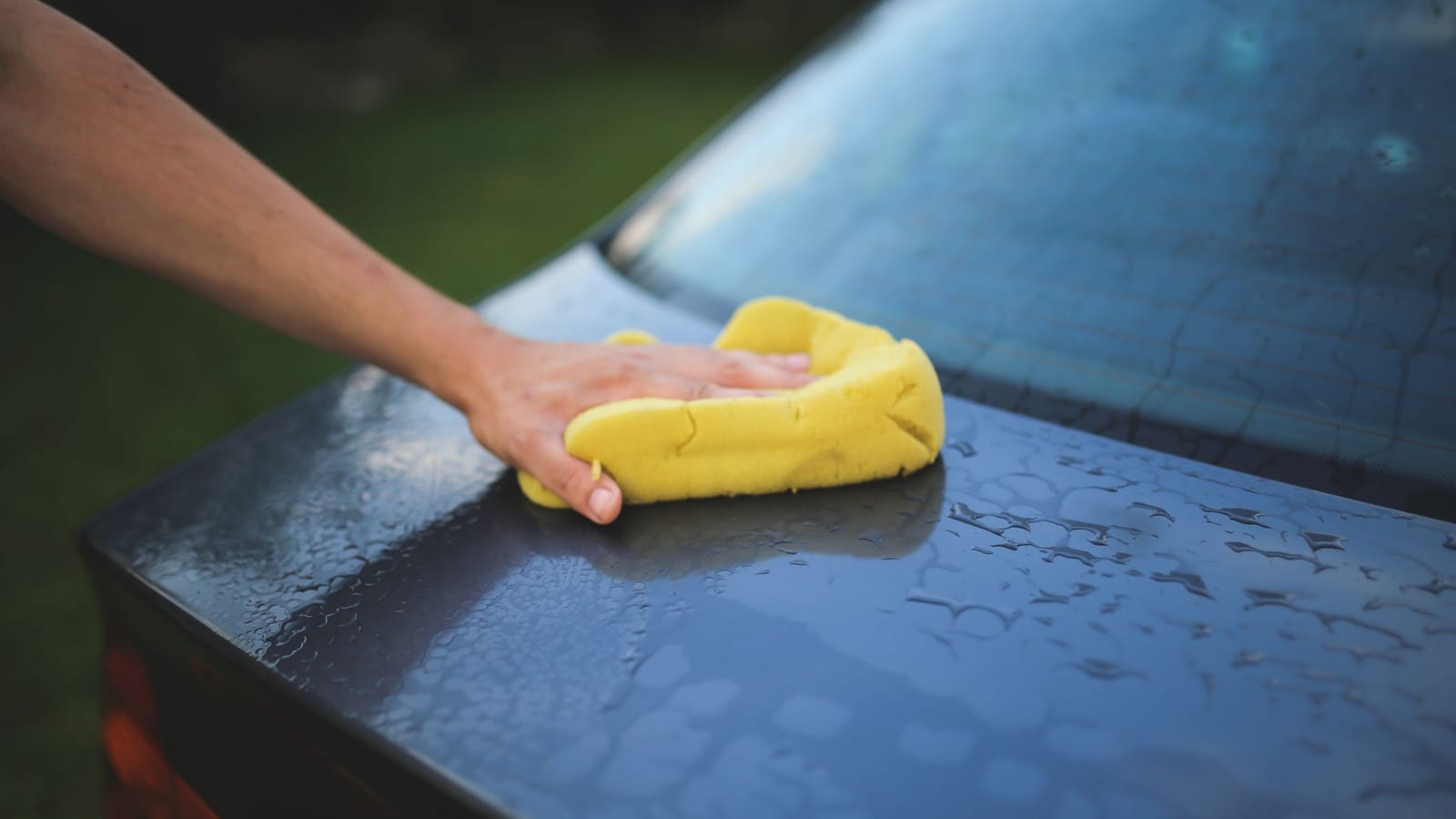
Start before the sun gets on the hood. If you can put a palm flat on the paint for five seconds and it's uncomfortable, you're too late — soap dries into streaks, and every product you spray flashes off before it can work. Seven in the morning, in the shade of the garage, is the whole trick. If your driveway faces east and has no shade, wash the passenger side first and work around the truck ahead of the light.
Now, the order. Wheels first, always, because brake dust and road grime are the dirtiest things on the vehicle and you don't want that water running down over panels you've already cleaned. Separate bucket, separate mitt, separate brushes. Label them if you have to. A wheel mitt that touches your door paint once will leave marks you'll see in every parking lot for the next two years.
What you actually need
You can do a real detail with less than most people think.
- Two five-gallon buckets with grit guards in the bottom
- A pH-neutral car shampoo. Not dish soap. Dish soap strips whatever protection is on the paint, which is the entire thing you're about to spend the morning applying
- One microfiber wash mitt for paint, a second for wheels, a stiff brush for tires, a soft detail brush for lug nuts and emblems
- A dedicated iron remover (the purple stuff that bleeds when it reacts)
- A large twisted-loop drying towel, and two smaller ones
- A spray sealant or ceramic detail spray
- Interior: shop vac with a crevice tool, an all-purpose cleaner diluted for interiors, two low-pile microfibers, a soft brush
- Glass cleaner and two waffle-weave glass towels
- Trim dressing for black plastic
The drying towel is where you should spend money. A cheap one pushes water around and drags grit. A good one pulls a whole door dry in two passes.
7:00 — Wheels, tires, wells
Spray the wheels with cleaner and let it sit a minute while you hit the tires with the stiff brush and some diluted all-purpose cleaner. Tires come up brown before they come up black. Keep scrubbing until the suds stay white.
Get the wheel wells. Everybody forgets them, and on a truck they hold half a county's worth of mud. A long-handled brush and a strong stream of water does it in three minutes a corner.
Rinse everything out before it dries.
7:30 — Pre-rinse, then contact
Rinse the whole truck top down. If you've got a foam cannon, lay foam on and let it dwell five minutes. That dwell is doing the work of about fifty wash mitt passes, and every pass you skip is a scratch you don't put in.
Then the two-bucket wash. Soap in one, clean rinse water in the other, grit guards in both. Mitt goes into soap, onto the panel, back into the rinse bucket, scrubbed against the guard, then back into soap. Wash top down. Straight lines, not circles — swirl marks are circles, and they show up worst on black and dark blue.
Save the rockers, the lower tailgate and the front bumper for last. That's where the tar and bug guts live.
8:15 — Decontamination, which is the part people skip
Rinse the soap off and run your hand over the hood inside a sandwich bag. If it feels like fine sandpaper, the paint has embedded contamination and no amount of wax will fix it.
Spray iron remover over the paint and wheels. Give it three to five minutes. It'll turn purple where it's dissolving brake dust and rail dust, mostly along the lower half of the doors and around the wheels. Rinse thoroughly.
Then clay, if it still feels rough. Clay bar or a clay mitt, plenty of lubricant, light pressure, small sections. Fold the bar over every panel so you're not dragging the grit you just pulled off.
Honest concession: if your truck lives on a gravel road and hauls hay twice a week, clay it once a year in the spring and don't think about it again. It's a paint-preservation step, not a cleaning step, and doing it monthly is a waste of a Saturday you could spend on the tailgate hinges instead.
9:00 — Dry, then protect
Dry with the big towel, laid flat and pulled rather than rubbed. A leaf blower gets water out of mirror housings, grille slats, badge edges and the gap behind the taillights, which is where the drips come from that streak your clean door ten minutes later.
Once it's dry, spray sealant. One panel at a time, thin, buffed off with a fresh towel before it hazes. A spray sealant or ceramic detailer on clean paint will hold up through two or three months of weather. A paste wax looks warmer on a dark truck and takes forty-five minutes longer. Your call. On a work truck, take the ninety seconds a panel and go do something else with the time.
Trim dressing on the black plastic last. Bumper caps, mirror housings, fender flares. Wipe it in, then wipe it back off with a dry towel so it doesn't sling onto the paint the first time it rains.
10:00 — Inside, and everything comes out
Floor mats out. Seats all the way forward, then all the way back. Crack the seat bottoms up if they fold.
Blow or brush the dust down from the dash and vents before you vacuum, not after. Crevice tool down the seat rails, along the door sills, into the seams where the seat back meets the bottom. Under the rear bench in a crew cab is a separate ecosystem. Expect crayons, a socket you've been missing, and roughly a cup of dirt.
Wipe hard surfaces with a damp microfiber and interior cleaner sprayed onto the towel, not the dash — overspray on glass is a twenty-minute problem. Soft brush for the vent slats, the steering wheel controls and the seams around the shifter.
Cupholders take the most abuse and get the least attention. Pull the liners out if yours come out. If they don't, a damp towel wrapped around your finger and a little patience.
11:00 — Glass, and then the bed
Glass last, because everything else throws dust. Two towels: one damp with cleaner, one dry to buff. Roll each window down two inches and clean that top strip, or you'll see the line every time you lower it.
Inside glass is harder than outside. The windshield haze is off-gassing from the dash, and it takes two passes. Wipe the inside horizontally and the outside vertically, so when you spot a streak you know which side it's on.
Then the bed. Sweep it, hose it, and check that the drain holes in the bedliner aren't packed. Hit the tailgate hinges and the latch with a shot of white lithium grease. Same for the door hinges and the hood latch. It takes four minutes and it's the difference between a tailgate that drops smoothly at year eight and one that groans.
Keeping it
You don't do this again next week. You do a twenty-minute version every other weekend: rinse, quick wash with the two buckets, dry, spray detailer. Twice a year you go back and do the decontamination step.
And if it's February, salt is on the roads, and the choice is between a touchless drive-through wash and nothing — take the drive-through. Salt sitting in the frame rails will cost you more than a soft-touch brush ever will. The perfect version of this can wait for April.
The first time you do the whole thing it'll take six hours and you'll find a spot you missed at noon on Sunday. Second time it's four. By the third you'll have the buckets filled before the coffee's done, and you'll know without looking which side of the windshield the streak is on.
Dean Shaw
Gear & Garage
Reads the warranty, the parts list and the long-term owner reviews before anything else. Trucks, tools, watches, and the cheap version that costs more.

Watch
Worth an hour of your evening
More from Cars.
From channels we rate. Plays on YouTube.
Read next