
What a Classic Car Actually Costs You Every Year
The purchase price is the cheap part. Insurance, storage and the stuff nobody warns you about is where the money actually goes.
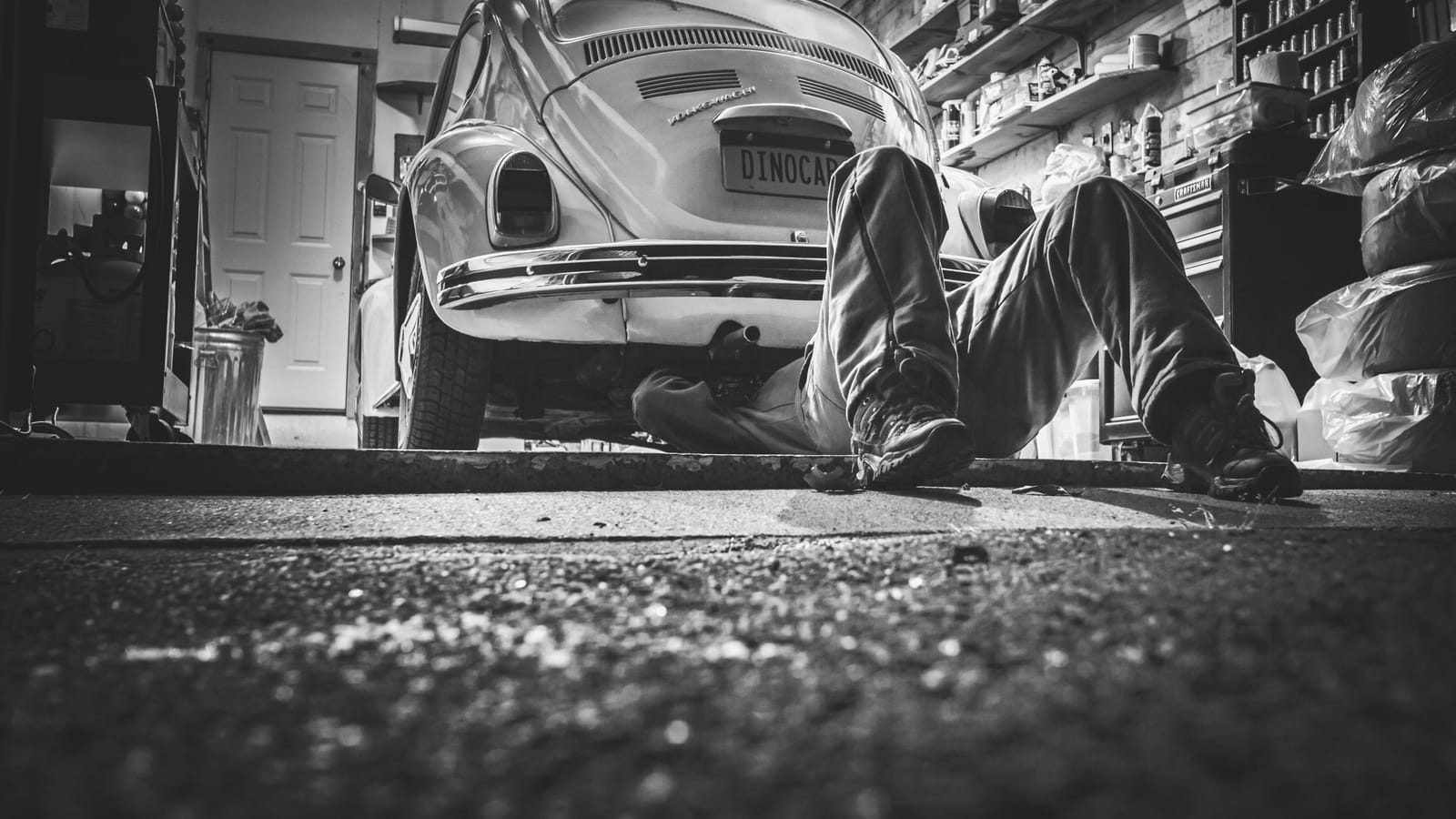
Say you buy a clean 1968 Mustang coupe for $28,000. You didn't spend $28,000. You signed up for a payment plan that never ends, and the monthly number isn't on any contract. Insurance, a dry place to keep it, fluids that go bad whether you drive or not, tires that age out with tread still on them, and one unscheduled repair a year that you didn't see coming.
Budget 8 to 10 percent of the car's value annually and you'll almost never get ambushed. On that Mustang, that's roughly $2,300 to $2,800 a year before you buy a single tank of premium. Most guys budget zero, then get quietly resentful of a car they used to love.
Let's go line by line.
Classic insurance is cheap, and the reason matters
Don't insure a 1968 anything on your regular auto policy. A standard policy pays actual cash value, and an actuary's opinion of a 57-year-old Ford isn't going to be your opinion of it. You'll total the car in a parking lot fender-bender and get a check that wouldn't cover the paint.
What you want is an agreed value policy from a collector specialist. Hagerty, Grundy, American Collectors and J.C. Taylor all play in this space. You and the insurer write down a number before anything happens. If the car burns, you get that number. No depreciation argument, no haggling with an adjuster who's never seen a C-code VIN.
The premium is usually a fraction of what you'd pay to insure a late-model sedan, which sounds like a trick until you read the conditions:
- The car sleeps in a locked, enclosed garage. Not a carport. Not a tarp.
- You own another vehicle for daily driving, and everybody in the household with a license is covered somewhere else.
- Mileage is capped. Tiers usually run around 1,000, 2,500 and 5,000 miles a year, with "unlimited pleasure use" at the top for more money.
- No commuting, no Uber, no hauling lumber.
- Clean driving record, and usually a minimum age, often 25.
Pleasure use is more generous than people assume. Car shows, Sunday drives, taking your daughter to breakfast. What it isn't is a backup car for when the truck's in the shop.
Two things to get right. First, declare your modifications. Crate engine, disc brake conversion, aftermarket wheels, all of it. An undeclared build is how a claim gets denied. Second, revisit the agreed value every two or three years. Values move. If your car has appreciated $9,000 and you're still insured at the 2019 number, you're self-insuring the difference and paying an insurer for the privilege of not knowing it.
Ask about spare parts coverage and trip interruption while you're on the phone. Both are usually small money and both come in handy the day a fuel pump quits 140 miles from your driveway.
Storage: the car is decaying whether you drive it or not
Here's the part nobody tells you at the auction. A car that sits doesn't rest. It rots quietly.
A concrete floor pulls moisture up out of the ground and pushes it into your floor pans. Lay down a heavy polyethylene vapor barrier under the car, or a cheap rubber mat. It's a $40 problem you can solve once.
Mice are the real enemy. They'll nest in the air cleaner, chew the wiring harness insulation, and turn seat foam into bedding. Dryer sheets and peppermint oil are folklore. Snap traps, checked monthly, work. Steel wool in the tailpipe works. Mothballs will perfume your interior for the rest of the car's natural life, so skip those.
Before the car sits for more than a month:
- Change the oil first, not in spring. Used oil carries acids and combustion byproducts. Don't let those marinate in your bearings all winter.
- Fill the tank to about 90 percent and add a fuel stabilizer, then run the engine 15 minutes so treated fuel gets through the whole system. Ethanol pulls water out of the air and a half-empty tank is a condensation factory.
- Put the battery on a maintainer, not an old trickle charger. A Battery Tender or CTEK costs less than the battery it saves.
- Overinflate the tires to 40 psi or park on tire cradles. Flat spots on bias-plies are permanent.
- Leave the parking brake off. Chock the wheels instead. Shoes rust to drums and you'll find out in the least convenient way.
- Use a breathable indoor cover. A plastic tarp traps moisture against the paint and sands it every time the wind moves.
If you don't have the garage, commercial collector storage in most metros runs somewhere in the range of $100 to $250 a month for a shared heated warehouse spot, and more for climate-controlled with your own bay. Get it in writing who's liable if the guy two rows over drops a transmission on your fender.
The annual budget, honestly
For a $25,000 to $30,000 car driven maybe 2,000 miles a year, plan for something like this:
- Agreed value insurance: a few hundred dollars a year, often less than $500.
- Registration and plates: most states offer historic or antique plates at a reduced rate, usually with use restrictions and sometimes an emissions exemption. Rules vary hard by state. Call your DMV, don't trust a forum post.
- Annual service: oil, filters, grease, a brake fluid flush every two or three years, coolant every few. Call it $300 to $600 if you're not turning the wrenches.
- Tires: they age out at six to ten years regardless of tread. Check the four-digit DOT date code on the sidewall. A set for an older car, mounted and balanced, is commonly $800 to $1,400, so amortize $150 a year and stop flinching.
- Storage: $0 if you have the garage, $1,200 to $3,000 if you don't.
- The surprise: carburetor rebuild, starter, master cylinder, a leaking rear main. Set aside $800 a year in a separate account and let it accumulate. It will get used.
Add a club membership if the car has a marque worth belonging to. Fifty bucks for access to guys who've solved your exact problem is the best value in the hobby.
The trade-off worth saying out loud
A $12,000 driver and a $60,000 show car cost nearly the same to keep. Insurance scales with value, but storage, tires, fluids and the surprise fund barely move. Which means the cheap car is proportionally the expensive one to own, and the expensive car is the better deal per dollar of car.
That's an argument for buying the better example the first time. It's also an argument, if you're honest with yourself, for not buying one at all. Some guys are happier renting a Cobra for a weekend twice a year and putting the other $2,500 into the college fund. That's not a lesser choice. It's just a different one, and nobody should make it for you.
Drive the thing
Sitting is what destroys these cars. Seals dry out, brakes seize, fuel varnishes, and every one of those fixes costs more than the gas you saved. Get it out once a month if the roads are clear and drive it long enough for the oil to come up to full temperature, 20 minutes at least. A quick idle in the driveway is worse than nothing, because you make condensation in the exhaust and never boil it off.
Put your kid in the passenger seat while you do it. That's the actual return on this investment, and it doesn't show up on any spreadsheet.
The cars that bankrupt people aren't the ones being driven. They're the ones under a cover in the dark, aging in place, waiting for a someday that keeps getting pushed to next spring.
Dean Shaw
Gear & Garage
Reads the warranty, the parts list and the long-term owner reviews before anything else. Trucks, tools, watches, and the cheap version that costs more.

Watch
Worth an hour of your evening
More from Cars.
From channels we rate. Plays on YouTube.
Read next