
What to check before you hand a stranger cash for a car
A private sale can save you thousands or cost you a transmission. The difference is about ninety minutes of work and the willingness to walk away.
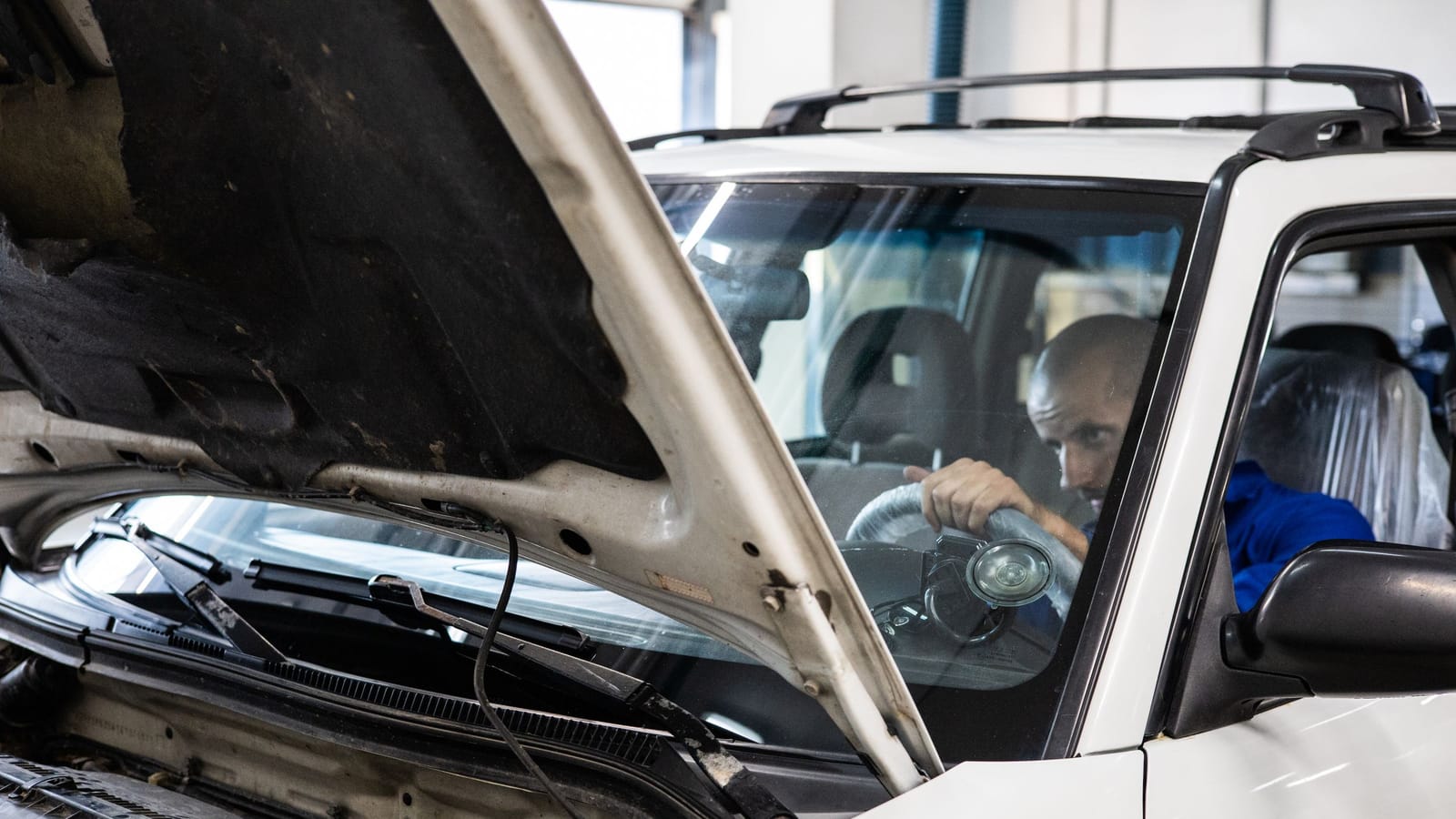
The single best thing you can do when buying a car from a private seller is take it to a mechanic you chose, not one the seller suggested. Everything else in this piece matters. That one thing matters most. An independent pre-purchase inspection costs far less than one surprise repair, and it turns a gamble into a decision.
If a seller won't let you take the car to a shop for an hour, the answer is no. Not "let me think about it." No.
Decide what you're buying before you start looking
Private sales reward people who know exactly what they want and punish people who are browsing. If you're open to anything, you'll fall for the first clean-looking car that's a little too cheap.
Pick two or three models. Read the owner forums for each one, specifically the threads about what breaks and at what mileage. Every car has a known weak point — a timing chain tensioner, a transmission that hates neglect, an oil consumption issue on a particular engine year. Know yours before you look at a single listing. It changes what you ask the seller and what you look at under the hood.
Then set your real budget, which is the purchase price plus a reserve for immediate maintenance. Assume the car needs tires, fluids, brakes or a timing belt. Sometimes it doesn't. Plan as if it does.
Read the ad like it's a document
Good private listings have a lot of photos, including the interior, the engine bay, the tires and the odometer. Bad ones have four exterior shots at dusk and the word "clean."
Look for what's missing. No engine bay photo usually means it's filthy or leaking. No dash photo means there's a warning light on. A price well under everything comparable means there's a story, and you'll find out what it's either before you buy or after.
Watch the language too. "Ran when parked." "Needs nothing." "Selling for a friend." "Must go today." Urgency is a tool, and it's being used on you.
The phone call filters most of them out
Call. Don't just text. You learn more in three minutes of conversation than in a day of messages.
Ask these, in roughly this order:
- Is the title in your name, and do you have it in hand? If the answer is anything other than a clean yes, that's most of your decision made.
- Is there a loan on it? A lien isn't a dealbreaker, but it changes how you pay and where you meet.
- How long have you owned it, and why are you selling?
- Do you have service records?
- Has it been in an accident, and has any panel been repainted?
- What does it need right now that you haven't fixed?
That last question is the good one. An honest seller will tell you about the cracked windshield and the rear brakes. A seller who says "nothing, it's perfect" is either not paying attention or not being straight with you. Either way it's useful.
Finally: ask them not to start or warm the car before you arrive. Cold starts tell you about compression, noisy lifters, blue smoke and rough idles. A warmed-up engine hides all of it. If you show up and the hood is warm, note that.
Meet at their house
A private seller with a legitimate car has an address. Meeting in a grocery store parking lot is a red flag for a reason.
There's an operation where somebody buys cars at auction, cleans them and resells them without ever putting the title in their name. It's called title jumping, and the seller is effectively an unlicensed dealer. Signs: the name on the title isn't the person standing in front of you, they've got two or three other cars for sale, they're vague about when they bought it, they want to meet somewhere neutral, and they're in a hurry.
Ask to see their driver's license and match it against the title. A normal person selling their own car won't blink at this.
The walkaround takes ten minutes and tells you a lot
Bring a flashlight and a small magnet. Do it in daylight.
Check that the panel gaps are even side to side, and that the paint texture and shade match from fender to door to quarter panel. Look down the side of the car at a low angle — waves and ripples in a reflection mean bodywork. A magnet that won't stick where it should means filler underneath.
Look at the tires. Uneven wear across the tread points to alignment or suspension problems. Four mismatched brands means the owner bought the cheapest thing available every time, which tells you how they handled everything else.
Under the hood, look for wet or crusty residue around the valve cover, the oil pan and the transmission. Pull the oil dipstick: it should be brown or black, not milky. Check the coolant reservoir for an oily film. Look at the underside of the oil filler cap.
Then look at the ground where the car's been parked. Stains don't lie.
The test drive needs to be longer than you think
Twenty minutes minimum, and it needs to include a highway stretch, a rough road and a parking lot.
In the lot, turn the wheel lock to lock at low speed and listen for clicking. On the highway, get to speed and take your hands briefly off the wheel to check for pulling. Brake hard once, from speed, where it's safe. Feel for pulsing through the pedal.
Turn the radio off the whole time. You're listening.
Inside, run everything. Every window, the AC on max, the heat, every seat adjustment, the wipers, the rear defroster, the locks, the backup camera. Small electrical faults are expensive out of proportion to how minor they seem.
Paperwork, then payment, in that order
Match the VIN on the dash, the door jamb sticker and the title. All three. Match the mileage on the title's odometer disclosure to the dash.
Pull a vehicle history report yourself using the VIN rather than accepting one the seller hands you. It won't catch everything, but it catches branded titles, reported accidents and odometer inconsistencies.
Write a bill of sale with both names and addresses, the VIN, the date, the price, the odometer reading and the words "sold as-is." Both of you sign. Both of you keep a copy.
For payment, meet at your bank during business hours. Get a cashier's check made out to the name on the title, handed over the moment the title is signed. Large amounts of cash in a driveway are a bad idea for both of you. If there's an outstanding loan, do the whole transaction at the lender's branch so the lien gets released and the title moves in one sitting.
Never wire money. Never pay a deposit to hold a car you haven't seen. Never engage with a seller who wants to ship a car to you through an "escrow service" — that's a scam with a decades-long track record.
Call your insurance agent before you drive it home, and check your state DMV's rules for title transfer deadlines and temporary tags. Those vary a lot, and the penalty for missing one is annoying.
The part most people skip
Negotiate after the inspection, not before. A mechanic's list of what the car needs is the only leverage that isn't just haggling. "It needs rear brakes and a serpentine belt, here's the estimate" is a conversation. "Would you take less?" is noise.
And be genuinely prepared to drive away. The car you didn't buy costs nothing. There's always another one listed on Saturday morning.
Dean Shaw
Gear & Garage
Reads the warranty, the parts list and the long-term owner reviews before anything else. Trucks, tools, watches, and the cheap version that costs more.

Watch
Worth an hour of your evening
More from Cars.
From channels we rate. Plays on YouTube.
Read next