
Winter Driving When You Have the Whole Family in the Car
The decision that matters most happens twelve hours before the first flake. Then there's the tires, the trunk, and knowing when to quit.
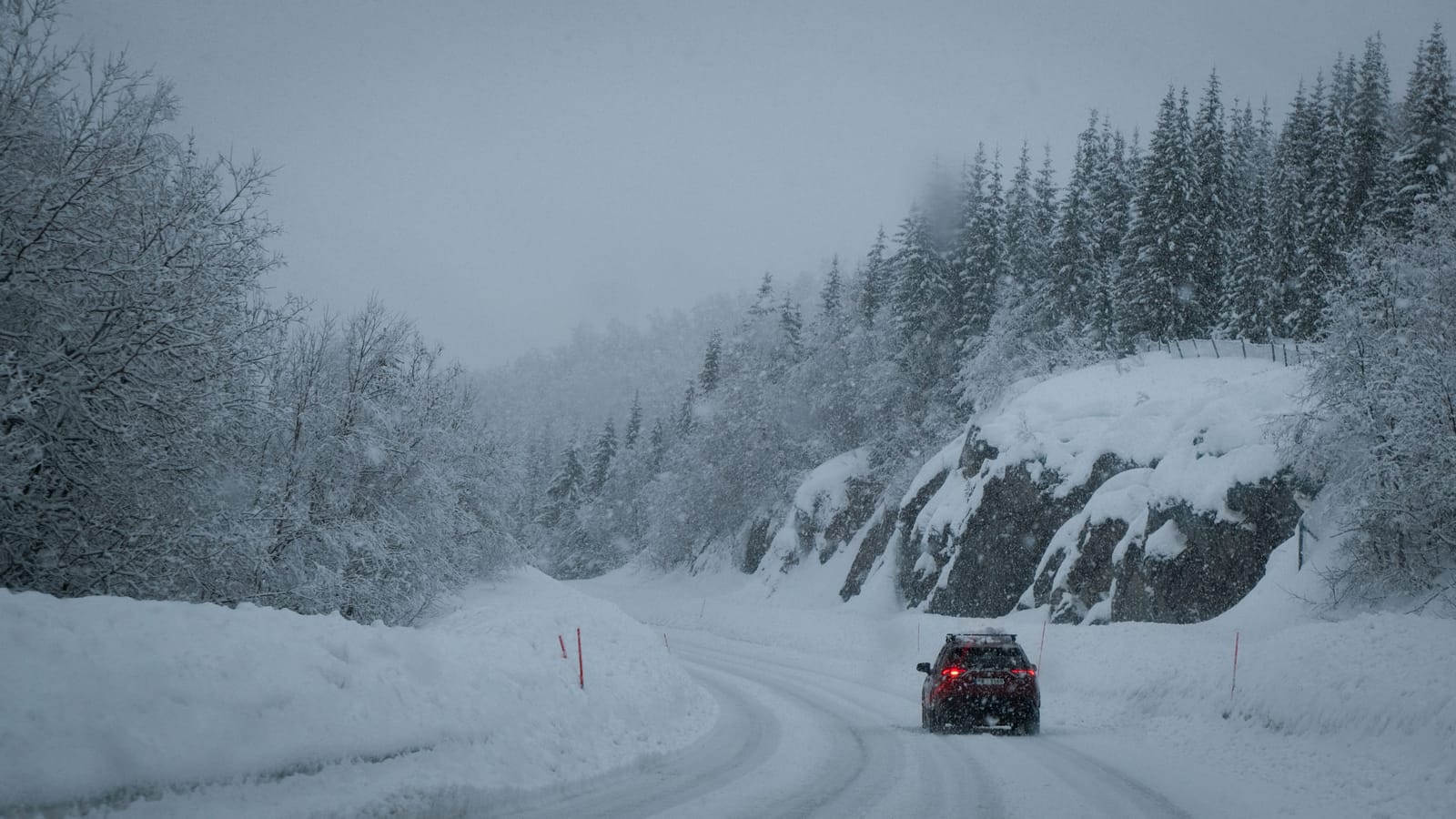
The best call you'll make in a snowstorm usually happens the night before, at the kitchen table, when you decide to leave Wednesday evening instead of Thursday morning. Everything after that's damage control.
Look at the timing, not the total. Eight inches falling over two days is a nuisance. Four inches falling between 3pm and 7pm, onto pavement that was 20°F all morning, on the same afternoon every school district lets out early, is the one that strands people. Check when the snow starts and when it gets heaviest, then put yourself on the road before or after that window. Not inside it.
Sometimes you can't. Shift work doesn't move, and neither does a hospital appointment. So plan for the drive you actually have to make.
Tires decide almost everything
Get this wrong and nothing else on this list saves you.
All-season tires are a compromise that mostly favors the other three seasons. Below roughly 45°F the rubber compound stiffens and grip falls off, even on dry pavement. Winter tires stay soft and the tread is cut to pack snow against snow, which is what actually holds you. If you live somewhere with four real winter months, a second set on steel wheels pays for itself the first time you stop short of a stop sign instead of sliding through it.
Tread depth matters more than brand. Stick a quarter upside down in the groove. If you can see the top of Washington's head, you're down around 4/32 of an inch and you're done for snow, whatever the sidewall says. The penny test people quote is the legal minimum, not the useful one.
Check pressure the morning you leave, when the tires are cold. Pressure drops about a pound for every 10 degrees the temperature falls, so a set you filled in October is soft in January.
The thing people get wrong: all-wheel drive helps you go. It does nothing for stopping or turning. An AWD crossover on worn all-seasons will pull away from a light beautifully and then slide into the intersection at the bottom of the hill exactly like everyone else. Confidence is the danger, not the snow.
The trunk, packed once, left alone
Build it in November and forget about it. Mine lives in a plastic tote so it doesn't migrate under the seats.
- A real shovel. Folding aluminum, not a plastic beach toy. You'll be digging packed slush out from behind a rear tire, on your knees.
- Sand or non-clumping cat litter. Twenty pounds. Clumping litter turns to grease when it gets wet, which is the opposite of the plan.
- Wool blankets, one per person. Fleece is fine until it's damp. Wool still works wet.
- A charged power bank and a cable that fits every phone in the family. Test it in October. Power banks self-discharge.
- Windshield washer fluid rated to -20°F, plus a spare gallon. The summer blue stuff freezes in the lines and then you're driving blind behind a salt truck.
- Headlamp, not a flashlight. You need both hands.
- A proper ice scraper with a brass or stiff plastic blade, and a long-handled brush for the roof.
- Food that survives cold. Granola bars turn into bricks. Jerky, nuts and peanut butter crackers stay edible.
- Water in the cabin, not the trunk. It'll slush, but it won't be a solid block.
Add a set of jumper cables or a lithium jump pack, and know where your tow hook screws in. Most cars hide it in the trunk with the jack, and the threaded hole is behind a pop-out panel in the bumper. Find it in your driveway, in daylight, not at night on a shoulder with your hazards on.
Keep the tank above half all winter. That's your heater budget.
Kids, coats and the harness
Car seat technicians will tell you the same thing every year and half of us still ignore it: a puffy winter coat doesn't belong under a harness. The loft compresses in a crash and leaves several inches of slack that weren't there when you clicked the buckle. Strap the child in wearing a thin layer, tighten so you can't pinch webbing at the collarbone, then put the coat on backwards over the top or throw a blanket over them.
Yes, it's annoying at 7am in a parking lot. Do it anyway.
Pack a plastic bag for car sickness, because stop-and-go on an unplowed highway produces it reliably. Download the movies before you leave. Cell service drops out in exactly the places where you're crawling along and most need the kids quiet.
And tell them the plan. "This is going to take longer than normal, we might stop for the night, everybody needs to be patient." Children handle almost anything if they know it's expected.
Driving it
Gentle in, gentle out. Every input you make gets smoothed: turn slower, brake earlier, accelerate like the pedal is connected to a full mug of coffee.
Double or triple your following distance. Eight to ten seconds behind the car ahead isn't paranoid in snow, it's the whole technique. Most of what you'll do is brake, and you need room to do it badly.
Turn cruise control off. If a tire spins on ice with cruise engaged, the system adds power at the worst possible moment.
Bridges and overpasses freeze first because cold air moves under them. So do shaded curves and the gap between two tall buildings downtown.
If you feel the back of the car step out, look where you want to go and steer there, smoothly. Your hands follow your eyes. Stay off the brake if you can.
Don't pass a snowplow. The road in front of it is worse than the road behind it, and plows throw a wall of spray that will blind you for the exact three seconds you're alongside. Sit back and be grateful.
Clear the roof. A slab of snow sliding onto your own windshield at 50mph is a genuinely terrifying experience, and it's worse for the driver behind you.
If you get stuck
Stay with the vehicle. People die walking for help in weather that would have been survivable in the driver's seat.
Before you run the engine, get out and clear snow away from the exhaust pipe. A blocked tailpipe pushes carbon monoxide back into the cabin and it's quiet, odorless and fast. Check it again every time the wind shifts.
Run the engine about ten minutes an hour for heat, and crack a downwind window an inch while it's running. Blankets the rest of the time. Everyone stays buckled in case someone slides into you.
Hazards on. If it's safe to step out, put a bright bag or a flare where an approaching plow driver will see it.
Knowing when to quit
The hardest part isn't the driving. It's admitting at exit 214, with two hours still to go, that you're not making it tonight.
Take the exit. A motel near the interstate costs less than a deductible, and far less than the rest of it. Feed everyone fries, let the kids swim in the pool if there's one, and finish the drive at nine the next morning on roads that have been plowed twice.
They'll remember the vending machine in the hallway. They won't remember the four hours you saved.
Dean Shaw
Gear & Garage
Reads the warranty, the parts list and the long-term owner reviews before anything else. Trucks, tools, watches, and the cheap version that costs more.

Watch
Worth an hour of your evening
More from Cars.
From channels we rate. Plays on YouTube.
Read next