Forming faith at home when nothing else reinforces it
Ten quiet minutes after dinner will shape your children's faith more than any program you can drive them to.
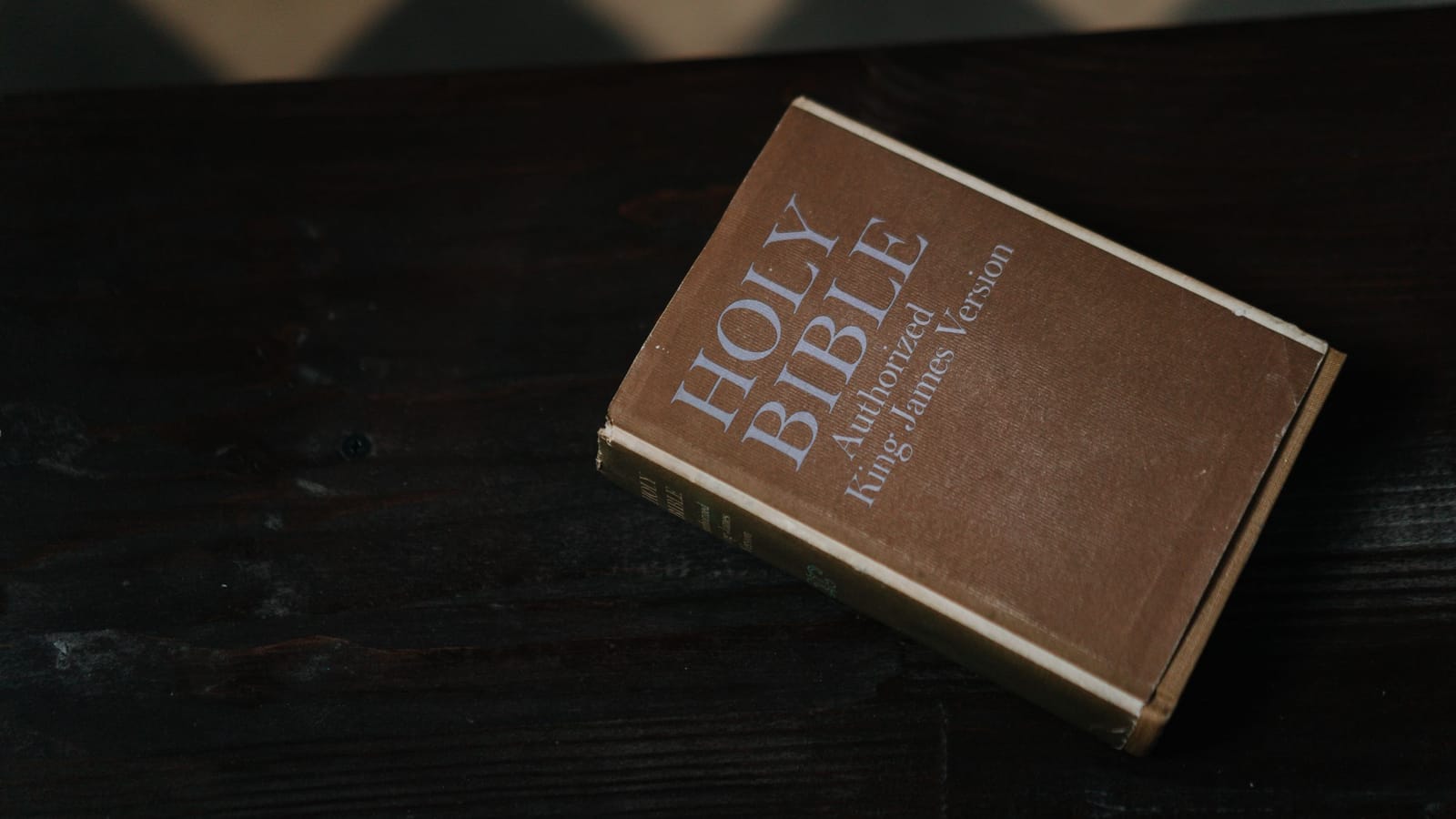
Ten minutes after dinner, every night, will do more for your children's faith than any program you can drive them to.
Not a great ten minutes. An ordinary, slightly awkward, sometimes interrupted ten minutes. A short passage read out loud. One question. A prayer where you name each kid and one real thing they're carrying. Then the table gets cleared and everyone goes back to normal life.
Frequency beats intensity, and it isn't close. A family that does something small nightly is forming a person. A family that attempts a forty-five-minute study once a month is producing an event nobody enjoys.
Deuteronomy 6 doesn't describe a curriculum. It describes a house. Talk of these things when you sit in your house, when you walk by the way, when you lie down, when you rise. That's not a program slot. That's the shape of a day.
Start smaller than feels respectable
Most men quit because they started too big. Pick one fixed point in the day and don't move it. Dinner is the obvious one. Bedtime works if your kids are young. Car rides work if your schedule is shredded.
Read a psalm. Read a chapter of a gospel, eight verses at a time. Ask one question that can't be answered with yes or no: "What did God do in that?" or "Who comes out looking worst, and why?"
Then pray. Out loud. Badly is fine. Your kids need to hear a grown man talk to God in plain language about a job, a bill, a sick grandmother, a sin he's fighting.
If you miss three nights, start again on the fourth without a speech about it. The apology tour is more damaging than the gap.
Don't outsource the part only you can do
A youth pastor gets your kid for maybe an hour a week, minus summers, minus sickness, minus the weeks he's away. You get thousands of hours. The math isn't ambiguous.
Church matters. Sunday matters. You go when you're tired, when the week was long, when the game is on, when your child is sulking in the car. That's most of the lesson right there. Kids can read effort, and they notice which commitments survive inconvenience.
But the weight of formation sits at your kitchen table. If church is where faith happens and home is where it isn't discussed, your kids will file it under activities. Activities get dropped at eighteen.
Teach the actual text, not the sanded-down version
Children's Bibles are fine for a five-year-old. They become a liability at fifteen if that's all a kid ever got.
A teenager who grew up on felt-board Noah and a smiling Abraham will eventually find out what those chapters actually say. If the version you gave him can't survive that discovery, he'll assume the whole thing was a story told to keep him in line.
So read the real thing. Read the hard parts. Let David be a murderer as well as a psalmist. Let Peter deny Christ. Let Job's friends be wrong and let the ending be strange. When your eight-year-old asks why God let that happen, you're allowed to say you don't fully understand it either, and that you've decided to trust the character of the one who does.
"I don't know" is a stronger answer than a confident guess your kid will later discover was invented. It also teaches them that faith and honesty aren't enemies.
Watch the culture with them, not for them
You can't build a bunker. You can build discernment, which travels.
Watch the show with them. Play the game with them. Then talk about it like an adult, not a prosecutor. What's this asking me to want? Who's the hero and what makes them heroic here? What's the promise being made about happiness, and does anyone you know actually live that way?
That conversation, repeated over years, gives a kid a working set of tools. A blanket ban gives them a list to work through the moment they leave your house.
Be specific about what you object to and why. "Because I said so" is a legitimate parental answer for a seven-year-old and a losing one for a sixteen-year-old. By the teenage years, your reasons need to be reasons.
Phones are a discipleship question, not a tech question
Whatever you decide, decide it on purpose and decide it early.
Some practical positions that hold up: no phones in bedrooms overnight, with one charging spot in the kitchen for everyone including you. A delayed smartphone, with a basic phone in the gap if you need to reach them. Accounts you can see, disclosed up front rather than discovered. Screens off during the ten minutes.
You will be the least generous parent in the class. Your kid will tell you so. Accept that and keep going.
And apply the same rules to yourself out loud. A father scrolling through the passage he just read has taught his children exactly what he thinks it's worth.
Put other believing adults at your table
Your children need three or four grown-ups besides you who love Christ and know their names. Not for emergencies. For ordinary Sunday lunches and dropping something off and stopping to talk.
This doesn't happen by accident. It happens because you invite people over, repeatedly, and let the house be a bit messy while you do it. Hospitality is one of the few parenting strategies that costs almost nothing and pays for twenty years.
The reason is simple. At some point your kid will stop finding you credible on the subject of God, temporarily, because you're his father and that's how it goes. If the only believer he respects is you, that season has nowhere to land.
When they doubt out loud, that's the good outcome
A question asked at your kitchen table is a gift. It means the kid still trusts you with it.
Don't flinch. Don't get loud. Don't send them to a pamphlet. Take the question seriously enough to sit in it with them, and say the truest thing you know.
The father in Mark's gospel gets it right in seven words: "I believe; help my unbelief." That man is in the Bible, and he's there as an example, not a warning. Tell your kids that.
Silent doubt is the dangerous kind. It hardens in private and surfaces at twenty-two as a settled decision nobody got to talk about.
What actually goes wrong
Fear-driven parenting. Kids can smell panic, and panic communicates that God isn't strong enough to hold them.
Faith presented as a list of prohibitions. If your children can name ten things Christians don't do and nothing Christ has done, you've handed them a cage instead of a Savior.
Scripture used as a discipline weapon. Quote a verse while you're angry and you've taught them the Bible is a stick.
Performance on Sunday that the house contradicts on Monday. This is the one that does the most damage and it's the one we're all closest to.
And the quiet one: making a child the family's spiritual project. Kids know when they're being worked on. Love them because they're yours.
The promise you were actually given
"Train up a child in the way he should go; even when he is old he will not depart from it." That's a proverb. It's wisdom about how things generally go, not a contract with guaranteed delivery. Faithful parents lose children to the world, and it isn't always because they got something wrong.
Paul had the better framing. He planted, someone else watered, God gave the growth. Your job is the planting, done daily, done badly some nights, done anyway.
Your kids won't remember your best argument. They'll remember that you got up on Sunday, that you said sorry when you were wrong, and that when the news was bad you prayed out loud at the table with your hand on their shoulder.
Start tonight. Eight verses and a prayer.
Josh Halloran
Christian Bro
Leads a mid-week mens group and has done for eleven years. Writes about faith as a practice rather than a position.

Watch
Worth an hour of your evening
More from Christian Bro.
From channels we rate. Plays on YouTube.
Read next