The Small Group That Lasts Starts With an End Date
Ten weeks, eight people, a start time you keep and a Bible somebody actually opens. Everything else in a small group is negotiable.
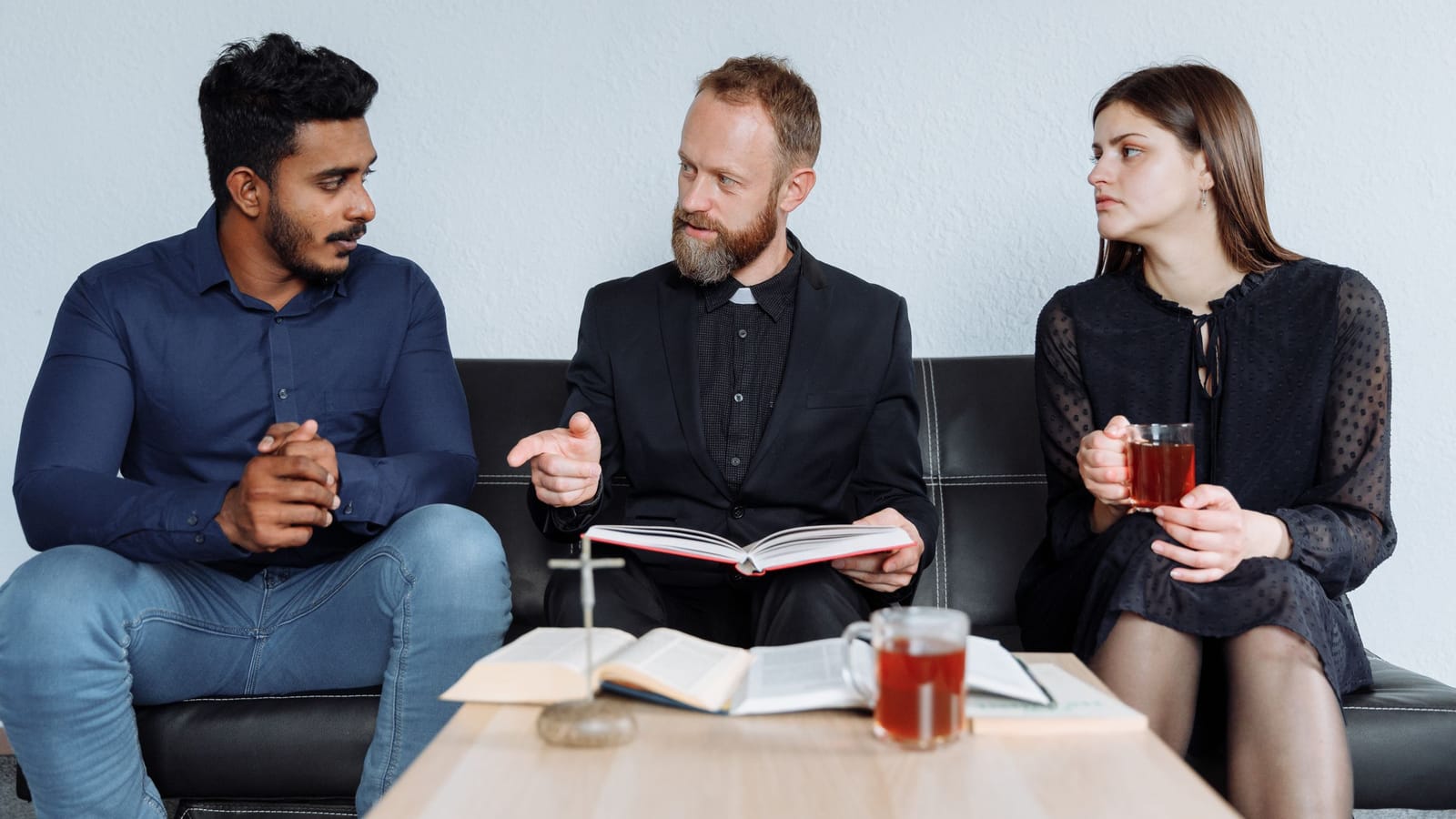
The fastest way to kill a small group is to make it permanent.
Open-ended groups drift. Month four, attendance is four out of nine and nobody can say what the group is for anymore, but nobody can quit either, because quitting feels like quitting church. So people just get busy. The group doesn't end. It dissolves, slowly, and everyone pretends they didn't notice.
Run in seasons instead. Ten weeks, twelve at most, with a known last night. At the end, everybody gets a clean exit and a genuine invitation to sign up again. You'll be amazed what people will commit to when they can see the far side of it. And the group that re-ups for a second season is a group that actually wants to be there, which is the only kind worth hosting.
Eight people, one room, no microphone
Six to ten. Under six and one absence guts the night. Over twelve and it stops being a conversation and becomes an audience, and the three quiet people never speak again.
You want a room where everyone can see everyone's face without turning around. That means a living room, not a fellowship hall. Circle the chairs. If somebody's sitting behind somebody else, you have a bad geometry problem, and bad geometry produces bad honesty.
Same night, same house, same time, every week. Rotating the location sounds fair and generous. In practice it produces a group chat full of addresses and two people who show up at the wrong door in the rain. Let one family host and let everybody else carry the load in other ways: one brings the main dish, one brings dessert, one arrives early to set up chairs, one stays late to help load the dishwasher.
Start on time. End on time. This is the whole thing.
Say 6:30 for food and 7:00 for the study, and then start the study at 7:00 with three people still chewing.
Say you'll pray at 8:15 and be out the door by 8:45, and then do it. Every single week.
Here's the part nobody tells you: ending on time is a spiritual discipline, not a scheduling preference. The couple with a newborn can come to a group that ends at 8:45. They can't come to a group that ends whenever the conversation runs out of steam, which in practice means 10:20. The nurse who's on at six in the morning can come. The guy who tried a group once and swore off them because it ate his whole evening can come.
A long night feels rich to the person talking and expensive to everyone else.
Read a book of the Bible, out loud, in order
Curriculum has its place. But the group that grows is the group that opens the actual text and works through one book, chapter by chapter, to the end.
Pick something with traction. Mark for a newer group. Philippians if you want four weeks that teach people how joy works under pressure. James if your people like getting punched. First Peter if there's suffering in the room.
Start by reading the passage out loud. All of it. It takes four minutes and it changes the entire night, because now nobody is bluffing. Then three questions, in this order, every week:
- What does it say? Just observation. What's actually on the page.
- What does it mean? Context, who's writing, who's listening, what came before.
- What do we do Monday?
That third question is where most groups chicken out. Force it. Go around the circle and have each person name one thing, out loud, specific enough to fail at. Not "be more patient." Try "I'm going to apologize to my daughter for Tuesday night." Then ask about it the following week. The asking is the discipleship. The Bible study is just the raw material.
The talker, the silence, and the fixer
Every group has one person who answers every question. He's usually not arrogant. He's just uncomfortable with silence and he loves this stuff.
Handle it privately and warmly. Tell him you need his help getting the quiet people talking, and ask him to hold his thoughts until two other people have gone. Give a man a job and he'll do it. Correct him in front of the group and you'll lose him.
Then learn to let silence sit. Count to ten in your head after you ask a question. It feels like an hour. Somewhere around eight, the person who's been thinking the longest starts to talk, and it's usually the best thing anybody says all night.
The fixer is harder. Somebody shares something heavy, and before it's even out of their mouth the advice starts flying: try this counselor, read this book, have you considered. Make it a rule that when somebody shares, the first response isn't a solution. It is "thank you for telling us." Then you pray for them, by name, right then, before moving on.
Rejoice with those who rejoice, weep with those who weep (Romans 12:15). Notice what's not in that verse. No instruction to have a plan.
Men and women in the same room
Co-ed groups are worth the complexity. Husbands and wives hearing each other answer a question in front of other people is one of the great underrated engines of a marriage, and single men and women both need to see what a functioning marriage sounds like on an ordinary Tuesday rather than in a sermon illustration.
Two guardrails make it work.
First, don't use group time to make a point at your spouse. If your answer to the study question is really a complaint you've been rehearsing in the truck, put it away and have the conversation at home. Everyone in the room can tell, and it makes the whole group less safe.
Second, split the room a few times a season. Men in the garage, women in the kitchen, an hour each. Some things get said honestly among men that don't get said in a mixed room, and the same is true in reverse. That's not a failure of the co-ed model. It's just how people are built. James says to confess your sins to one another and pray for one another, that you may be healed (James 5:16). Confession needs a smaller, sex-specific room more often than the mixed circle admits.
Write the prayer requests down
Get a cheap notebook. One person keeps it. Every week you write the requests down, and every week you read last week's back before you pray.
This does two things. It kills the vague request, because "just pray for my situation" looks strange on paper next to "Dave's MRI is Thursday at 9." And it lets you see answered prayer, which is the single most faith-building experience available to a room full of ordinary people. Six months in, you flip back through and realize God did about eleven things you'd already forgotten to thank Him for.
Show up between Tuesdays
The group becomes real the first time somebody needs a truck.
Somebody's mom dies. Somebody's laid off. Somebody's water heater lets go at eleven at night. If the group only exists from 7:00 to 8:45 on Tuesdays, it's a class. If three people show up at the hospital, it's a church. Bear one another's burdens, and so fulfill the law of Christ (Galatians 6:2) was never a Tuesday-night activity.
So build the reflex early, while the stakes are low. Watch somebody's kids so they can go to a doctor's appointment. Bring the meal. Go to the recital. Send the two-line text on Thursday that says you prayed for the thing they mentioned.
Keep one chair empty on purpose, and talk about who might fill it. Groups that never add anybody turn inward within a year and start mistaking comfort for depth.
Ten weeks. Eight people. A book of the Bible and a notebook. That's it, and it will change more about your next decade than the last conference you paid for.
Cal Brennan
Fitness
Strength coach. Trains fathers, tradesmen and desk workers, which means programs that survive a bad week.

Watch
Watch how it's done
Picked for this article.
From channels we rate. Plays on YouTube.
LifeWay Leadership
Practices of a Small Group Leader: Leading an Effective Bible Study Conversation
Lifeway Christian Resources
What Is a Small Group Leader? | Tips for Bible Study Leaders
Read next