Two thousand years of church history in twelve hinges
Most of us know Acts and whatever year our own church was founded. The 1,900 years in between is where your faith got its spine.
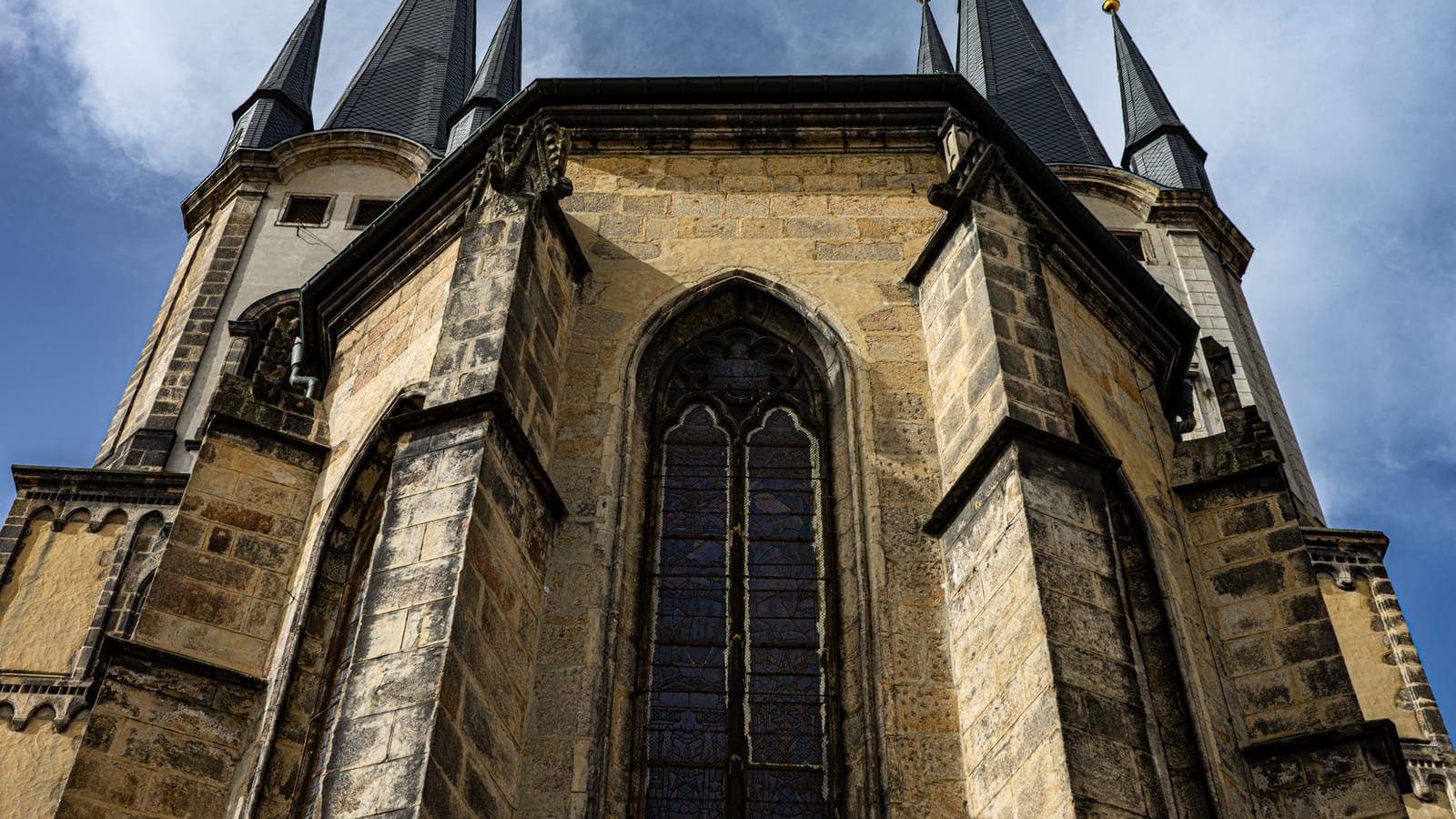
Most Christian men know two chapters of church history. There's the Book of Acts, and there's the year their church got its building. Everything in between is a fog with a few shapes moving around in it. Luther nailed something to a door. There were Crusades, and they were bad. Somebody named Constantine did something, probably shady.
That gap costs you. When your twelve-year-old asks where the Bible came from, "God gave it to us" is true and also not an answer to the question he asked. When a coworker says the church invented the divinity of Jesus at a council in the 300s, you either know what happened at Nicaea or you change the subject.
So here's the spine of it. Twelve hinges. You can carry these in your head, and each one has a door you can open later.
1. One generation, AD 30 to about 100
Everything that anchors your faith happened fast. Crucifixion and resurrection around AD 30 to 33. Pentecost days later. Paul writing letters to real congregations in Corinth and Philippi within twenty-five years of the empty tomb, while eyewitnesses were still alive to correct him. By the end of the first century, every document in your New Testament existed.
That speed matters. This wasn't a legend that had two centuries to cool and harden. It was a movement of people who had seen something and could not stop saying so.
2. Three centuries with no power at all, 64 to 313
Nero blamed Christians for the fire in Rome in 64. Peter and Paul died in that era. Then came wave after wave, worst of all under Diocletian starting in 303.
The scene to keep: Polycarp, bishop of Smyrna, an old man who had known the apostle John, standing in a stadium around AD 155 while the governor offered him an easy out. Just curse Christ. His answer, as the early account records it, was that he'd served Christ eighty-six years and Christ had never done him wrong.
For nearly 300 years the church had zero political protection and grew anyway. Remember that the next time somebody tells you the faith depends on winning an election.
3. Nicaea, 325
Constantine legalized Christianity in 313, and the pressure changed overnight from persecution to politics. A priest in Alexandria named Arius started teaching that the Son was a created being. Not eternal. A very high creature, but a creature.
Roughly 300 bishops met at Nicaea in 325 and said no. The Son is "of one substance with the Father." They didn't invent Christ's divinity there; they drew a boundary around what the church had been worshiping since Pentecost. Athanasius spent decades in and out of exile defending that line when the political winds went the other way.
The trade-off nobody should skip: imperial favor gave the church schools, safety and stone buildings. It also gave the church a taste for the emperor's hand on its shoulder, and that bill came due repeatedly for the next 1,500 years.
4. The canon, 367 and 397
Athanasius listed all 27 New Testament books in a festal letter in 367. A council at Carthage affirmed the list in 397. What those men were doing was recognition, not election. They were asking which books the churches had actually been reading in worship for generations, and which ones came from the apostles.
Say that to your kid plainly. The church didn't pick the Bible out of a hat. It recognized what it had already been living on.
5. Augustine, 386 to 430
A brilliant, restless North African chased every pleasure and every philosophy he could find, wrecked his own life doing it, and got converted in a garden in Milan at 31. His Confessions is still the most honest book any man has written about his own appetites. When Alaric's Goths sacked Rome in 410 and pagans blamed the Christians, Augustine answered with City of God.
6. Benedict's Rule, around 530
Rome collapsed. A man named Benedict wrote a short, unglamorous rulebook for communities of monks: fixed hours of prayer, manual labor, obedience, no heroics. Those communities kept literacy, agriculture and manuscripts alive across centuries of chaos in Europe. Every Bible you've ever held passed through the hands of men copying by lamplight because of that discipline.
7. The Great Schism, 1054, and the Crusades from 1095
East and West split in 1054 over authority and a clause in the creed, and the split has never healed. Four decades later the pope called the First Crusade. Say the hard part out loud: whatever you make of the original defensive rationale, crusading produced massacres, the sack of Christian Constantinople in 1204, and centuries of wreckage done under the sign of the cross.
A man who can't tell that story honestly has no credibility when he tells the good parts.
8. Print and Reformation, 1415 to 1536
Jan Hus was burned at Constance in 1415 for saying things Luther would say a century later. The difference was Gutenberg. Movable type arrived in the 1450s, and suddenly a pamphlet could outrun a bishop.
Luther posted 95 theses in Wittenberg on October 31, 1517, and stood before the emperor at Worms in 1521 refusing to recant. William Tyndale put the New Testament into plowman's English and was strangled and burned for it in 1536. Roughly eighty percent of the King James wording traces back to his work. Calvin published his Institutes the same year Tyndale died.
Rome answered at the Council of Trent, 1545 to 1563, which reformed real abuses and hardened the doctrinal divide. The King James Bible landed in 1611.
9. Awakening and missions, 1738 to 1807
John Wesley's heart was "strangely warmed" at Aldersgate in May 1738, and he spent the next fifty years on horseback. George Whitefield preached to open fields in Britain and the American colonies. Jonathan Edwards wrote the theology underneath it.
Out of that came William Carey sailing for India in 1793 and the modern missionary movement, and William Wilberforce grinding through Parliament for twenty years until the slave trade was abolished in 1807. Revival that never reaches the statute book was never revival.
10. The confessing church, 1934 to 1945
German Christians faced a state that wanted the church as a chaplaincy for its own ideology. Most complied. A minority signed the Barmen Declaration in 1934 and said the church has one Lord and He isn't the Führer. Dietrich Bonhoeffer was hanged at Flossenbürg on April 9, 1945, weeks before the war ended.
11. The center moves, 1906 to now
Azusa Street in Los Angeles in 1906 launched a movement that now spans the globe. And over the last century the church's population center has shifted hard toward Africa, Asia and Latin America, while Western attendance has fallen. The churches growing fastest today are largely the ones with the least money and the most pressure.
12. Present tense
Christians are imprisoned and killed for the faith right now, in this calendar year. Church history isn't a closed file. You're in it.
What to do with this
Read one primary source a year, not a survey. Start with Athanasius, On the Incarnation. It's short enough to finish on a flight. Then Augustine's Confessions, then Bonhoeffer's The Cost of Discipleship. If you want one overview for the shelf, Justo González's The Story of Christianity is the standard.
Learn the Nicene Creed by heart. Not as a party trick. When somebody tells you Christians have always disagreed about everything, you'll be able to recite the floor they've agreed on for seventeen centuries.
Give your children one martyr's name. Polycarp works. So does Tyndale. Kids remember a man in a stadium at eighty-six years old far longer than they remember a principle.
Notice the pattern and stop panicking. The church has been strongest when it held nothing but the truth and weakest when it held the levers. Paul told the Corinthians that God chose weak things to shame the strong. Two thousand years of receipts say he wasn't being poetic.
You inherited this. Somebody copied it out by hand in a cold room so you could have it in your pocket. The least you can do is know his name.
Cal Brennan
Fitness
Strength coach. Trains fathers, tradesmen and desk workers, which means programs that survive a bad week.

Watch
Watch how it's done
Picked for this article.
From channels we rate. Plays on YouTube.
THE BEAT by Allen Parr
Church History EXPLAINED in FIFTEEN MINUTES! | A.D. 33 - PRESENT
Breaking In The Habit
Church History in (About) 15 minutes
Read next