
Quick answer: Pick one cheap meal you could make half asleep, set one standing night, and send the invitation before you clean. Scripture calls you to open your home. It never once calls you to impress anybody in it.
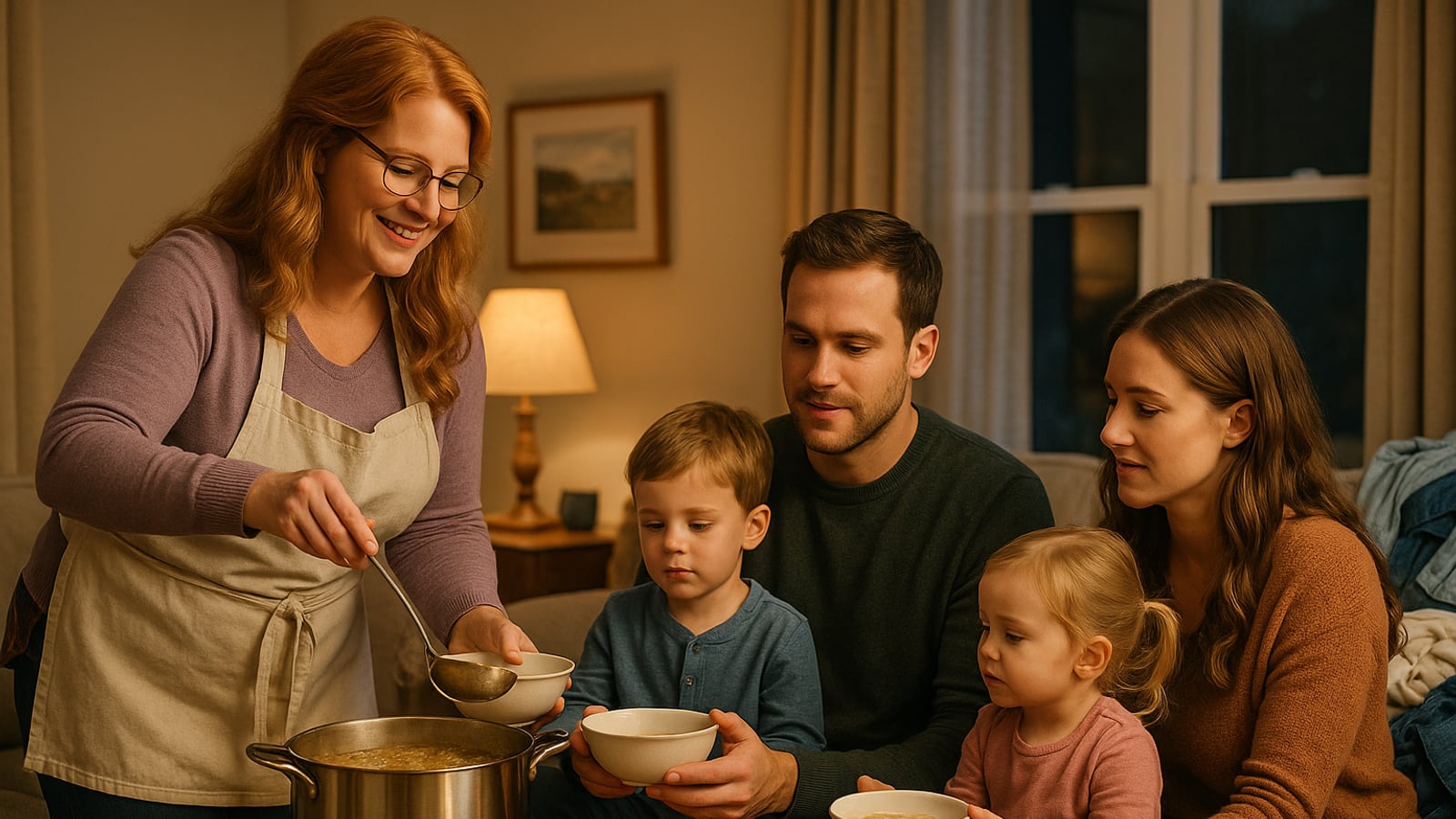
It's 5:15 on a Sunday. There's an eight-quart pot of white chicken chili on the stove, a sleeve of saltines on the counter, and one end of the couch is still buried under clean laundry nobody folded. The family who started sitting in the back pew last month will knock in fifteen minutes. You have two choices. Fold the laundry, or light a candle and let the laundry live.
Let it live. They didn't come to see your couch.
Martha did the hard part first
Luke 10 has a bad reputation among women who like to cook. Martha gets the scolding and Mary gets the praise, and a lot of us quietly side with Martha because somebody had to make dinner.
Read it again. Before Jesus corrects anything, Luke gives Martha credit: "a woman named Martha welcomed him into her house" (Luke 10:38, ESV). She opened the door. That was the hospitality, and it was good.
The trouble came later. "But Martha was distracted with much serving" (Luke 10:40, ESV). The problem was never the meal. It was the much. Too many dishes and too much fuss, until the guest in her living room became an audience for her effort instead of a person she was sitting with. Jesus answers her gently: "Martha, Martha, you are anxious and troubled about many things, but one thing is necessary" (Luke 10:41-42, ESV).
That's the whole difference between hosting and performing. Performing keeps you in the kitchen, watching the room to see how it's going over. Hospitality puts you at the table.
The New Testament word for hospitality, philoxenia, literally means love of strangers. It says nothing about table settings. Paul tells believers to "seek to show hospitality" (Romans 12:13, ESV), which is the language of pursuit. You chase it. You don't wait until you're ready for it.
Pick your pot and stop reinventing dinner
The fastest way to host more often is to decide once. Choose one or two meals that feed eight people for very little money, and make them your house meal. Guests will start to look forward to it. Nobody gets tired of good soup.
Meals that stretch well:
- A big pot of soup or chili with bread. Dried beans cost next to nothing and cover for a small amount of meat. Crackers or a grocery-store loaf finish it.
- A baked potato bar. Potatoes, butter, shredded cheese, a can of chili and some sour cream. Kids love building their own.
- Breakfast for dinner. Pancakes, scrambled eggs and a pound of bacon feed a crowd, and it feels like a treat.
- Rice and beans with toppings. Salsa, cheese, lime, a bag of chips on the side. Cheap, filling and easy to double.
- Spaghetti and a salad kit. The oldest trick there is, because it works.
"Better is a dinner of herbs where love is than a fattened ox and hatred with it" (Proverbs 15:17, ESV). Solomon had money for the ox. He still picked the herbs.
The annoying part nobody mentions is that the first time will feel too plain. You'll want to add a second side, then a dessert, then a signature drink in mason jars. Resist it. The plainness is what makes it repeatable. Plan something you can pull off without dread, and you'll host again next month.
Clean one room, then quit
Performing wants the whole house ready. Hospitality needs about twenty minutes:
- The bathroom your guests will use: toilet wiped, clean hand towel, a fresh roll within reach
- The table cleared and wiped down
- Trash taken out so the kitchen doesn't smell like last night
- Porch light on, so people know they're expected
- Shoes and backpacks pushed out of the doorway so nobody trips
Leave the rest. The toys in the corner and the laundry on the couch do something a spotless house can't. They tell your guest she's allowed to be a real person here too. The woman whose house is always perfect rarely gets invited back, because nobody feels they can match it. The woman with a basket of unfolded towels just told the tired young mom across the table that she's not the only one.
Let them bring something
When someone asks what they can bring, don't say "just yourselves." Give them a real job: a bag of rolls, a gallon of tea, ice cream for the kids. The early church ate this way. "Breaking bread in their homes, they received their food with glad and generous hearts" (Acts 2:46, ESV). Shared tables are the tradition. Letting people contribute makes them part of the evening instead of guests who owe you.
Then flip it. When you're the one invited, bring something, even if they told you not to. Stay after dinner to dry dishes. Carry the trash to the curb on your way out. Leave her kitchen a little cleaner than you found it. The women who do this are the ones everybody wants to have over.
Invite the people who can't invite you back
Jesus is blunt about the guest list: "When you give a dinner or a banquet, do not invite your friends or your brothers or your relatives or rich neighbors, lest they also invite you in return and you be repaid. But when you give a feast, invite the poor, the crippled, the lame, the blind, and you will be blessed, because they cannot repay you" (Luke 14:12-14, ESV).
In your town that might mean the widow who sits alone on the third row. The single guy from church who eats cereal for dinner four nights a week. A college student who's a thousand miles from home. The family who just moved and doesn't know anybody's last name yet.
These are the people who remember a bowl of chili for years. If you've been struggling to make friends at church, a table is where it tends to start. It rarely starts in the church lobby. And if you want the invitations to become a rhythm, ask for a specific Tuesday rather than "sometime."
Open the door and keep your backbone
Hospitality is service, and service still needs limits. A few that protect the table:
- Agree with your husband first. Pick the night and the frequency together. A home opened over one spouse's objection doesn't stay open long.
- Set an end time and keep it. "Dinner at 5:30, we'll wrap up around 7:30 for the kids' bedtime" is kind and clear. People like knowing.
- Choose a frequency you can sustain. Once a month you'll keep up with for ten years beats every Sunday for six weeks and then burnout.
- Fit it to your real life. If you work full time, Friday pizza on paper plates counts. If you're home with little ones, a Tuesday lunch with another mom and her toddlers counts. Neither is the lesser version.
And safety comes first, always. You're not obligated to bring anyone into your home who makes you or your children unsafe. If a guest opens up about abuse, addiction or a crisis, love her well at your table and then help her get to a pastor or a licensed counselor who can walk with her. Your kitchen can be a first step. It shouldn't be the only one.
Peter says to "show hospitality to one another without grumbling" (1 Peter 4:9, ESV). If you notice yourself grumbling at 4:45 on a Sunday, you've probably planned too big. Scale it back until it's something you're glad to do. That's what Proverbs 31 looks like: a woman whose home is a gift to other people, not a test she takes every weekend.
Nobody has ever driven home from dinner saying the soup was too cheap. They drive home saying somebody wanted them there.
Nina Castellan
BRO for Her
Runs the women-facing desk. Same standard, same tools, written for a different reader — not a softer one.

Watch
Worth an hour of your evening
More from Christian Women.
From channels we rate. Plays on YouTube.
Read next