How to tell a networking event from a wasted evening
Five filters that separate the rooms where something actually happens from the ones where grown men trade business cards by the shrimp.
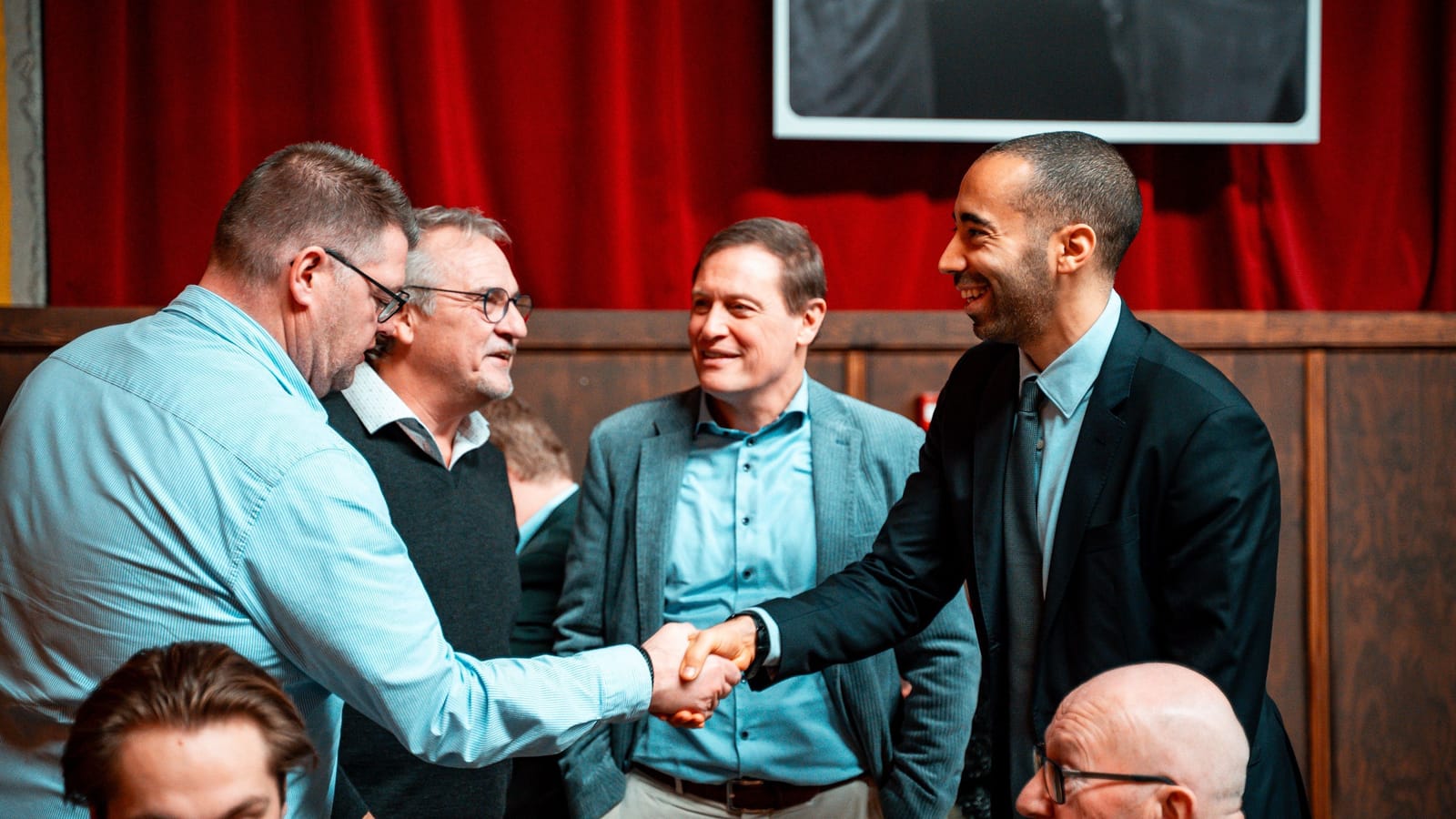
Start with the invitation itself. If the event description tells you what will happen (a talk, a demo, a panel, a walkthrough of a building, a tasting, a board vote) it's probably worth your Tuesday. If the description is mostly adjectives (dynamic, vibrant, connect with fellow professionals) you're being invited to stand in a hotel lobby bar with strangers who also have nothing to do.
A room with no reason to exist fills up with people who have no reason to be there.
That's the whole test, and it'll save you roughly thirty evenings a year. But you've still got to pick the two or three nights a month that are worth the babysitter, the parking garage, and the drive home at 9:15. So let's get specific about what earns them.
The event needs a job, and so do you
The best rooms are organized around a task. A code-review meetup where somebody actually puts code on a screen. A local chapter dinner with a speaker who's built something. A nonprofit board meeting where you're voting on a budget. A trade association's annual awards where the winners are people you'd want to work for.
Tasks give you something to talk about that isn't the weather or the parking. They also sort the room. People who show up for a technical talk on a weeknight are the kind of people who show up.
Then give yourself a job too. Email the organizer three days out and offer to work the registration table, run the mic, or help break down chairs. This is the single highest-return move in the whole business and almost nobody does it. You meet every person in the room by name because you're handing them a name tag. You have an obvious reason to talk to anyone. And at the end of the night, while the crowd streams out, you're stacking chairs next to the person who knows everyone in the city and has now watched you be useful for two hours.
Volunteering at the door beats a hundred handshakes. It's not close.
If you can't name three people going, it's a lottery ticket
Before you commit, find out who's actually attending. Some events publish a list. Some post the speaker and the sponsors, which tells you most of what you need. Some you can figure out by asking one person who went last year.
If you can name three people you want to talk to, go. If you can name zero, you're buying a lottery ticket with your evening. Occasionally a lottery ticket hits. I've met a client in a line for coffee at a conference I had no business attending. But you can't build a schedule on it, and your wife can't plan around it.
The corollary: the same event a second time is worth far more than a new event the first time. Nobody introduces a stranger. They introduce a regular. Show up to the same chapter meeting five times and by the fifth you're the guy who always comes, which in a city full of people passing through is a genuine credential.
Small and paid beats big and free
A free mixer with 300 people and an open bar sponsored by somebody who wants to sell you software isn't an event. It's a lead-generation exercise with a cash bar attached.
A seated dinner for 40 where the ticket is $85 and covers the meal is a different animal. The price is a filter. It means the people in the room made a decision. It also means somebody had to plan seating, which means you'll be sitting next to someone for ninety minutes instead of doing laps.
Look for formats that force conversation: assigned seats, a round of one-sentence introductions, breakout tables of six, a working session. Look for hosts who are individuals rather than brands. When a person puts their own name on a dinner, they curate it, because their reputation is the product.
Skip anything called "speed networking." Ninety seconds is enough time to exchange job titles and not one thing more.
The side room beats the main room
At any conference, the value is in the events orbiting it. The 7 a.m. run somebody organizes on LinkedIn. The invite-only dinner your vendor hosts. The after-party thrown by a company you don't work with. The main hall is for the badge scan. The side room is where people talk like humans.
Same principle applies at home. The rooms that shape a career often aren't labeled networking at all. The men's group at church. The shooting league on Thursdays. The youth soccer sideline where you spend two seasons standing next to the same four dads and find out in year two that one of them runs operations for a company you've been trying to reach for eighteen months.
Those relationships take a year instead of an evening. They also hold, which is more than you can say for a card handed to you by a stranger at a shrimp table.
Arrive early, leave early
Get there in the first fifteen minutes. The room is half empty, nobody's locked into a cluster yet, and people standing alone are actively grateful when you walk over. By 7:30 the room has hardened into circles of three and you're spending the night looking for a gap to stand in.
Set a hard exit. Three hours, home by nine. Tell your family the time and hit it. A guy who leaves at nine consistently is a guy whose family doesn't dread his calendar, and that matters more than any contact you'd have made in hour four.
One more thing before you leave: find the organizer and thank them by name. Ten seconds. They'll remember, because roughly nobody does it.
The next morning is the whole thing
Everything above is worthless if you skip this part. Within eighteen hours, send one email per person that's actually worth sending. Not "great meeting you." Send the article you mentioned. The name of the contractor. The link to the thing you described. Something with an object in it.
Then put a note in your calendar for ninety days out to follow up once, with something useful, asking for nothing. That's it. Two touches. If it turns into something, it'll turn into something on its own after that.
Keep a running list somewhere dumb and simple: the event, the date, who you met, what came of it. After a year you'll be able to see plainly which three events on your calendar are carrying the whole load and which eleven are costing you evenings you'd rather have spent at the dinner table.
Cut the eleven. Nobody's ever regretted that trade.
Marcus Vale
Editor-in-Chief
Twenty years in magazines, most of it deciding what to cut. Writes about work, discipline and the decisions that compound.

Watch
Watch how it's done
Picked for this article.
From channels we rate. Plays on YouTube.
CBS Mornings
How to navigate networking events and leave a lasting impression
Stanford Graduate School of Business
Tom Friel: How to Network
Read next