

Your seed phrase doesn't need a safe. It needs two homes.
No safe deposit box, no fireproof safe, no problem. Here's how to back up twelve or twenty-four words so fire, thieves and your own memory can't take them.
Quick answer: Write the words on paper, or better, stamp them into steel. Make two copies and keep them in two different buildings. Never photograph them, type them into anything, or store them in the cloud.
That's the whole system. The rest of this piece is how to do it cheaply, what goes wrong, and why a safe was never the point.
What you're protecting against
Your seed phrase is 12 or 24 words. Whoever holds them holds the coins, with no password reset and no customer service line. That's the appeal of self-custody, and it's the risk.
Three things destroy a backup. Fire and water take it. A burglar or a nosy houseguest finds it. Or you lose it yourself, because you moved, cleaned out a drawer, or forgot which book you tucked it into.
A fireproof safe covers one of those three. A bolted-down safe is also the first thing a burglar looks for. Plenty of people have a safe and still lose everything the day the house goes, because the one copy sat in the one building.
So skip the question "where's the safe?" Ask "where are two places nobody would think to look?"
Step one: write it down, and check it twice
Use a pen, not a pencil. Pencil smears and fades. Pen on plain paper in a sealed zip bag will last a long time if it stays dry.
Write each word in full, numbered, in order. Then read it back against the wallet screen one word at a time, slowly, with a second person watching if you can. Most seed phrase disasters aren't hacks. They're a transposed word that nobody caught until the day it mattered.
Only write the phrase when the house is quiet and nobody is looking over your shoulder. Don't do it on a video call. Don't do it near a camera.
Step two: upgrade to steel if you can
Paper handles most trouble. It doesn't handle a house fire or a burst pipe.
That's where steel comes in. Commercial stainless steel backup plates exist, and they're worth a look. You can also build one yourself with stainless washers or a blank plate and a set of letter punches from a hardware store.
The wordlist most wallets use has a handy property: the first four letters of each word are enough to identify it. So you only stamp four letters per word. Check that your wallet uses that standard before you rely on it, and when in doubt, stamp the whole word.
Stainless steel survives temperatures that a house fire reaches. Paper doesn't. A plate in a ziplock bag in a toolbox in a detached garage is already better protected than most people's single copy.
The annoying part is stamping. You'll misstrike a letter. Buy extra blanks and practice on scrap before you touch the real thing.
Step three: pick two homes, not one
This is the step people skip. One copy is a gamble. Two copies in separate buildings is a plan.
Where does the first copy go? Somewhere dull inside your own house:
- Inside a hollowed-out spot in something you'd never throw away, like a toolbox with a false bottom or the back of a framed print.
- Taped inside a rarely used appliance cabinet, in a sealed bag.
- Behind a loose baseboard or access panel you've already reworked.
Avoid the places every burglar checks: the sock drawer, the freezer, the closet shelf, the nightstand.
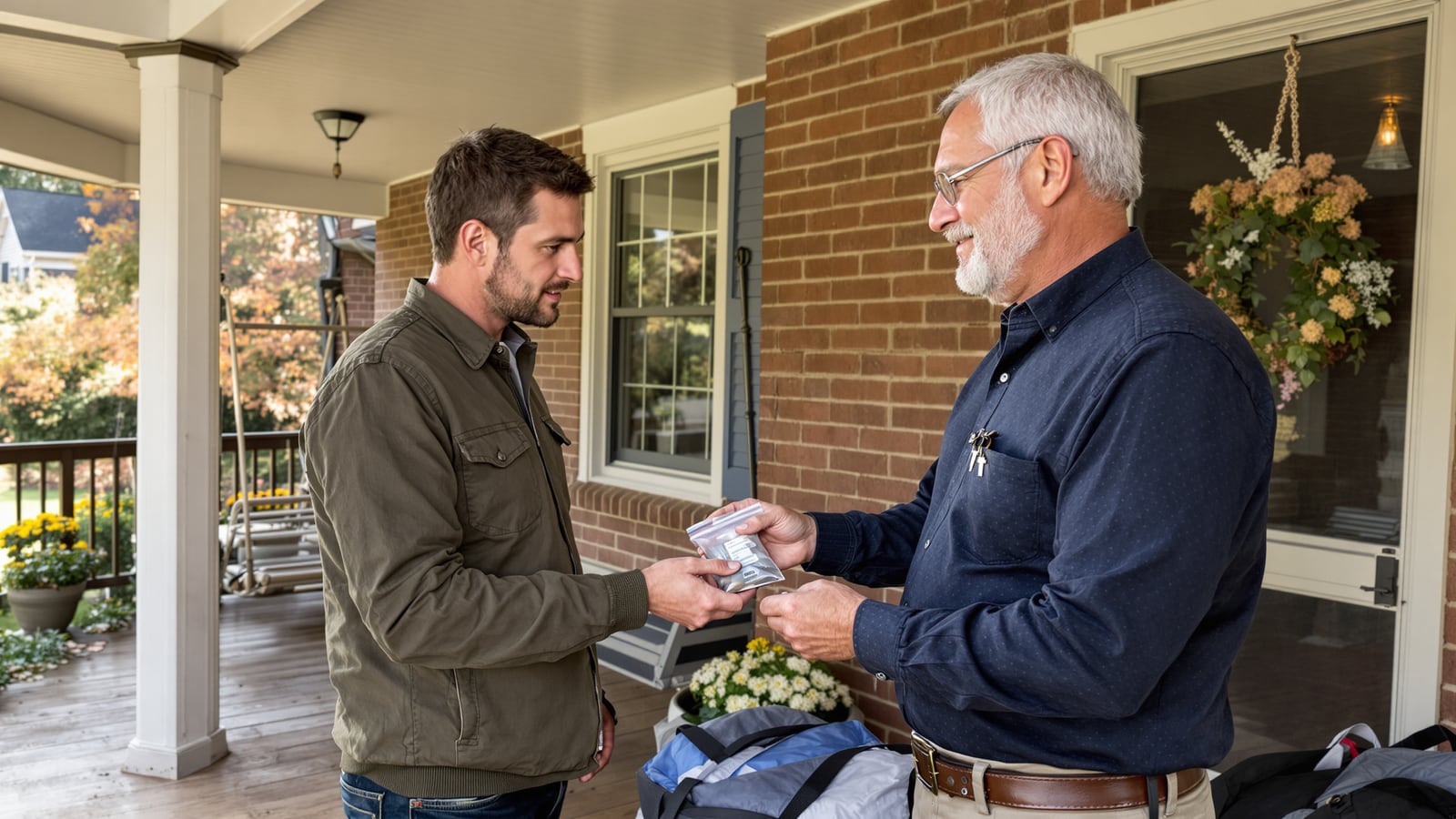
The second copy goes out of the house. That could be your parents' garage, a brother's workshop, or a trusted friend's place, in a sealed envelope with nothing written on it. Pick someone who is stable, who isn't in the middle of a divorce, and who won't be curious. If you don't have a person like that, a rented storage unit or a small rural property you control can work. Think through the fire, theft and flood risk of that spot the same way you did at home.
You don't have to tell the person what's inside. "It's important papers, please don't open it" is enough.
Don't split the words, and think hard about a passphrase
A common idea is to cut the 24 words in half and store each half in a different place. Don't. It looks clever, but now losing either half loses everything, and you've made your backup more fragile, not less.
If you want a real split, wallets that support Shamir backup (SLIP39) do it properly, where any two of three shares can rebuild the wallet. That's a real tool, but it's extra complexity. Read the manual and practice a full recovery before you trust it.
The same goes for a passphrase, sometimes called the 25th word. It's an extra layer. If someone finds your paper, they still can't get in. But if you forget the passphrase, your coins are gone for good, and no one can help. Don't use one unless you've stored it separately and tested it.
What never goes anywhere near the seed phrase
- A photo, a screenshot or a scan.
- Notes apps, email drafts, cloud storage, texts to yourself.
- A password manager, however good.
- Any website or "wallet verification" tool that asks for it.
Nobody legitimate will ever ask for your seed phrase. Not support, not an exchange, not a "recovery specialist." Careful people get caught on this one all the time, which I covered in The crypto scams that catch careful people too.
Test it before you trust it
Set up a fresh wallet with a small amount. Wipe it, or use a spare device, and recover from your backup. If it works, you have a real backup. If not, you've found out for a few dollars instead of the whole stack.
Tell your wife where it is
This is the one nobody wants to talk about. If something happens to you, the person left behind needs to know the coins exist and where the backup is. Write a short letter of instructions that says where the backups are and what the wallet is. Don't put the seed phrase itself in the letter. Keep the letter somewhere your spouse knows about, along with the rest of the estate papers.
A good filing system is half of this. I wrote about what happens when you skip it in The biggest threat to your crypto is your own filing system.
If you're still getting oriented on what these coins are in the first place, start with Bitcoin, explained for somebody who skipped the last decade.
This is general education, not advice for your situation. If your holdings are large or your estate is complicated, a fee-only financial planner and an estate attorney can help you set it up properly.
You don't need a vault. You need two dull hiding places, one steel plate, and a wife who knows the plan. A man who can do that is harder to rob than any bank.
Ray Okonkwo
Money & Business
Former commercial banker turned small-business owner. Covers salary, credit, margins and the arithmetic nobody does before signing.

Watch
Worth an hour of your evening
More from Crypto.
From channels we rate. Plays on YouTube.
Read next