The permit fee is cheap. The bill for skipping it isn't.
Skipping a permit feels like a smart saving. It's a loan against your business, and the lender picks the day it comes due.
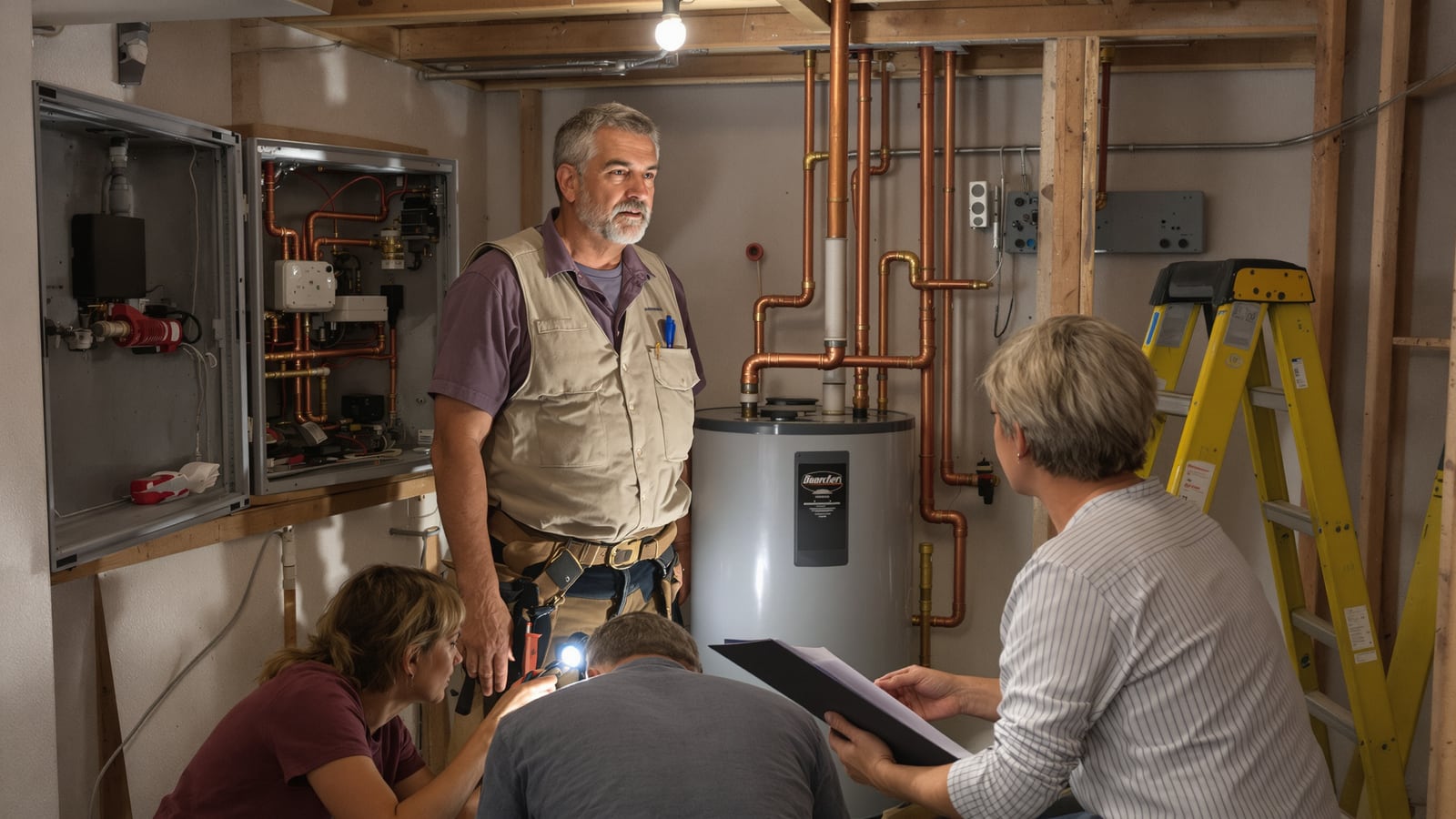
Quick answer: Before you take a job or open for business, find out which license or permit it needs, and price it into the work. The fee is a known cost. Skipping it is an unknown cost with no ceiling, and it tends to arrive when a customer won't pay, an insurer gets involved, or somebody buys the house.
The math you did in your head
Picture a handyman. He's good, he's busy, and he's been asked to move a water heater and run a new circuit for it. The permit takes a trip downtown, a form, a fee of a couple hundred dollars, and a wait for an inspector. The customer says, "Can we just skip that?"
He skips it. Everyone saves money and time. Nothing happens for two years.
Then the customer sells the house. The buyer's inspector sees work with no permit on file. Now the sale stalls, the buyer wants a credit or a repair, and the customer's lawyer asks one question: who did this work?
That's the first thing the saving was hiding. You didn't skip a cost. You moved it to a later date, handed it to someone else's schedule, and attached your name to it.
Where the bill actually comes from
It rarely comes as a fine. A fine is the cheap version. These are the expensive ones.
You can't collect. In many states, an unlicensed contractor can't enforce a contract in court. Some states go further and let the customer demand back what they already paid. Check your own state, because the rules vary a lot. But picture finishing a job, the customer refusing to pay, and a judge asking to see your license.
Your insurance gets slippery. Policies have conditions. If work was done without a required license or permit, a claim on that work can get denied or argued over for months. A fire that starts at an electrical job is the worst day of your career. It's far worse if the paperwork says the job never officially happened.
You tear it open. An unpermitted job found later often has to be opened up so an inspector can see what's behind the drywall. You pay to open it, pay to inspect it, and pay to close it. Many jurisdictions also charge extra fees on after-the-fact permits. That's where "ten times more" comes from. It isn't a statistic. It's what usually happens when one cheap step becomes a demolition job.
Somebody tells. A neighbor, a competitor who did it the right way, an ex-employee, an unhappy customer. You're not being watched. You just need one person with a grudge and a phone.
You're liable for the stuff you can't see. Permits and inspections exist mostly for gas, electrical, structural and fire work. Those are the jobs where a mistake hurts a family sleeping upstairs. The inspector is a second pair of eyes on your work. Paying for that is cheap.
This isn't only for contractors
The pattern shows up everywhere in service businesses.
- Business license and sales tax registration. Many cities and states require both, even for a one-person operation. Selling taxable goods or services without registering leaves you owing tax you never collected, plus penalties, out of your own pocket.
- Home occupation permits. Running clients through your house, parking work trucks on the street, or storing equipment in the garage can run into local rules.
- Food. Cottage food laws let some people sell homemade goods legally, with limits. The limits are the point. Learn them before the first sale.
- Trade and professional licenses. Electricians, plumbers, HVAC, landscapers who spray, mobile detailers who discharge wastewater, anyone who hauls and dumps. If your trade touches safety or the environment, assume somebody regulates it.
- Vehicle and hauling rules. Weight limits, commercial plates, dump fees. Small things, until a tired officer pulls over a loaded trailer.
That's why I'd start with the unglamorous list in the paperwork you can't skip in your first year. Do that once and the rest gets easier.
A fair complaint
Some of this is overreach. Permit fees can be steep, offices can be slow, and in some cities the process seems built to punish the small operator while big firms with a compliance department glide through. A man who wants to work for himself shouldn't need a lawyer to hang a sign. That's a fair argument for local reform, and it's worth making loudly at a city council meeting.
But the fight is the one you have in daylight, out loud, with your name on it. It isn't won by quietly ignoring the rule on a job where somebody else's home and insurance are on the line. Bad rules get changed by people with clean records. They don't get changed by someone who just got fined.
How to do it without losing your shirt
Make one phone call before the first job. Call your city or county building department and ask a plain question: "I'm going to do this type of work. What do I need?" Most offices answer straight if you ask before you start. Write down the name of who you spoke to and the date.
Put the permit in the quote. List it as its own line. The customer sees it's legitimate, you aren't eating the cost, and you look like the professional you are. A customer who objects to a permit line is telling you something about how they'll behave when the invoice comes.
Build the wait into the schedule. Permits and inspections take time, so promise dates that include them. If you're trying to hit a deadline with a skipped permit, you've already lost the argument.
Know who pulls it. In some places the contractor pulls the permit. In others the homeowner can. Whichever it is, get it in writing so everyone knows who's responsible.
Ask your insurance agent one question. "Does my policy depend on me holding a license or permit for this work?" Ten minutes, and it can change how you run the whole business. For the legal or tax side of any of this, a local attorney or CPA is the right person to ask. Rules differ too much by place for general advice to cover it.
Say no when no is right. The customer who pushes you to skip the permit is asking you to carry all the risk while they save a few hundred dollars. A man with a backbone says, "I'll do it right or I won't do it." You'll lose a job or two. You'll keep the business.
If you've already skipped one
Stop adding to the pile. Talk to a local attorney before you talk to the building department. Many jurisdictions have a way to bring past work into compliance. It usually costs more than the original permit and far less than waiting for someone else to find it. The fix gets more expensive every month you delay.
The old rule for leaving a place better than you found it applies to paperwork too. The job isn't done when the tools are loaded. It's done when the work is legal, inspected, and ready for whoever owns that house in twenty years.
If you're still building the business, the first ten thousand dollars teaches you everything else, and one of the lessons is that cheap and cut-rate aren't the same thing. And if you're doing this alone, running a one-man business that doesn't eat your family starts with not betting the house on a form you didn't want to fill out.
A permit costs a few hundred dollars and one afternoon. Your name on a job done right is worth more than that, and it's the only advertising nobody can take away.
Ray Okonkwo
Money & Business
Former commercial banker turned small-business owner. Covers salary, credit, margins and the arithmetic nobody does before signing.

Watch
Worth an hour of your evening
More from Startups.
From channels we rate. Plays on YouTube.
Read next