

Stay out of the first fight, unless somebody's getting hurt
Step in too fast and you're the permanent referee. Too late and someone gets hurt. Know where the line is before the shouting starts.
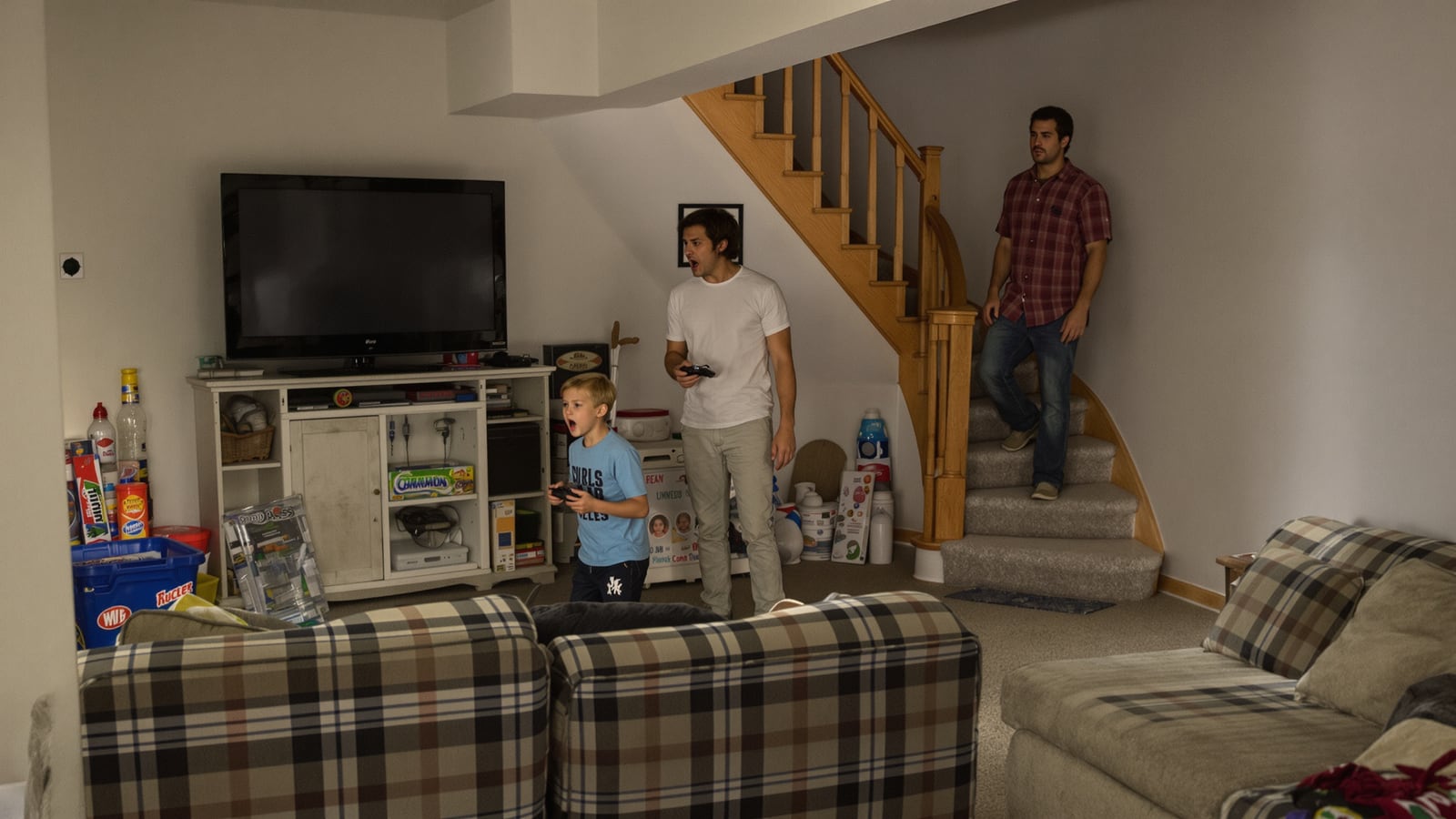
Quick answer: Step in right away for three things only: hands, destroyed property, and cruelty. Everything else, stay in earshot, keep your mouth shut, and hand the problem back when they bring it to you.
The Saturday it happens
Your nine-year-old and your six-year-old both want the blue controller. Voices go up. A door slaps. Somebody yells "you ALWAYS" and the other one yells "you NEVER," and neither sentence is true.
You've got about four seconds before you do the thing nearly every parent does. You walk in, ask who had it first, hear two incompatible versions, and issue a ruling. Somebody's furious. You've now taught both kids the same lesson, which is that conflict gets settled by whoever can persuade Dad, and that the way to win is to tell the better story.
You weren't there for the first ten seconds. You can't judge it. You'd be guessing, and they both know it.
Decide your floor before the fight starts
Letting kids work it out doesn't mean letting them do anything. It means you've drawn a floor, and above it they're on their own.
Three things bring you in immediately, no discussion:
- Hands. Hitting, shoving, pinning, throwing something at a person. One warning is generous. Usually it's zero.
- Wrecked property. Smashed, torn, or hidden out of spite.
- Cruelty. Mocking who the other kid is, as opposed to arguing about what he did. "You're stupid" and "nobody likes you" end the argument and start a different conversation, and that one is yours.
Everything else is theirs: who had it first, whose turn it is, whether the rules of the backyard game changed halfway through, whether somebody cheated at cards. It's loud and annoying, and it's also the practice.
Settle the floor with your wife before the next fight, not during it. If Mom steps in at "hands" and Dad doesn't step in until a lamp goes over, the kids will work out which parent to run to by Tuesday. The same goes for any standard you hold at home, which is why holding the line at home without ruling by mood matters more than any single fight.
Stay close and say nothing
Don't leave the house. Go load the dishwasher in the next room, or find something to do in the garage with the door open. Kids who know a parent can hear them tend to hold themselves to a slightly better standard than kids who think they're alone, and you're close enough to catch the three floor items.
Resist the sigh, the throat-clear, and the "boys." They can read your face from across a room better than you think. If you hover with your arms crossed, you haven't stayed out. You've just stepped in silently, and they'll perform for you.
Ten minutes is a fair stretch to let it run. Most fights burn out in less. The ones that don't are telling you something, and we'll get to that.
When they come to you
They will. Usually the younger one arrives first, wounded, with the case for the prosecution.
Don't take the case. Say, "What did you tell him?" Then, "What did he say?" Then, "So what are you going to do about it?"
That last question sounds like a dodge. It isn't. It's the whole method. A six-year-old will often have an answer within thirty seconds, and it's usually more workable than whatever you'd have ordered. Sometimes it's "take turns." Sometimes it's "he can have it, I'm going outside." Both are good outcomes. A kid who gives something up on his own has learned more than a kid who was made to.
If he says "nothing, you do it," hold the line gently. "I wasn't there. You two figure it out and tell me what you decide." Then go back to the dishes.
When it doesn't work
Some fights don't burn out. Same complaint, third day running. Or one kid is plainly bigger, louder, and winning every round, and the other has stopped fighting and started sulking. That's not a fair fight anymore, and it's the moment to come in.
Do it like this:
- Separate them. Different rooms, ten or fifteen minutes. Nobody's being punished. Everybody's cooling off.
- One at a time, no interrupting. Each kid tells his side while the other waits. The rule is simple: you get to finish, and so does he. This alone ends a surprising number of fights, because it's the first time either has heard the other's version without having to defend against it.
- Make them say back what the other said. "Tell me what he's upset about." They hate it. It works.
- Let them propose the fix first. You only impose one if they can't.
You'll notice you're still not deciding who was right. You're running the process and leaving the verdict to them. Most of the time there isn't a clean verdict anyway.
Don't extract a fake apology
"Say you're sorry." "Sorry." That's a toll booth, not repentance, and a kid who's learned to pay it quickly has learned to say whatever ends the lecture.
Ask for repair instead. If he broke his brother's model plane, he fixes it, or earns the money to replace it, or gives up something of his own for a week. And the old rule applies at kid scale: you return a borrowed thing in better shape than you took it. The brother who broke it brings it back cleaner, sturdier, maybe with a small extra. It's a lot harder than "sorry," and a lot more honest.
Then, once repair is done, a real apology tends to come on its own. If it doesn't, don't squeeze it out. Some kids need an hour.
Don't make the oldest the permanent loser
Parents lean on the older child out of habit. "You're bigger, you should know better." Sometimes that's true. Do it every time, though, and the oldest learns that being responsible means being punished, and the youngest learns that being small is a weapon.
Hold both to the same floor. Expect the older to carry a little more grace and the younger to carry a little more accountability than he'd like. Neither gets a free pass.
They're watching you two
Kids learn how to fight by watching the only married couple they know up close. Raise your voice at your wife in the kitchen, then tell your son to use his words, and he'll file your words under "things adults say" and your tone under "what actually works."
You don't have to be perfect. Marriages argue. The useful thing is letting them see the end of it: a disagreement, a cooldown, somebody saying "I was out of line," and dinner. If you and your wife are stuck on something big, like money, work on it away from the kids and let them see the landing, not the fight. That's part of what a father in the house is actually doing. He isn't only providing. He's showing them what a man does with a disagreement.
Next time the door slaps and somebody yells "you ALWAYS," leave the dishes where they are for four more minutes. Let them find out they can survive each other. They'll need that skill a lot longer than they'll need the controller.
Cal Brennan
Fitness
Strength coach. Trains fathers, tradesmen and desk workers, which means programs that survive a bad week.

Watch
Worth an hour of your evening
More from Family.
From channels we rate. Plays on YouTube.
Read next