The family meeting that works because Dad stops lecturing
Most family meetings die by the third Sunday. Here's a format that survives eye-rolling teenagers, tired parents, and a toddler under the table.
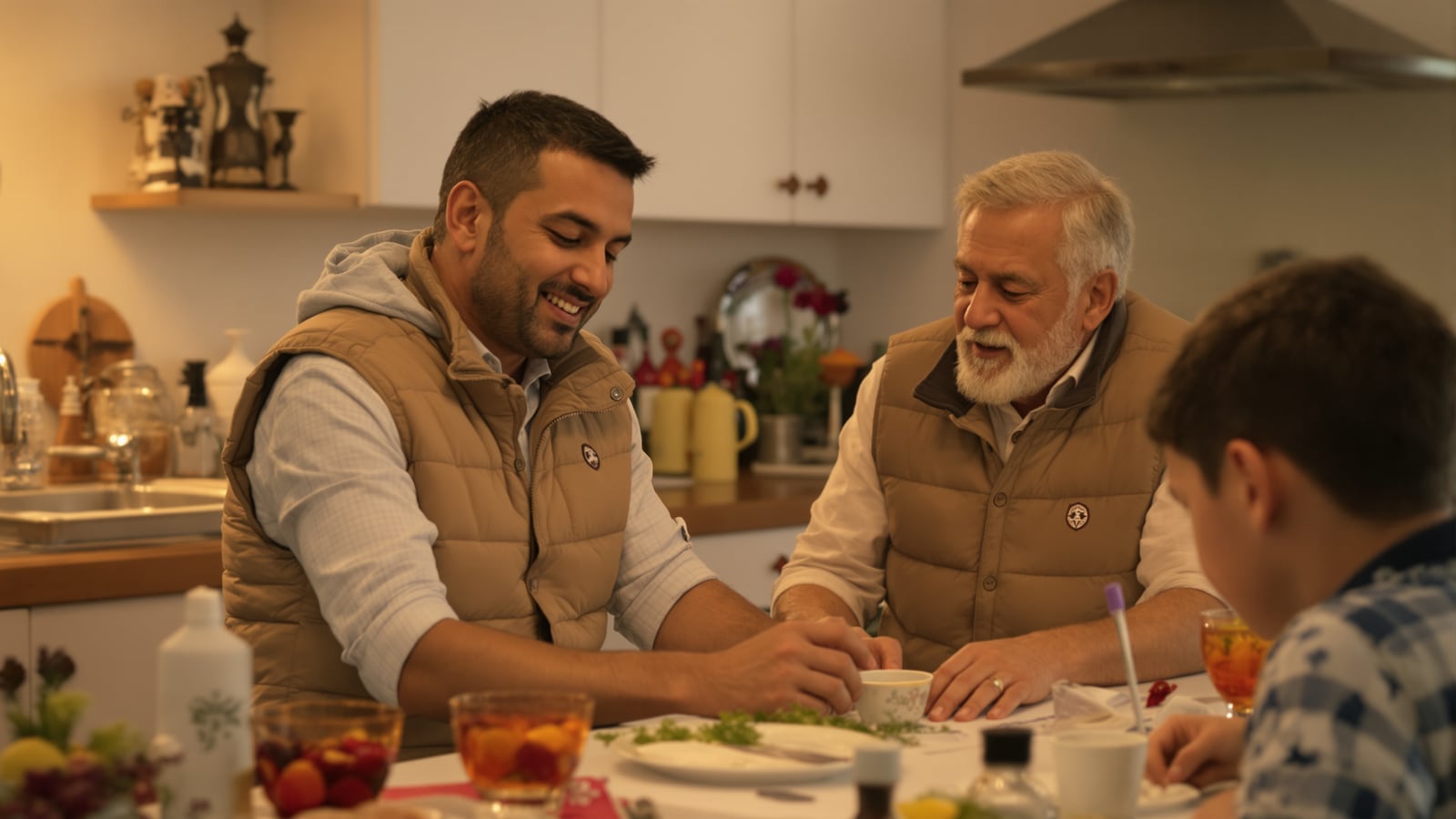
Quick answer: Talk to your wife first. Hold it at the same time every week, cap it at twenty minutes with a kitchen timer, and keep the agenda the same every time. Let the kids run pieces of it. Listen to everyone, then decide the things that are yours to decide.
Why the first one goes well and the fourth never happens
You've seen the first meeting. Dad clears his throat at dinner, announces "we need to talk as a family," and pulls out a list. Shoes by the door. Dishes in the sink. Somebody's attitude. Twenty-five minutes later, one kid is crying, one is staring at the ceiling, your wife is wincing, and you feel like you made your case brilliantly.
Nobody wants a second meeting. Why would they? It was a performance review with no raise.
The fix isn't a better speech. It's a different job. You're not the prosecutor. You're the guy running the table, which means the meeting has to be worth sitting through for a nine-year-old and a sixteen-year-old and a woman who has already had a long week.
Settle it with your wife before you sit down
Ten minutes on Saturday. Pick the one issue you want to raise Sunday and agree on what you'll say about it. If you've got a real disagreement, and most couples do, have it in the kitchen, not in front of the kids. When you and your wife don't agree about money covers how to do that without it turning into a siege.
Kids read a split in the parents faster than any adult does. If they see you two disagree at the meeting, the meeting becomes about who they can recruit.
Your wife also gets a say in whether the meeting happens at all. If Sunday at 6:30 is when she's finally sitting down, she may want 4:30. Fine. Move it. You want her at that table as your partner, not as someone standing by the stove with a dish towel and an opinion she's keeping to herself.
Pick a slot and set a timer
Same day, same time, same room. Sunday after dinner works for most households because dessert can be part of the deal. A kitchen timer set to twenty minutes goes on the table where everybody can see it.
That timer does more than any ground rule. It tells a fourteen-year-old this isn't a hostage situation. It tells you to stop talking. When it goes off, you're done, even if you've got one more point. Especially then.
The annoying part: the first month will be awkward. Somebody will roll their eyes. One kid will say "nothing" to every question. Don't take the bait and don't lecture about attitude. Show up, run it short, end on time. The rhythm is what builds the trust, not any one meeting.
Run it in the same order every time
A fixed agenda keeps it from drifting into complaint hour. Here's the order that works.
- The week ahead. Everybody names what's on their calendar: practices, tests, appointments, who needs a ride, who's working late. Put it on one shared calendar in the kitchen. This alone will save you about three arguments a week.
- One thing that went well. Each person names something someone else did. Short. A kid who held a door, a wife who handled the car trouble, a brother who helped with homework. Teenagers will groan. Make them do it anyway.
- One thing to fix. One. Not seven. If the house has six problems, pick the one that matters most this week. Leave the rest for later.
- Anything anyone wants to bring up. Open floor. Even a six-year-old gets to ask for a pancake morning.
Then end. Timer or not, end.
Give the kids a real job
A kid with a role stays awake. A kid with no role is an audience.
Put your eight-year-old in charge of reading the calendar aloud. Let your twelve-year-old keep the notes on a pad, with a pen, in handwriting. Your sixteen-year-old can run the money item once a month: the grocery budget, what the family trip will cost, why the electric bill jumped. That's a real piece of the household, and they'll be shocked how much it is.
You speak last. This is harder than it sounds for a father who's used to being the loudest voice at the table. But once you've let everyone talk, your answer carries more weight, not less.
Listen like a man who's going to decide
A family meeting isn't a democracy, and kids know it. Pretending otherwise breeds cynicism fast.
Some things are everyone's call: pizza or tacos, which movie, where to camp for the long weekend. Vote on those. It's practice for adult life, and it's fun.
Other things belong to you and your wife: bedtimes, curfews, screens, how money gets spent, what's allowed in the house. The kids get to speak on those. They don't get to vote. Say so plainly: "I want to hear your side. Mom and I will decide, and you'll know by Wednesday." Then do it by Wednesday.
That last part matters more than the listening. If you ask for opinions and then ignore them without a word, you've taught your kids that speaking up is pointless. If you ask, weigh it, and say "I heard you and here's why the answer's still no," you've taught them something worth far more. The difference between a household standard and a bad mood is worth a read before the next time you're tempted to make a rule on the spot.
What kills it
- Ambush. Using the meeting to spring a grievance on a kid, or your wife, who didn't know it was coming.
- Relitigating. Last week's decision isn't up for debate again unless something real changed.
- Phones on the table. Yours too. Especially yours.
- Skipping. Miss two Sundays and it's over. If you're traveling, hold it by video call for fifteen minutes. A short meeting beats none.
- Blowing up. You will, once. When you do, make the first item on next week's agenda your apology. Say what you did, say you were wrong, and say what you'll do instead. Your kids will remember the apology longer than the outburst. That's not weakness. It's what a father in the house is actually doing when it counts.
How it ends
When the timer goes off, say thanks and stand up. The kids clear the table. You wash the dishes, or at least dry them. Leave the kitchen cleaner than you found it, and let them see you do it.
A couple of years from now, your kids won't remember a single agenda item. They'll remember that every Sunday night, someone asked what they thought, and then did what he said he'd do.
Cal Brennan
Fitness
Strength coach. Trains fathers, tradesmen and desk workers, which means programs that survive a bad week.

Watch
Worth an hour of your evening
More from Family.
From channels we rate. Plays on YouTube.
Read next