Finish the dental work before menopause changes the terms
Your mouth gets harder to fix once hormones shift. Here's what to book in your forties, in what order, and how to keep it from costing double.
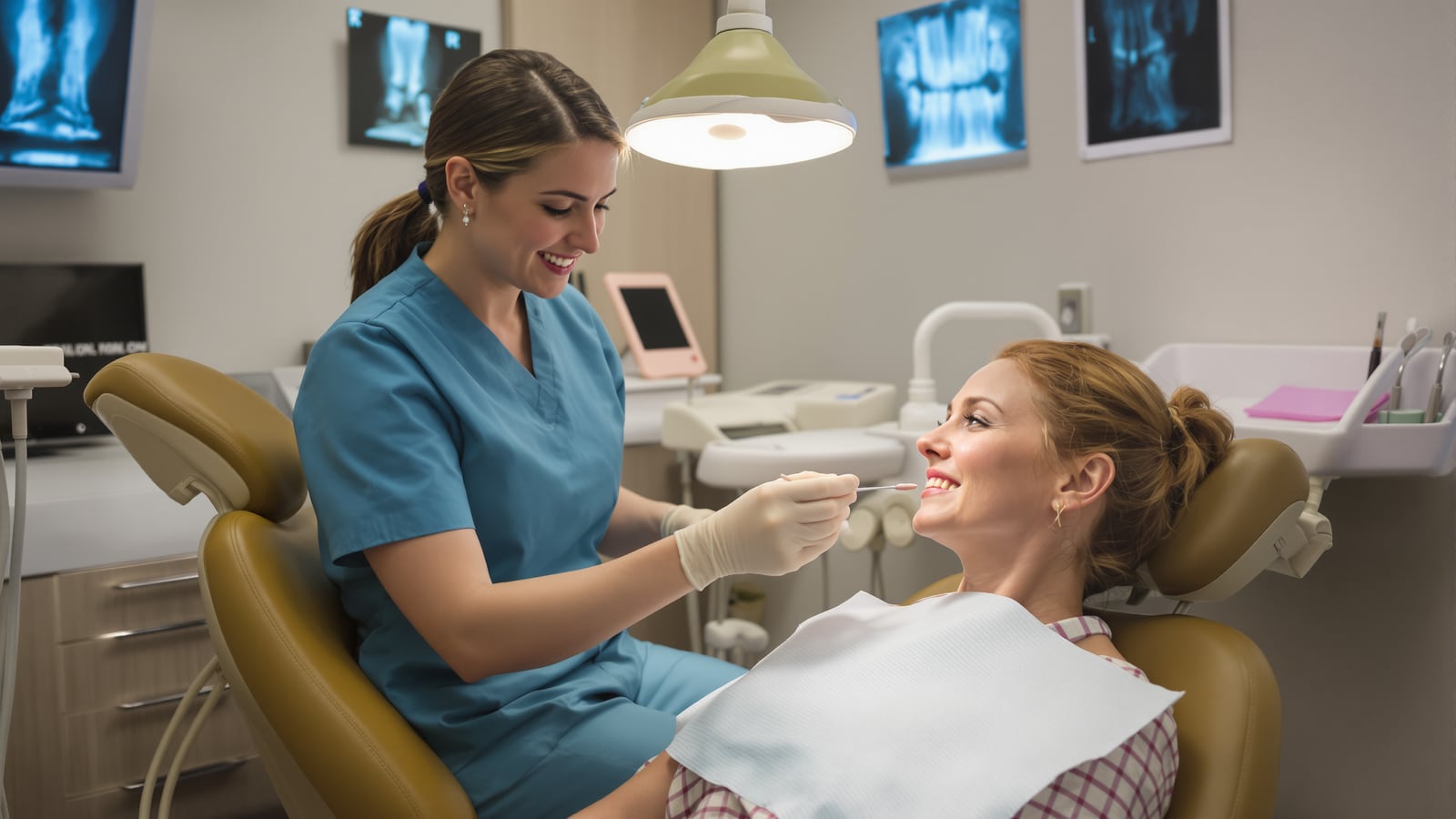
Quick answer: In your early to mid forties, book a full exam with X-rays and gum measurements. Finish anything decayed, leaking, loose or questionable before bone, saliva and gums start to change.
Picture a woman of 48 whose dentist says the crown on her back molar has a leak at the edge. It's eleven years old. It doesn't hurt. She puts it off for two years, because nothing hurts.
By 50 she's in perimenopause, her mouth is drier than it used to be, and decay has gotten under the crown. What would have been a new crown is now a root canal, a build-up and a new crown. If the tooth can't be saved, she's pricing an implant in a jaw that's lost some density.
None of this is certain, and it doesn't happen to everyone. But the direction is well known, and it's a good reason to move first.
Why your forties are the window
The average age of menopause in the U.S. is about 51. The hormone shifts of perimenopause often begin years earlier, in the mid to late forties. Estrogen helps hold bone density in place, and your jaw is bone. As estrogen falls, bone loss speeds up across the body, and your jaw is part of that. Teeth sit in that bone, and implants have to anchor in it.
Saliva is the second thing. Many women notice a drier mouth in midlife. Some medications make it worse, including common antihistamines, some antidepressants and some blood pressure drugs. Saliva washes away food, neutralizes acid and helps repair enamel. Less of it means more cavities, and they tend to show up at the gumline and on exposed root surfaces, which decay faster than enamel does.
Gums are the third. Gum disease is driven by bacteria, and hormone changes can make gums more reactive. Receding gums expose roots, which brings you back to the cavity problem.
You can't stop menopause. You can make sure your teeth go into it in good repair.
The audit
Ask for these at one appointment, and tell the office that's what you want.
- A full set of X-rays, not just the bitewings. You want a baseline of your bone levels.
- Periodontal charting. The hygienist measures the gap between gum and tooth at six points per tooth, calling out numbers as she goes. Ask for a copy. Those numbers are your baseline, and a rise over time is the earliest warning you'll get.
- A look at every old filling and crown. Margins wear, and a leak can sit quietly for years.
- A check for grinding. Flat, worn tips or a sore jaw in the morning mean you may need a night guard. Midlife stress and poor sleep make clenching worse.
- A written treatment plan, in order of urgency.
Then get the plan in writing and read it at home, not in the chair.
What to finish first
Start with the work that gets worse by waiting.
Decay and failing restorations. A filling is cheap. A crown costs more. A root canal costs more again. Every year you wait moves you one step down that ladder.
Gum disease. If your charting shows deep pockets, ask about a deep cleaning (scaling and root planing) and a follow-up in a few months to check the result. This isn't glamorous. It's what holds your teeth in.
The tooth everybody's unsure about. A cracked or heavily broken-down tooth is a decision. Save it or replace it, but decide while your bone is still solid. If you're going to need an implant, plan for months, not weeks. The implant has to heal into the bone before the final tooth goes on, and many offices space the steps over several months.
Missing teeth. A gap shifts the teeth beside it and changes how you chew. Ask about your options now, while the surrounding bone is still strong.
Whitening and cosmetic work can wait. They don't affect any of the above.
The medication wrinkle
If you're ever diagnosed with osteoporosis, one common class of treatment is bisphosphonates, along with some related drugs. They protect bone. They also carry a rare risk of a serious jaw bone problem, mostly tied to extractions and other invasive dental work done afterward. Because of that, doctors and dentists often want a patient's dental work finished first.
That's a conversation for your doctor and dentist. But it's one more reason not to be sitting on a tooth that needs pulling when the prescription gets written. Tell your dentist about any bone medication, past or present.
For the supplement side of bone health, see which supplements aimed at women actually earn the money. Calcium and vitamin D come up, and your doctor can tell you what's right for you.
Order and money
Dental insurance often has an annual maximum, and it resets with the plan year. If a plan runs on the calendar year, you can do part of a big job in December and the rest in January, so both years' benefits apply. Ask your office to sequence it that way. Check your own plan, since the details vary.
If you have a flexible spending or health savings account, treatment plans are what it's for. And if you're ever weighing a new job, ask about dental coverage before you accept. Negotiating an offer when you've never done it before covers how to raise benefits without apologizing for it.
When to say wait
Not every line on a treatment plan is urgent. A big plan, with multiple crowns and a long list of extras, deserves a second opinion from another office. Bring your X-rays and charting. A good dentist won't mind, and it's your mouth.
Watch for pressure. "Do it all today" is rarely the right pace for anything but pain or infection. A sound plan tells you what's urgent, what can wait a year and what's optional.
Keep the basics going while you sort out the rest. Brush twice a day with a fluoride toothpaste. Clean between your teeth daily. If your mouth feels dry, say so at your next visit. There are things your dentist can suggest, and plain water through the day helps.
Your teeth are the one part of aging you can schedule around. Book the exam this month, and make the appointment in your forties, not your fifties.
Nina Castellan
BRO for Her
Runs the women-facing desk. Same standard, same tools, written for a different reader — not a softer one.

Watch
Worth an hour of your evening
More from BRO for Her.
From channels we rate. Plays on YouTube.
Read next