Plant Garlic in Fall and Mostly Forget About It Until Summer
Garlic is the laziest crop you can grow and the only one you plant now to eat next year. Here's how to time it for your zone and not rot the bulbs.
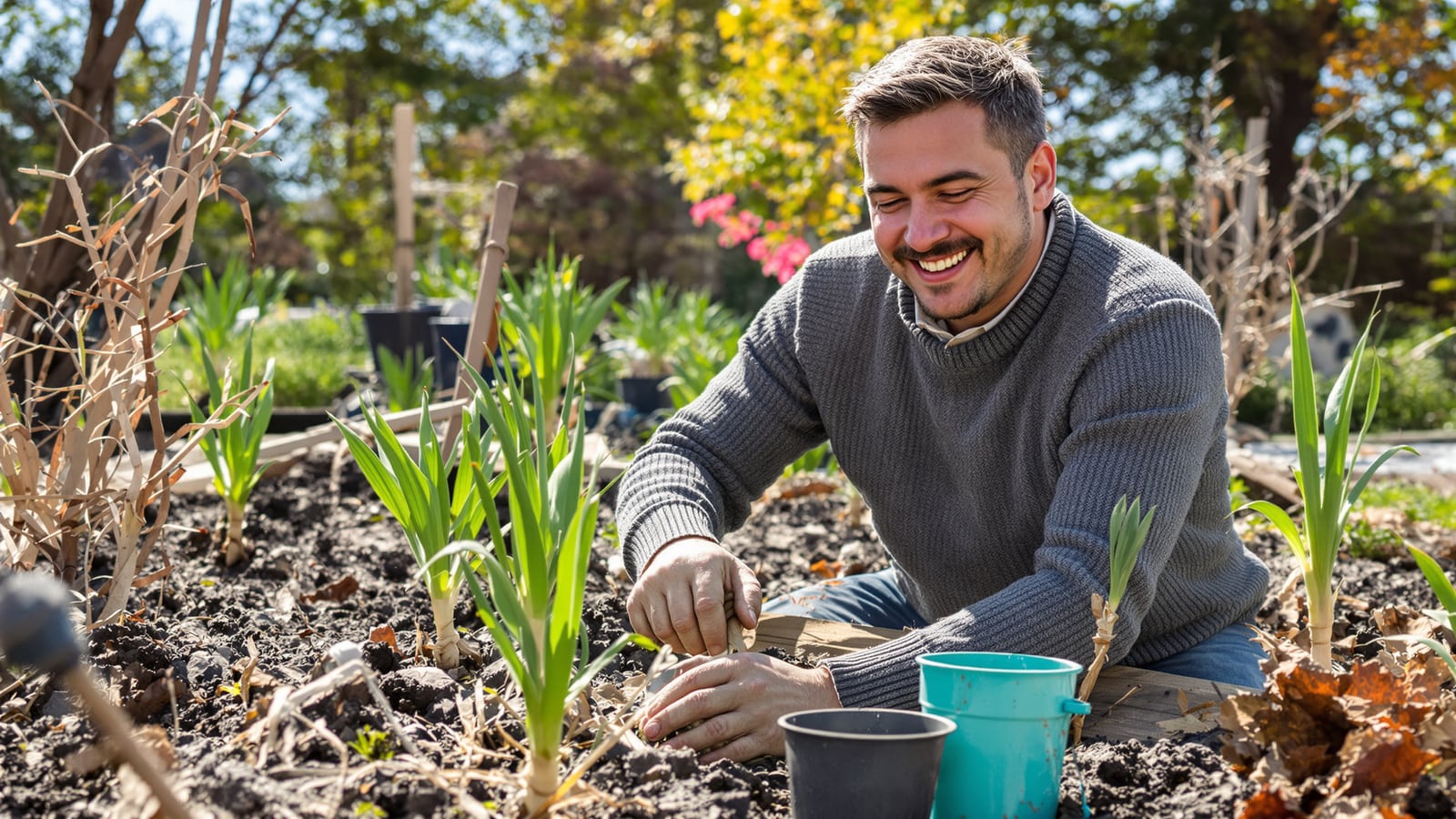
Quick answer: Buy seed garlic, not grocery store garlic. Plant cloves pointy end up, 2 inches deep and 6 inches apart, about four to six weeks before your ground freezes. Mulch it. Harvest next July when the lower leaves brown. Cure it for a few weeks. Save your biggest bulbs to plant again.
Fall is the whole point
Garlic wants a cold winter. The cloves put out roots in autumn, sit through the freeze, and wake up in spring with a head start nothing planted in April can match. Spring-planted garlic usually gives you small bulbs, and sometimes just a single round clove with no cloves in it.
So your calendar runs backward from your first hard freeze. Find your zone first. If you don't know it, your hardiness zone decides what lives and what dies, and it's a two-minute lookup by ZIP code.
Rough timing:
- Zones 3 to 5: late September to mid October.
- Zones 6 and 7: October into early November.
- Zones 8 and 9: November into December. Hardneck garlic wants cold, so chill the cloves in the refrigerator for six to eight weeks first.
You want roots before the freeze, but not a foot of green top. If you see a few inches of growth in December, that's fine. If you see eight, you planted too early. Mulch will carry it through.
Hardneck or softneck
This is the one real decision, and your zone makes it for you.
Hardneck has a stiff center stalk, bigger and fewer cloves, and a stronger flavor. It handles brutal winters better. It also sends up a curly flower stalk in June called a scape. It stores for roughly four to six months.
Softneck is the braidable kind in the grocery store. It does better where winters are mild, stores longer, up to nine months or a year, and has more, smaller cloves. It rarely makes scapes.
Cold country, plant hardneck. Southern country, softneck. In the middle, either works, and many growers plant both so they have fresh flavor in the fall and storage garlic through winter.
Don't plant what you bought for dinner
Grocery garlic is the number one beginner mistake. It's often bred and shipped for a different climate than yours, and some is treated to resist sprouting. It can also carry soil diseases you don't want in your bed.
Buy seed garlic from a nursery or a regional grower. Order early. The good varieties sell out by late summer, and shipping usually happens in the fall at planting time anyway.
Do the math before you order. A 4x4 section of bed at 6-inch spacing holds 64 plants. One head of seed garlic breaks into six to ten cloves, so eight to ten heads fills it. Seed garlic costs more per head than the grocery kind, but you buy it once. After the first harvest, you replant from your own crop, and the seed cost drops to nothing.
If you don't have a bed, a 4x8 raised bed built for under two hundred dollars is a good home for garlic. Raised beds drain, and drainage matters more than anything else on this list.
Planting day
Pick a spot with full sun and soil that drains. Garlic stands in wet ground and rots. If water pools there after a rain, build up the bed or pick somewhere else.
- Loosen the soil a foot deep and work in a couple of inches of finished compost. If you make your own, compost that doesn't stink or feed the rats is the version you want.
- Break the heads apart a day or two before planting. Leave the papery skin on each clove.
- Sort them. Plant the big, plump cloves. Eat the small ones. A runt clove gives you a runt bulb.
- Set each clove pointy end up, 2 inches deep, 6 inches apart, in rows about 12 inches apart. Upside-down cloves still grow, but they waste weeks turning around and come up late and weak.
- Cover, water once, and mulch with 4 to 6 inches of straw or shredded leaves in cold zones, and 2 to 3 inches in mild ones. Leaves from your own yard are free.
Then walk away. That's not laziness. That's the method.
Spring, scapes, and the one thing to skip
Green shoots show up in March or April, depending on where you live. Pull the mulch back a little if it's smothering them.
Feed once in early spring with a nitrogen source like blood meal or compost, and once more a few weeks later. Stop by late May or early June, because after that the plant is putting its energy into the bulb, not the leaves. Water about an inch a week if it doesn't rain.
Weed by hand. Garlic is a poor competitor and has no thick leaves to shade out intruders.
In June, hardneck varieties send up scapes. Snap them off when they curl once. The plant puts that energy into the bulb instead, and you get something to cook with weeks before harvest. Chop them into eggs, grill them whole, or blend them into pesto.
Harvest at the right week
This is where most people go wrong, because the plant doesn't announce itself.
Watch the leaves. When the bottom three or four have turned brown but five or six are still green, it's time. That's usually July, earlier in the South. Wait for everything to brown and the wrappers split, the bulbs open up, and they won't store. Dig too early and you get small heads with thin skins.
Stop watering about two weeks before. Then dig with a fork, a few inches out from the stem. Pulling snaps the stalks, and a snapped stalk is a bulb that rots in storage.
Curing and storing
Tie the plants in bunches of ten or so and hang them in a shaded, airy spot like a garage or porch. Out of the sun and out of the rain. Leave them two to four weeks until the necks are dry and the skins are papery.
Trim the roots to a half inch. Cut the stalks, or braid the softneck. Brush off the dirt, don't wash it.
Store in a cool, dry, dark place at about 60 to 65 degrees. A mesh bag in a pantry works. Skip the refrigerator, which makes bulbs sprout sooner.
What goes wrong
- Yellow tips in spring usually means a wet or cold snap. If the bed is soggy, the problem is drainage.
- Soft, rotted bulbs mean wet soil, late harvest, or damage in digging.
- Tiny bulbs mean crowded plants, runt cloves, spring planting, or too little food.
- White fuzz at the base is white rot, a soil disease that lingers for years. If you see it, don't replant garlic or onions in that spot for at least three or four years, and don't move the soil.
Keep the best, plant it back
When harvest ends, pick your eight biggest, firmest bulbs for next year. Set them aside from the ones you'll eat. That one habit, repeated for a few years, gets you garlic suited to your yard, and you'll never buy seed again.
Eat the small ones first. Plant the big ones in October.
Wes Dunbar
Country & Skills
Grew up on an acreage and never quite left. Covers trucks, trades, land, and how to do the thing yourself.

Watch
Worth an hour of your evening
More from Garden & Yard.
From channels we rate. Plays on YouTube.
Read next