Why week six of a new skill feels like going backwards
The beginner gains run out around day forty, and that's exactly when most grown men quit. Here's how to get through the flat part.
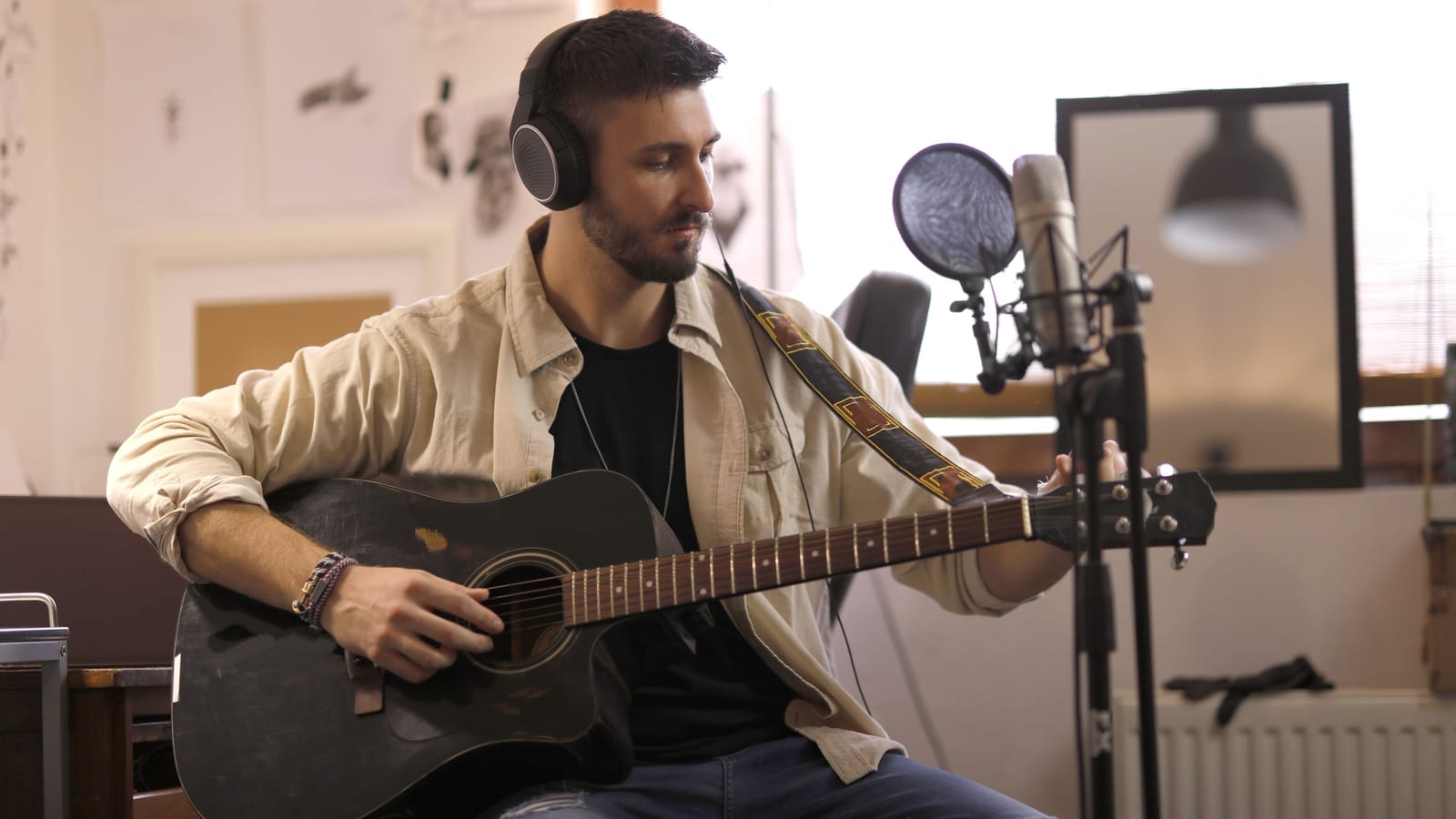
Week one on the guitar, you learn three chords and feel like a genius. Week three, you can play most of a song if nobody's watching and you're allowed to stop at the bridge. Week six, you sit down with the same $180 used Yamaha, play the same song, and it sounds worse than it did on Tuesday.
That's the plateau. It shows up in almost everything a grown man picks up late: Spanish, welding, swimming freestyle without drowning, jiu-jitsu, woodworking, shooting a pistol accurately at fifteen yards. Somewhere around day forty, the free improvement stops arriving and you're left with the actual work.
Most guys quit right there. Not dramatically. They just don't get the case out one Thursday, and then it's two Thursdays, and by March the thing is leaning against the wall in the spare room becoming furniture.
The early gains were never skill
The first month of anything is mostly your brain deleting waste. You stop gripping so hard. You stop looking at your hands. You stop doing the four dumb things a total beginner does, and the improvement from deleting dumb things is enormous and fast and basically free.
Then it's gone. You've deleted the dumb things. What's left is the slow accumulation of actual competence, and that accumulates at a rate you can't feel day to day. You're still improving in week six. You just can't perceive it, because the improvements are now smaller than the daily noise in your performance.
There's a second thing happening, and it's the meaner one. Your ear got better faster than your hands did. Same in Spanish: you can now hear that your accent is bad, which you couldn't in week one. You didn't get worse. You got good enough to notice.
That's a promotion disguised as a failure.
Measure something that isn't your feelings
If you judge progress by how the session felt, you'll quit in week six every time, because week six feels like sandpaper.
So measure something dumb and external. A metronome number. Reps at a weight. Laps before you have to stop. Words you got right out of a stack of fifty cards. Minutes under the hood without the bead wandering.
Write it in a notebook, one line per session, date and number. A cheap composition book on the bench is better than an app, because the app is on the phone and the phone is a casino.
Six weeks in, flip back to the first page. In week one you played that chord change at 60 beats per minute and dropped it half the time. Now it's 84 and clean. You had no idea. Feelings are a broken gauge and the notebook isn't.
Slow everything down until it's boring
The instinct at the plateau is to push harder and faster. It's the wrong instinct, and it's the single most common way men in their forties stall out.
Take whatever you're doing and run it at about 60 percent speed. Slow enough that you can't make a mistake. Then creep up. If you break, drop back down and stay there longer than your pride wants to.
Fast practice with errors just teaches you to make errors quickly. You're not building the skill, you're building a very reliable version of the wrong thing, and then you have to spend week nine unbuilding it.
Fifteen minutes on the part you hate
Here's the honest audit: most of your practice is you doing the parts you can already do. It feels like work. It's a concert.
Find the one thing that's breaking. Not five things. One. The bar chord. The rolled R. The bilateral breath on your weak side. The trigger press when you're anticipating the shot.
Then isolate it and drill it on its own for fifteen minutes before you're allowed to do the fun stuff. Separate it out from the song, the sentence, the sparring round. Repeat it until it's dull, then twenty more.
Fifteen boring minutes at the broken part will move you more in two weeks than an hour of pleasant noodling will in two months.
Buy an hour of a real human being
This is where the money should go, and it's usually the last place a forty-year-old puts it. He'll spend $600 on a better guitar and won't spend $60 on a lesson.
One session. Tell the instructor straight: "I'm six weeks in, I've stopped improving, watch me and tell me what I'm doing wrong." A competent coach will find it in about four minutes. It's almost always something structural and invisible from the inside. Your wrist angle. Your left foot. Your breath timing. Your grip.
You can't see your own form. Nobody can. That's not a character flaw, it's geometry. Second best option, free: set the phone on a shelf and film yourself. It's uncomfortable viewing. Do it anyway.
Protect the streak, shrink the session
You're forty. You've got a job, a wife, kids with practices, and a water heater that's making a noise. The hour-long practice session was always a fantasy.
Twenty minutes, four or five days a week, beats ninety minutes on Sunday. Not close. The skill lives on repetition and sleep, and five contacts a week gives you five nights of consolidation instead of one.
On the days it's genuinely impossible, do five minutes. Five real minutes with the instrument in your hands. It's not about the practice value. It's about not becoming a man who skips.
When quitting is the right call
Sometimes the plateau is information. Here's how to tell the difference.
If you're bored of the practice but still want the result — you want to play at the campfire, you want to talk to your wife's family in their own language — push through. That's a work problem and work fixes it.
If you look honestly at the result and you don't actually want it, quit cleanly and stop paying rent on the guilt. You picked it up because a guy at work made it sound good. That's fine. Sell the gear, tell yourself the truth, pick something you actually want.
Just don't make that decision in week six. Make it in week twelve, when you've got data instead of a mood.
What it looks like when it breaks
It doesn't break gradually. You'll have a session somewhere around week nine or ten where the thing just goes, and you'll look down at your hands like they belong to somebody else.
Then it'll be bad again the next day, and fine again the day after, and eventually the good days outnumber the bad ones and you stop counting.
There's a side effect nobody tells you about, and it might be worth more than the skill. Your kids get to watch a grown man be visibly bad at something in his own kitchen, week after week, and not quit. They're keeping score on that. They're keeping better score on that than on anything you say to them about effort.
So get the case out on Thursday. Play it at 60 beats per minute. Write the number down.
Cal Brennan
Fitness
Strength coach. Trains fathers, tradesmen and desk workers, which means programs that survive a bad week.

Watch
Watch how it's done
Picked for this article.
From channels we rate. Plays on YouTube.
Troy Stetina
Reached a plateau on guitar? Advice from 4 decades of music education