

You Notice the One Thing She Missed, Not the Ten She Didn't
The small kindnesses get done so quietly you stop seeing them. Saying thank you out loud, by name, costs nothing and changes the house.
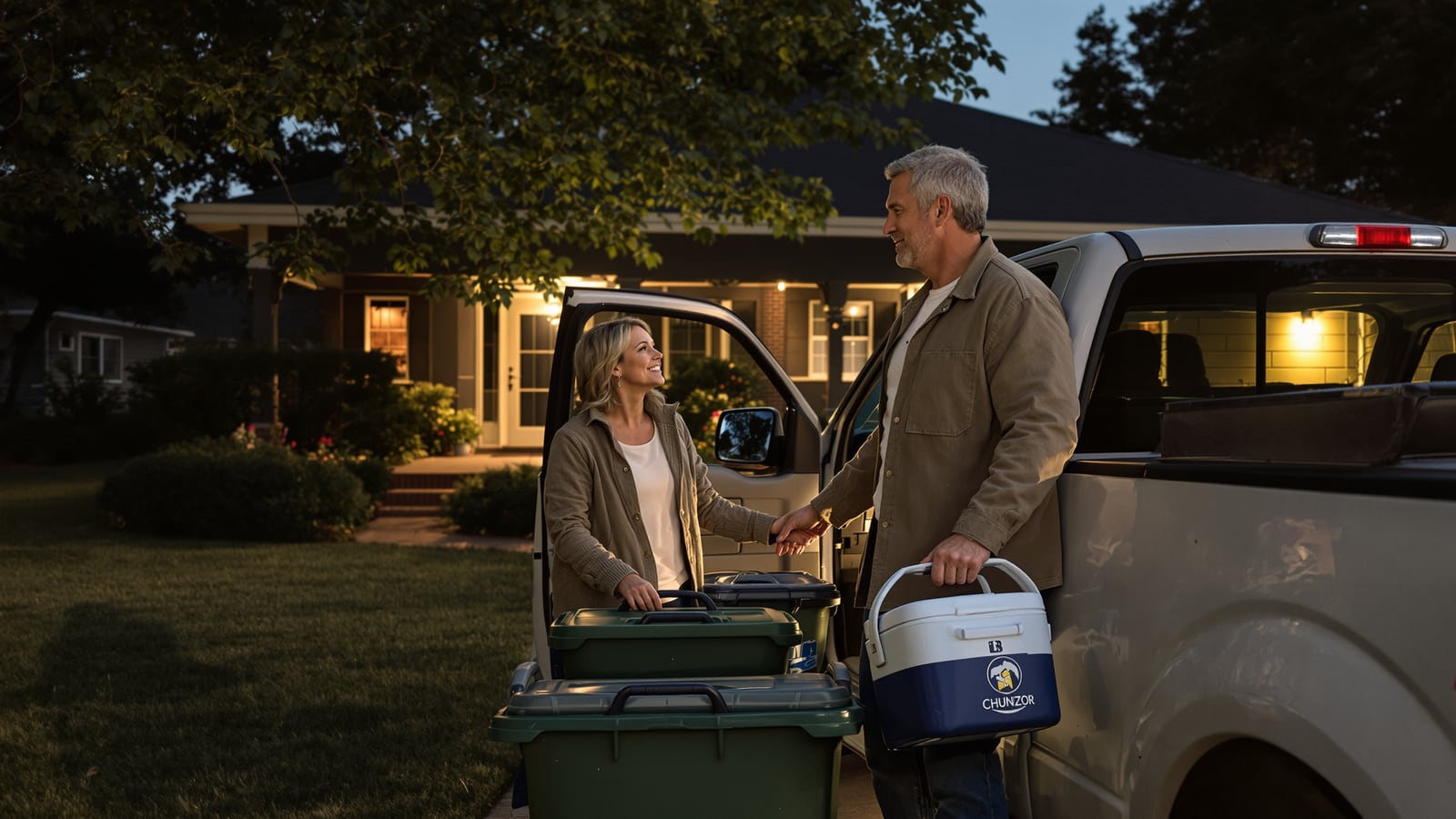
Quick answer: Pick three small things your spouse does every week without being asked. Thank them for one a day, out loud, naming the exact thing. Do it for two weeks and see what changes in the house.
Tuesday, 6:40 p.m. You walk in. The trash cans are at the curb. The porch light is on. There's a plate in the oven with foil on it because you got held up at work. You eat it standing at the counter, scroll your phone, and go to bed.
Nobody's angry. Nothing went wrong. That's exactly the problem, because nothing that went right got said either.
Anything daily turns into weather
You don't thank the weather. It's just there. And that's what happens to every kindness that shows up reliably. Month one of marriage, you notice the coffee already made. Year six, the coffee is a fact of the universe, like gravity, and the only thing you register is the morning it isn't made.
That's how a marriage ends up with one person tallying the misses and the other quietly doing the hits for free. Your eye goes to the one thing she forgot, or the one thing he left on the floor, because the other ten don't register as events.
You aren't a bad person for this. It's how attention works. But you can correct for it on purpose, the way you correct a truck that pulls to the right.
"She'd do it anyway" is true, and it's the whole trap
Try this line on yourself: he'd do it anyway. Probably so. He'd mow the lawn if you never said a word. She'd keep your schedule straight and your mother's birthday on the calendar for another twenty years.
But "would do it anyway" isn't the same as "owes it." Nobody gets fired from a marriage for skipping the lunch. Every small kindness is a choice somebody makes again today, with no boss, no paycheck and no review. The only payment available is being seen.
A spouse who does the invisible work for years and never hears about it doesn't usually blow up. They go quiet. They do less, then a little less, and stop volunteering the extras. By the time you notice, you'll call it distance. It started as silence about the porch light.
What a real thank-you sounds like
"You're the best" is fine. It's also forgettable. A thank-you that lands has two parts: the specific thing, and what it did for you.
- "Thanks for starting the coffee. I walked in and it was already done, and my whole morning went easier."
- "I saw you took the trash out in the rain. Thank you. I'd have let it sit till Thursday."
- "You remembered I hate that meeting. Thanks for the text. It got me through it."
Notice what's missing. No speech, no candles, no card. Ten seconds, phone down, eyes on them. Say it when it happens or the same day, while it's still true and fresh.
Say it to the kids about the other parent, too. "Mom stayed up to finish that for you" or "Dad drove across town for that." Children learn what a family notices. If the only things named out loud are the failures, that's the house they're growing up in.
And when you're the one being thanked, don't wave it off with "it's nothing." It wasn't nothing, that's the whole point. Say "glad to" or "you're welcome" and let it stand.
Where this goes wrong
A few honest warnings, because gratitude can be done badly.
Don't attach an invoice. "Thanks for dinner, now can you grab the kids' stuff?" turns the thank-you into a setup. Say thanks, stop talking, and make your request ten minutes later.
Don't do it by the clock. If you thank somebody on a schedule with nothing behind it, they'll hear the schedule. If you can't find anything today you mean, look harder. It's there. You just stopped looking.
Don't use it to cover an unfair load. If one of you is carrying the house, the kids and the calendar, and the other answers with warmer thank-yous, that's an insult with good manners. Thanks is the start. The follow-through is picking up a share of the work without being asked. Leave the kitchen cleaner than you found it. Fill the tank even if it came to you near empty. Do the thing before it turns into the thing she's tired of asking about.
Don't expect it to fix everything. Gratitude won't replace the hard talk when you actually disagree. A couple that notices each other fights on better ground, though, and the rules that keep a marriage argument from turning into a war work a lot better when the other person doesn't feel like an unpaid employee.
If you've dropped the ball for a while, thanks alone won't undo it. Start with how to apologize to your wife and mean it, then start noticing.
When thanks isn't the problem
Some marriages don't have a gratitude problem. They have fear in them, or abuse, or an addiction that's eating the household, or a crisis that's bigger than any habit you can build in a kitchen. If that's your house, a thank-you routine isn't the tool, and nobody should tell you to just try harder.
Safety comes first. If you're in danger, get to a safe place and contact your local police. For anything short of an emergency, talk to a pastor or a licensed marriage counselor soon. Don't wait for it to get worse. Asking for help is what a strong person does.
The two-week test
Write three names on a sticky note, the three small things your spouse does that you'd miss most if they stopped. The lunch packed. The bills paid before they're due. The car warmed up in January. Whatever's true in your house.
Each day for two weeks, thank them for one, out loud, with the specific part and the why. Don't announce the experiment. Don't expect a parade. Some days you'll get a shrug, and that's all right. Around day five or six, watch for the small change: a hand on your shoulder, an extra minute in the kitchen, a thank-you coming back at you for something you did and thought nobody saw.
Couples who stay married a long time tend to say this kind of thing without making a production of it, which is part of why what couples married fifty years do that the rest of us skip is worth your time.
Somebody in your house has been holding up the daily machinery with both hands for years. Tonight, tell them you saw.
Cal Brennan
Fitness
Strength coach. Trains fathers, tradesmen and desk workers, which means programs that survive a bad week.

Watch
Worth an hour of your evening
More from Marriage.
From channels we rate. Plays on YouTube.
Read next