Buy the tool the third time you borrow it
Borrowing is fine. Borrowing the same tool a third time means it's time to own one. Ten tools to start with, and how to treat the ones that aren't yours.
Quick answer: Start with ten tools that fit in one box. Buy each one the third time you catch yourself borrowing it. Keep a few spares and pay for the rest out of your own money when you can.
The knock on the door
Your bike chain slips. Your mom needs a shelf hung. A buddy's car battery terminal is loose. Each time you walk down the street, knock on a neighbor's door and ask for a wrench.
That's not a failure. Most guys with a full garage like being asked, and a neighbor who lends you a tool has done you a favor. But count the knocks. The first time, borrow it, use it, and return it better than you got it. The second time, ask yourself whether you'll need it again. The third time, you already know.
Own it.
The ten that matter
You don't need a four-hundred-piece set in a molded case. Most of those are filler wrapped around a handful of pieces you'll use. Buy these, in roughly this order:
- A 16-ounce claw hammer. Heavy enough to drive a nail, light enough that your wrist doesn't quit. A steel or fiberglass handle outlasts wood if you're rough on things.
- A 25-foot tape measure. Get the one with a wide blade. It stands out farther before it folds, which matters when you're measuring alone.
- A ratcheting screwdriver with a bit set. One handle, a pile of bits. You'll want Phillips #1 and #2, flat heads, and a few Torx.
- An adjustable wrench, 8 or 10 inches. It handles most nuts you'll meet on a bike, a faucet, or a lawn mower.
- Two kinds of pliers. A pair of needle-nose and a pair of slip-joint or groove-joint (the kind people call Channellocks).
- A utility knife with a few spare blades. Dull blades cut you. Fresh ones cut cardboard, rope, and drywall.
- A hex key set, both metric and standard. Bikes and flat-pack furniture run on these.
- A small socket set, 3/8-inch drive. Metric and standard both. This is the one that opens up the bike, the lawn mower, and eventually a car.
- A 2-foot level. A shelf that's a quarter inch off bothers everyone who walks past it.
- Safety glasses and a pair of leather work gloves. Not optional. Buy the glasses before you buy anything with a motor.
The small stuff nobody lists
Add a roll of duct tape, a roll of electrical tape, a tube of wood glue, a can of penetrating oil, a flashlight or headlamp, and a tire pressure gauge. Keep a bike patch kit in the box if you ride.
None of this is exciting. It's what you'll reach for on a Saturday morning when something breaks and your dad's at work.
What to leave for later
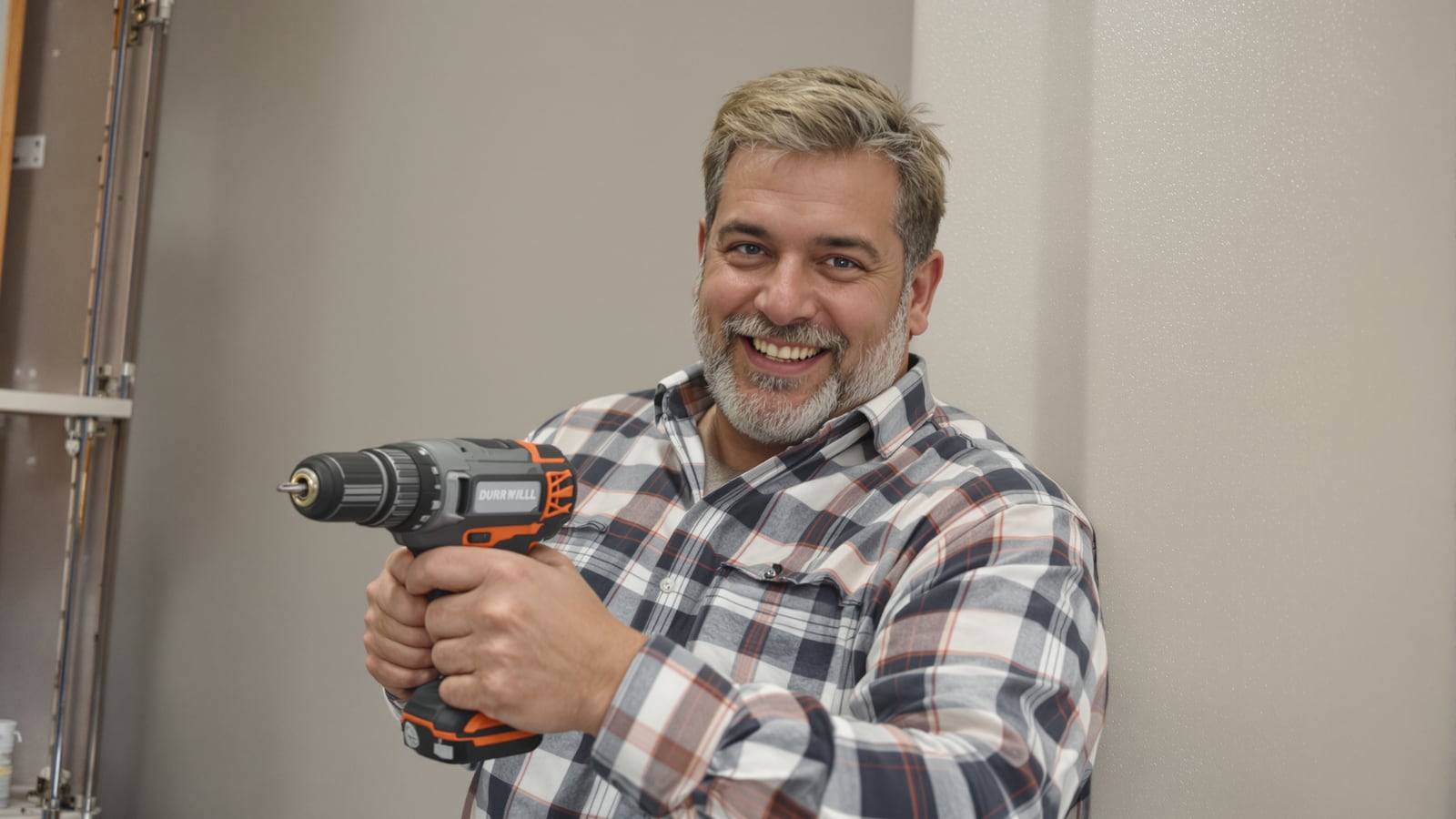
The cordless drill is the big one. It's worth owning and it's worth waiting for. Wait until you've used a borrowed one enough to know what you'd ask of it. Then look at the used market, or ask for one for a birthday. Same for a circular saw and a stud finder.
Skip the novelty stuff. The tool with fourteen functions rarely does any of them well. You can also skip the giant rolling chest at your age. A plain toolbox or a sturdy bucket is fine.
How to pay for it
Don't buy all ten in one weekend. Buy the next one when a job asks for it. Mow lawns, shovel driveways, and put the tool money aside before you spend the rest. If you've got a birthday coming, "a decent tape measure and a hammer" is a better ask than another hoodie, and most grandparents are relieved to hear it.
Ask your dad or your uncle what he'd buy first, and listen to the reasoning. Then ask whether he's got a spare you can have. A lot of men have a drawer with duplicates they'd happily hand to a kid who's serious.
Some of this connects to the larger habit of becoming someone people count on. Reliable men are built at fifteen, not at thirty makes that case, and reliability is built in the house you already live in is a good place to point that habit once you've got the tools.
The code for borrowed tools
When you borrow, you're a guest in someone's garage. The old rule applies: bring it back better than you got it.
- Wipe it down. Wipe off grease, dirt, and sawdust.
- Replace what you used up. If you borrowed a can of oil, buy a new one. If you dulled a blade, put in a fresh one.
- Return it fast. Same day if you can, and before it's asked for.
- If you broke it, say so first. Don't hand it back and hope. Tell him what happened and offer to replace it. That conversation costs you a little pride, and it buys you a neighbor who'll lend to you for years.
When it goes the other way
Once you've got a box of your own, people will ask to borrow from it. Sometimes it'll be a friend who never returns anything.
Say yes to the guy who brings it back cleaner. Say no, plainly and without apology, to the guy who has kept your socket set for three weeks. You can be kind and still hold a line. "I'll come over and help you do it" works well. You keep the tool and you get to be useful.
Write your name on everything with a paint pen. Do it the day you buy it. It's not about distrust. It's about making sure a good wrench finds its way home after a cookout.
The first test
Pick something small in your house that's been wrong for a month. A loose cabinet hinge, a wobbly chair, a door that sticks. Fix it with your own tools, however few you have. Then put them back in the box where they belong.
That's the whole start of it. A box, ten tools, and a neighbor you only have to knock on when you want to say thanks.
Cal Brennan
Fitness
Strength coach. Trains fathers, tradesmen and desk workers, which means programs that survive a bad week.

Read next