Go see the chaplain before you need one
Chaplains keep what you tell them private and have no say in your career. Here's how to find a good one and what to ask the first time.
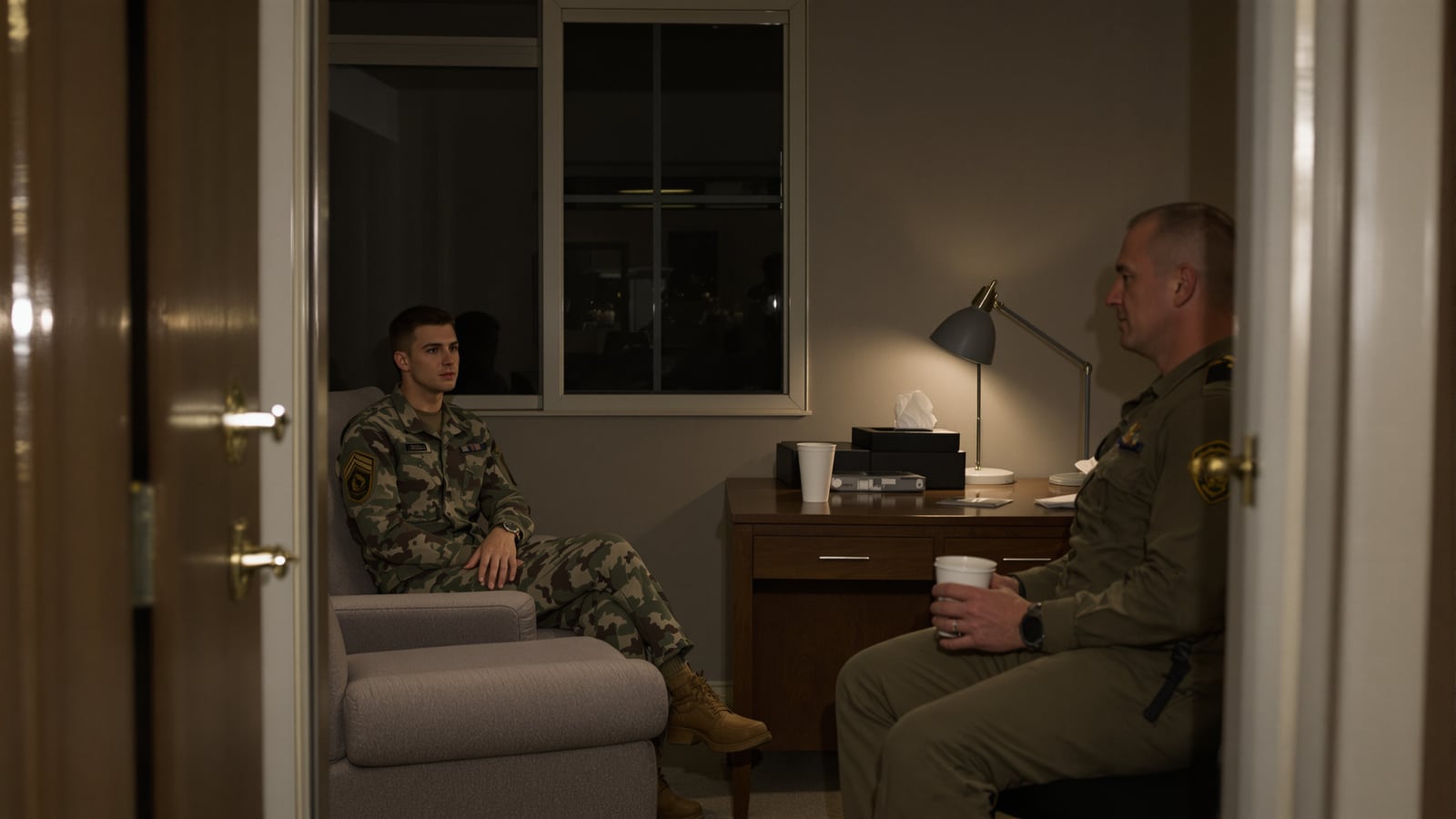
Quick answer: A military chaplain is a commissioned officer who doesn't write your evaluation, doesn't recommend you for discipline, and can offer you confidentiality your supervisor can't. You don't have to be religious to walk in. Meet one on a quiet week, ask three questions, and you'll know where to go when a bad week comes.
The officer who isn't in your way
Picture a specialist on a 0200 shift. His father went into the hospital that afternoon. He doesn't want to tell his sergeant yet, because he doesn't know what he's asking for. He doesn't want to call home and sound rattled. The commander's door feels like the wrong door. The clinic is closed.
The chaplain's office is the right door, and most people in uniform never think of it.
Chaplains are officers, but they stand outside the line that decides your promotions and your punishments. Their job is care, not command. That's why a chaplain can hear things a first sergeant shouldn't have to carry and you shouldn't have to risk saying out loud.
They're also noncombatants. They don't carry weapons. In the Army and Air Force a chaplain works with an enlisted assistant, and in the Navy and Marine Corps it's a religious program specialist. The two of them are usually called the unit ministry team, and that's the phrase to look for on a unit directory or a command board.
What they actually do
Think wider than services on Sunday.
- Grief. A death in the family, a buddy lost in training, a suicide in the unit. Chaplains are often the first people in the room and the last to leave.
- Marriage and family trouble. Deployments, money fights, a spouse who feels alone at a duty station two thousand miles from home. If that's you, the piece on what holds a marriage together through a deployment pairs well with a conversation.
- Moral weight. Things you saw, things you did, orders you carried out and can't set down. Plenty of people carry this quietly for years. A chaplain's office is a legitimate place to start putting it down.
- Emergencies. When there's a death or serious illness at home, a chaplain can help you get moving on emergency leave and point you to the Red Cross, whose emergency communication line for service members is 1-877-272-7337.
- Religious practice. The Constitution protects your free exercise of religion, and the chaplain corps exists in part to make that real where you can't choose your zip code. Chaplains provide for their own tradition and arrange access for others. If you want a service, a text, a holiday observed or a leader from your own tradition, ask.
You also don't need an appointment or a reason you can say neatly. "I need to talk to somebody" is enough.
The confidentiality question, answered straight
This is why many service members use a chaplain and not a friend, a supervisor or even a counselor. Under the Military Rules of Evidence, Rule 503, what you say to a chaplain in confidence, as a matter of conscience or religious practice, is privileged. The chaplain generally can't be made to repeat it.
Two cautions, because nobody should learn them the hard way.
First, privilege is narrower than "anything I ever said near a chaplain." Context matters. A hallway chat isn't the same as a private conversation you opened by asking for confidence.
Second, there are limits, and a threat to your life or somebody else's changes the picture. Nobody wants to find that out mid-sentence.
So ask first. Before you get into it, say: "Before I tell you anything, what stays between us and what doesn't?" A good chaplain will answer that plainly and won't be offended. If the answer is vague, that tells you something too.
And if your trouble is legal, a chaplain isn't your lawyer. Talk to a military defense counsel for that, and use the chaplain for the weight on you while you do.
How to find the right one
You'll have more than one choice than you think. Start close and work outward.
- Your unit's chaplain. Ask your first sergeant, your sergeant major or the unit administrator for the chaplain's office. In an emergency, any duty officer can get you to one.
- The installation chapel or religious support office. Every major base has one. The staff there can tell you who's on call and who's good with what: young troops, couples, combat stress, grief.
- Another unit's chaplain. You're allowed to go outside your own. If your battalion chaplain knows your commander well and that bothers you, walk across post. Nobody owns you.
- The VA, once you're out. VA medical centers have chaplains who serve veterans of any background or none. Still in? Start with the options above, then read what to do in the 18 months before you take off the uniform so you know who to call on the far side.
Fresh out of enlistment paperwork and headed to basic? Chaplains are there too, and recruits often meet one in the first week. The 90 days before you ship will tell you what else to line up.
Don't match the label, match the person
Most people hunt for a chaplain from their own denomination and stop there. That helps, and it's a fair thing to want. But it's not the main test.
A chaplain's duty is to serve everyone, and the good ones do. A man from a different tradition who listens well will do more for you than someone who shares your denomination and checks his watch.
Chaplains are addressed as "Chaplain" in the Army and Navy no matter their rank, which says something. The title is the job.
Three questions for the first visit
Keep the first meeting small. Ten minutes. Say you're introducing yourself and want to know how it works.
- What stays between us, and what are the limits?
- What kinds of things do people bring you most?
- If this isn't something you can help with, who do you send people to?
Then pay attention to how it feels. Did they listen or lecture? Did they answer straight or perform? Do you want to come back? If not, try the next one. Choosing a different chaplain is normal and nobody takes it personally.
Know the other lines too
A chaplain isn't a replacement for a doctor, a therapist, or a hotline. They're often the person who gets you to those.
If you or someone you know is in crisis, the Veterans Crisis Line is open around the clock. Dial 988, then press 1. You can also text 838255. Service members and their families can call Military OneSource at 800-342-9647 for confidential non-medical counseling and referrals. The Military and Family Life Counseling program offers short-term, confidential help too. Ask at your installation.
What to do this week
Look up your unit's chaplain. Learn the name, the building and the hours. Save the phone number in your phone, and put the Veterans Crisis Line next to it. If you're a spouse, do the same. You'll probably need the number before your service member does.
Then stop in, say hello, and ask the three questions. You'll have spent twenty minutes and bought yourself a door that opens when the others don't.
Someday, at 0200, you'll be glad you knew where it was.
Ade Fisher
Young Men
Teaches the trades intake at a community college. Writes the manual he wishes his students arrived with.

Watch
Worth an hour of your evening
More from Military & Vets.
From channels we rate. Plays on YouTube.
Read next