Your assessment notice is an opinion, not a bill
The county's number can be wrong, and the deadline to say so is short. Here's how to check it in an evening and decide if a challenge pays.
Quick answer: Check the facts on your property record first, then test the value against recent nearby sales. If the county's number is off by more than a few percent, file before the deadline printed on the notice. Deadlines are often measured in weeks, and they vary by state and county.
The envelope looks like a bill. It isn't one. It's the county's opinion of what your house would sell for, and opinions get made with software, averages, and a drive-by at best. Some of them are wrong. Yours might be.
Read the notice in this order
Don't start with the big number. Start with the date.
Find the appeal deadline, usually printed near the value or on the back. Write it on the calendar today. Miss it and you've bought another year at the county's number, however good your case was.
Then look at three things:
- The new value against last year's. A jump in a single cycle is the usual trigger for an appeal.
- The exemptions. Many places offer a homestead exemption, plus relief for seniors, disabled owners, or veterans. If you qualify and it isn't listed, that's the fastest money on the page. It usually takes a form, not an argument.
- The parcel details. Address, lot size, and parcel number. You'd be surprised how often the first error is on the first line.
Also note what the notice isn't. It isn't the tax rate. Your bill is the assessed value multiplied by the local rate, often quoted in mills (dollars per $1,000 of value), after exemptions. You can only fight the value here.
Pull the property record card
Your assessor's website almost certainly has a record card for your parcel. Search by address. It's free, and it lists what the county believes you own.
Go through it line by line, the way you'd check a contractor's invoice:
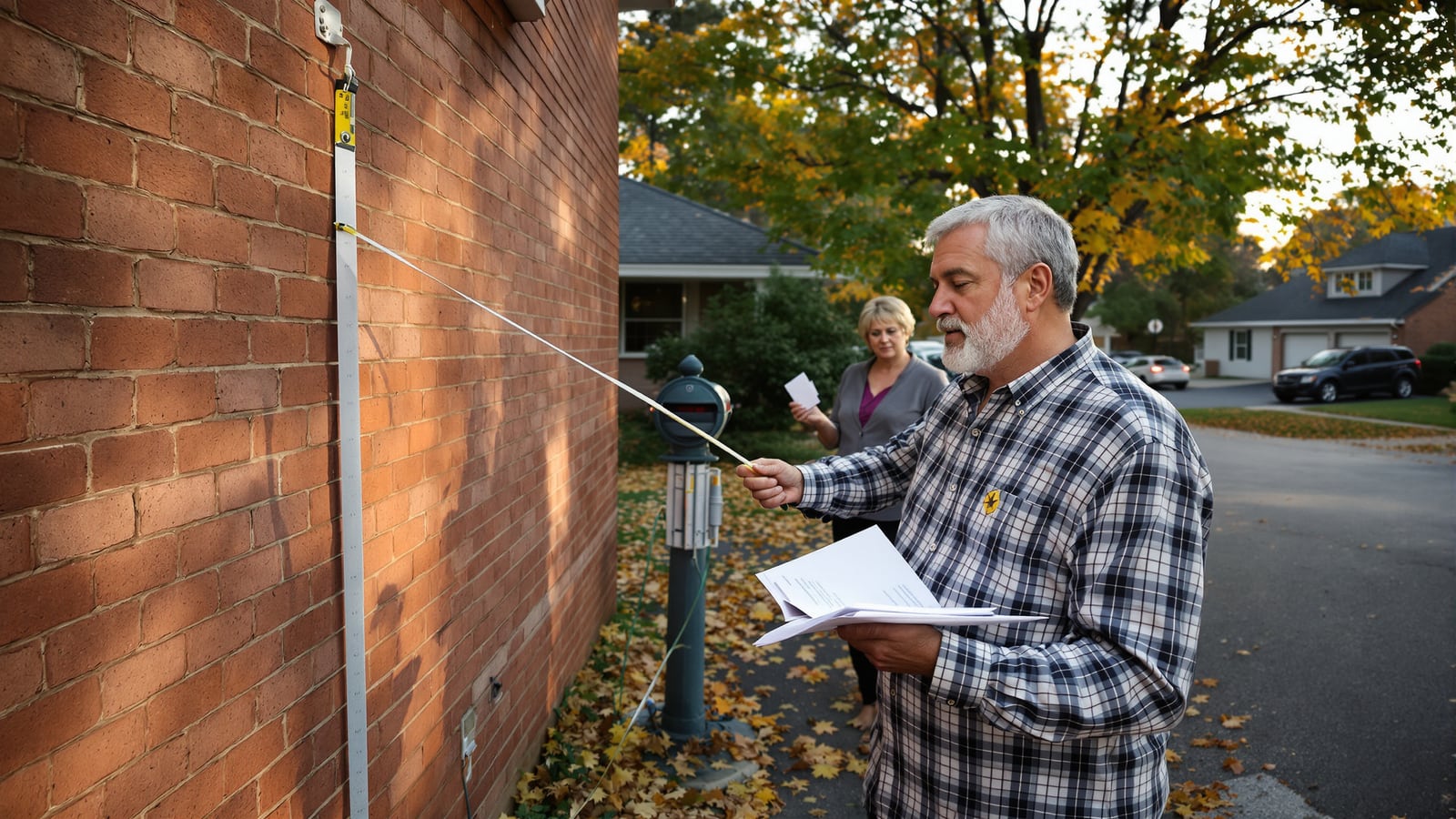
- Square footage. Compare it to your own paperwork or a quick tape measure.
- Bedrooms and bathrooms.
- A finished basement or attic that's actually storage and bare studs.
- A garage, deck, pool, or outbuilding that was torn down, or never existed.
- Condition rating. If the card says "good" and you've got a roof that's twenty-five years old and a cracked foundation wall, that matters.
Picture a ranch listed with four bedrooms, three baths, and a finished lower level. You've got three bedrooms, two baths, and a basement with a sump pump and a workbench. That's not a judgment call. It's a factual error, and factual errors are the easiest appeals to win. Many offices fix them with a phone call.
Test the value against real sales
If the facts check out, you're arguing about the number itself. Here the evidence is recent sales, not what you paid years ago and not what you feel your place is worth.
Find three to five homes that sold near you, ideally within the last year, similar in size, age, and condition. Same neighborhood beats same ZIP code. Use closed sale prices, not listing prices. Listings are hope. Closings are money.
Then adjust honestly. If your comparable has an extra bathroom and a new kitchen, it should sell for more than yours, so it doesn't prove your house is worth the same. Pick sales a skeptical clerk would accept.
Two other angles are worth a look:
- Neighbors' assessments. If similar houses on your street are assessed meaningfully lower than yours, you may have a fairness argument even when your number is close to market. Some jurisdictions give this real weight and some don't. Ask the assessor's office how they treat it.
- Local assessment ratios. Some counties assess at a set percentage of market value. Make sure you compare like with like before you cry foul.
Do the arithmetic before you file
A challenge costs an evening, maybe a morning off work, and in some places a modest filing fee. So do the math first.
Take a hypothetical. Your assessed value is $350,000, and the combined rate is 18 mills (1.8 percent). Your bill is $350,000 × 0.018, or $6,300. Your sales evidence says the home is closer to $330,000. At $330,000 the bill is $5,940.
That's $360 a year for a few hours of work. And it doesn't stop there, because the lower value usually carries forward until the next reassessment. In most places, anyway. Confirm yours.
Now the other direction. Overassessed by $5,000 on those same numbers is $90 a year. Still worth a phone call if the error is a typo. Probably not worth a hearing.
If you pay taxes through your mortgage escrow, a successful appeal lowers the escrow payment at the next analysis. You may also get a refund check if the lender already paid the higher amount. When that check lands, decide what it's for before it disappears.
Ask informally, then file formally
Call the assessor's office first. Be polite and specific: "The record card shows a finished basement. Mine isn't finished. Can you correct that?" Clerks hear angry calls all day. A calm one with a parcel number and a photo gets listened to.
If the informal route fails, or the deadline is close, file the formal appeal. Rules differ widely. The form may go to a board of review, a tribunal, or a county board, and some states add further levels above that. The notice or the assessor's website should say where to go. Bring:
- Photos of anything the record gets wrong
- Your comparable sales, with addresses and dates
- Repair estimates from a contractor, if condition is your argument
- A one-page summary: the county's value, your value, and the reason
Stick to value. "My taxes are too high" is a complaint about the rate, and the board can't touch it. "My home is worth $330,000 and here are four sales that show it" is an appeal.
Before you file, ask whether a review can raise a value as well as lower it. In most places it won't happen on solid evidence, but know your local rules. Some companies handle appeals for a share of the savings. A simple case is something you can do yourself, but a complicated or high-value property may justify a professional.
What the appeal can't fix
This part is commentary.
An appeal gets you a fair share of the bill. It doesn't touch how big the bill is. That's set by the levy, and the levy is set by budgets, school boards, and county commissioners, who vote in meetings most homeowners never attend.
If you spend four hours shaving $360 off your assessment and zero hours on the budget that raised the rate by two mills, you've bailed one bucket while the boat takes on water. Local government grows when nobody's watching. Read the proposed budget. Go to the hearing. Vote on the levy. A homeowner who shows up costs the spenders more sleep than one who only files paperwork.
And keep a cushion for the years the number goes up anyway. An emergency fund is what turns a surprise tax bill into an annoyance. Like the car payment, the mortgage payment was never the whole price of owning the thing.
This article is general education, not tax, legal, or financial advice. Rules, deadlines, and procedures differ by state and county. For your situation, ask your local assessor's office, a tax professional, or a property tax attorney.
Ray Okonkwo
Money & Business
Former commercial banker turned small-business owner. Covers salary, credit, margins and the arithmetic nobody does before signing.

Watch
Worth an hour of your evening
More from Money.
From channels we rate. Plays on YouTube.
Read next