Commentary.
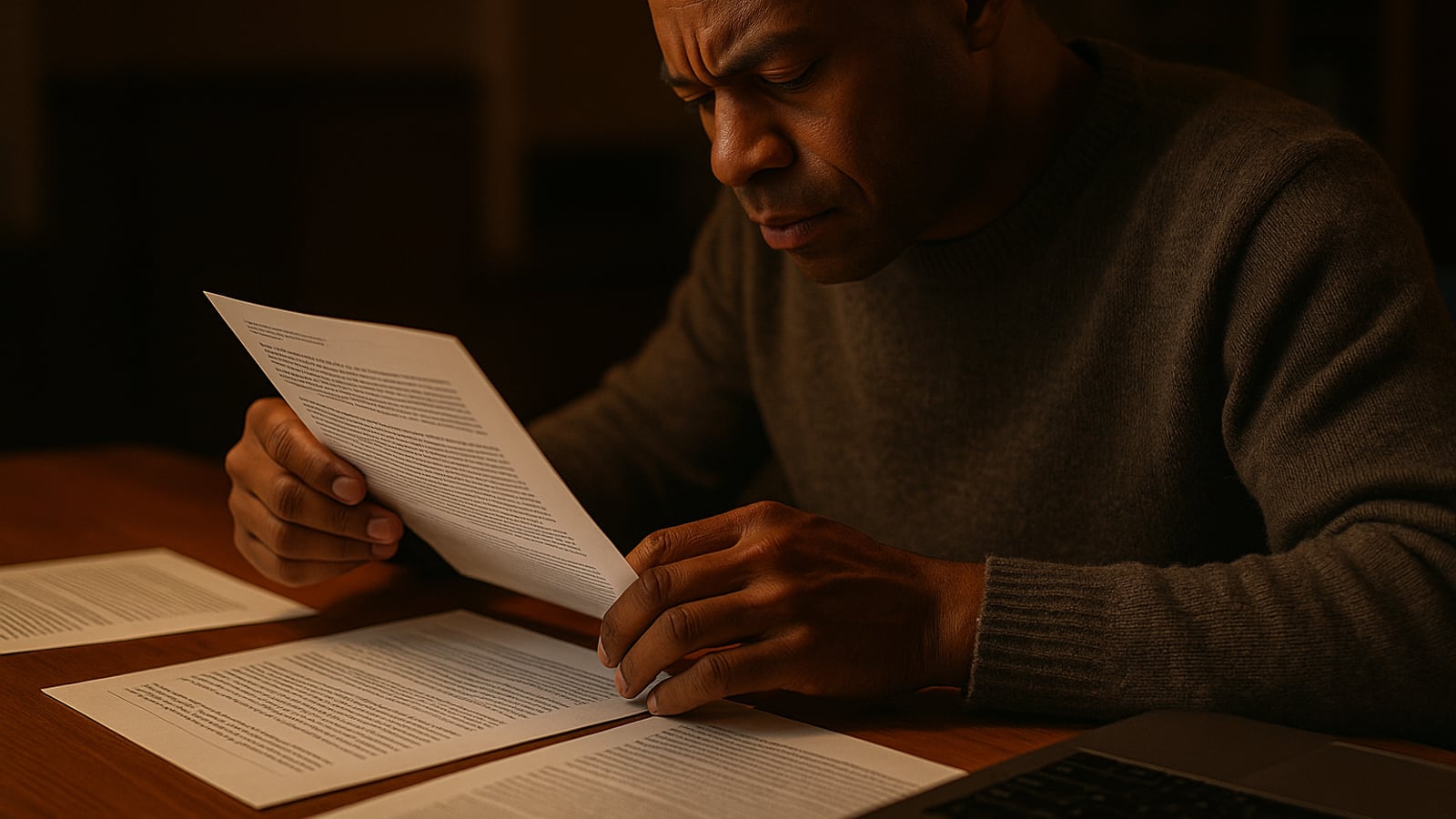
Start with the single habit that separates research from scrolling: find the primary document and read the part everyone is quoting.
If the claim is about a bill, the text is public on congress.gov. If it's about a company's finances, the filings are on the SEC's EDGAR database. If it's about a lawsuit, the docket exists and the filings are usually obtainable. If it's about a drug trial, the registration and often the results sit on ClinicalTrials.gov, and the published paper is findable through PubMed. If it's about employment or prices, the Bureau of Labor Statistics publishes the tables the headlines are built from.
Most arguments you'll have this month could be settled in eleven minutes by one person actually opening the source. Almost nobody does it. That's the whole game.
How the phrase got ruined
"Do your own research" used to be a reasonable thing to say. Now it lands as an insult, and it got there from both directions at once.
One side wore it out. During the pandemic years it became the sign-off on claims that had involved no research at all — a video, a screenshot, a thread, a confident stranger. The words stopped describing a method and started describing a mood. Skepticism toward institutions is healthy. Skepticism that only ever points one way isn't skepticism, it's a preference with better branding.
The other side overcorrected. Mocking the phrase slid quickly into an argument that ordinary people have no business checking anything, that reading a paper you didn't write is arrogance. That's a worse error. Institutions have been wrong in public, repeatedly and expensively, on things that mattered. Guidance changed. Positions that got people suspended from platforms later turned up in mainstream coverage. A citizen who wants to see the underlying document isn't a crank.
So the phrase is now useless as a signal. Fine. The underlying work is still yours to do, and it has an actual shape.
Research is a method, not a posture
You can tell the difference in about thirty seconds.
Research has a question you could answer either way. It has sources you can name and a record of what you looked at. It ends somewhere you didn't start, at least some of the time.
The counterfeit has a conclusion and a search history. It never comes back empty-handed, because it isn't looking — it's shopping. And it feels identical from the inside. That's the problem. Three hours of reading things you already agreed with produces the same satisfied certainty as three hours of genuine work, which is why people who've done the second thing and people who've done the first both say "I've looked into this."
One fix costs nothing. Before you open a single tab, write down what would change your mind. Be specific. "If the study turns out to be in mice, I'll drop it." "If the quote is accurate in context, I'll concede the point." If you can't finish that sentence, you're not researching. You're preparing.
What you're actually qualified to check
You probably can't evaluate the statistical methods in a clinical paper. Neither can most people quoting it at you. That doesn't leave you helpless, because there's a whole tier of verification that requires no expertise at all.
Does the claim match the source? This catches an enormous share of nonsense. Somebody says a study found X. Open the study. Frequently it found something adjacent, or smaller, or in a population that has nothing to do with the argument.
Who was studied, and how many? The abstract usually tells you. Mice aren't people. Twenty subjects aren't twenty thousand. A survey of a self-selected online panel isn't a random sample.
Is the number relative or absolute? This one is worth learning properly. A treatment that moves risk from two in a thousand to one in a thousand is a fifty percent reduction and a one-in-a-thousand difference. Both descriptions are true. Only one is useful when you're deciding something.
What's the date, and was it retracted or superseded? Papers get withdrawn. Guidance gets updated. A screenshot has no expiry date printed on it.
Who paid for it? Not disqualifying. Relevant.
None of that requires a degree. It requires the willingness to open the thing.
Then read the strongest version of the other side
Not the dumbest version. The strongest one, argued by someone competent who has thought about it longer than you have.
This is the step almost everyone skips, and skipping it's why so much confident opinion collapses the moment it meets a real objection. If you can't state the best case against your position in a way its holders would recognize as fair, you don't understand your own position yet. You've just memorized it.
A useful test: can you name one fact that genuinely cuts against what you believe? If the answer is no, you're not on the winning side of an argument. You're not in the argument.
You will still have to trust somebody
Nobody reads every study. Nobody has the time or the training. Choosing whom to believe is unavoidable, and choosing well is itself the research. Judge by track record, not by vibe.
- Do they publish corrections, by name, when they get it wrong?
- Are their claims specific enough to be wrong in the first place?
- Do they distinguish between what's established and what they suspect?
- Do they bear any cost if they're mistaken?
- Do they sometimes reach conclusions their audience won't like?
That last one matters most. A voice that has never once disappointed its own side is performing, not analyzing. Follow a few people who make you uncomfortable at predictable intervals. It's a decent sign they're tracking reality rather than the crowd.
And there's a fine line between checking a claim and deciding you've out-thought an entire field on a weekend. Reading isn't the same as competence. A cardiologist has seen ten thousand hearts. You've read three papers about one. Both facts can be true.
The line you shouldn't cross alone
Do all the reading you want. But if the question is what to do about your own body, your own contract, your own taxes, or your own case, the reading prepares you for the conversation — it doesn't replace it. Take your notes and your sources to a physician, an attorney, a licensed accountant. Ask better questions than you would have asked. Say the words "what would change your recommendation." A good professional respects a prepared client. A professional who bristles at being asked to explain is telling you something worth knowing.
A practical version you can run this week
Pick one claim you're confident about and treat it properly. Twenty minutes, not an evening.
Write the question as a question. Write what would change your mind. Find the primary source. Read the methods section and the limitations section. Find the best argument against it. Write down what you now think, including the parts you're unsure about.
Then notice how it feels to hold a position you can defend from the source material instead of from memory of somebody else's summary. It's steadier. You argue less and persuade more, because you're no longer defending your identity — you're describing something you actually looked at.
The phrase is probably unsalvageable as a slogan. Let it go. Keep the habit, do it quietly, and stop announcing it.
Marcus Vale
Editor-in-Chief
Twenty years in magazines, most of it deciding what to cut. Writes about work, discipline and the decisions that compound.

Watch
Worth an hour of your evening
More from News.
From channels we rate. Plays on YouTube.
Read next