
The strip of your lot that isn't entirely yours
An easement can put a utility crew in your backyard or stop a garage before the slab dries. Find every one before closing, not after.
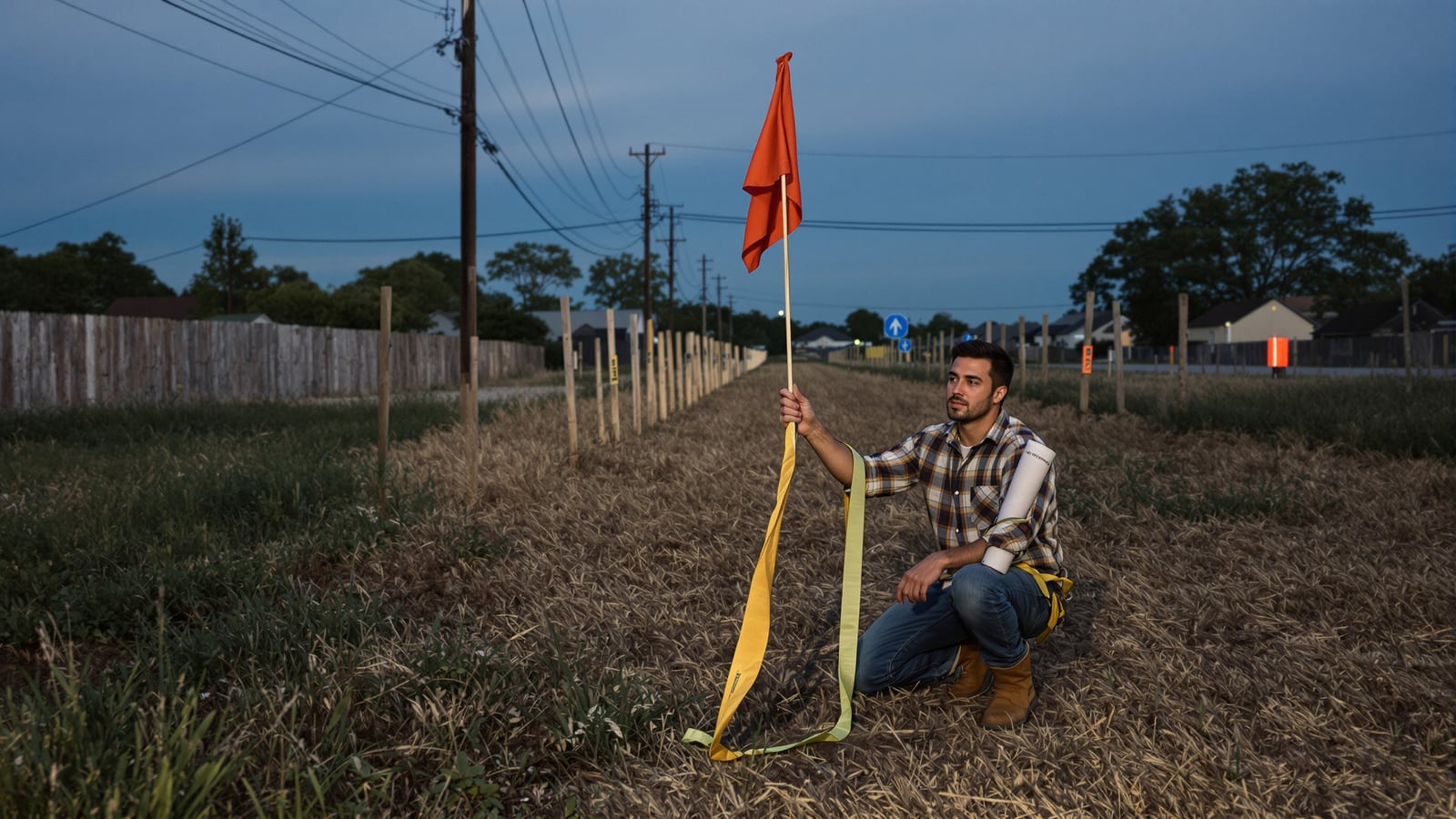
Quick answer: An easement is someone else's legal right to use part of land you own, for a stated purpose. You keep the title and the tax bill. They keep the right of use. Find them with four things: the title commitment, the recorded documents behind it, a survey, and a slow walk of the ground itself.
The slab that had to come out
Picture a buyer who closes on a house with a deep backyard. He pours a slab in the back corner for a shop. Six weeks later a letter arrives from the power company. Overhead lines run along the rear property line, and the company holds a recorded right to a strip fifteen feet wide beside them. The slab is inside it. The company can ask him to remove it, and he'll likely be the one paying for that.
Nothing was hidden. The easement was on record at the county the whole time. He just never looked.
What you'll actually run into
Most easements fall into a few families.
Utility easements. Power, gas, water, sewer, phone, cable. They're usually along a lot line or the front edge by the road, and they let the company enter, dig, repair and cut back trees.
Access easements. Also called ingress and egress. They let a neighbor, or the owner of a landlocked parcel, cross your land to reach a road. A shared driveway is the common version.
Drainage easements. They keep water moving across your lot to somewhere else. Regrade it or build a berm and you can create a legal problem and a flooded neighbor in one afternoon.
Conservation and other restrictive easements. Usually voluntary, often in rural areas, and they limit what the land can be used for. They're typically permanent.
Two terms are worth knowing. An easement appurtenant belongs to a neighboring parcel and goes along with that land when it sells. An easement in gross belongs to a person or company, like a utility.
Then there are the ones nobody wrote down. A prescriptive easement can arise when someone openly uses part of your land for a long stretch, and the required number of years varies a lot by state. An easement by necessity can arise when a parcel has no other way out. These can show up with no document at all, which is why paperwork alone doesn't settle the question.
Who can use what
You still own the dirt. The easement holder can use it for the purpose named in the document, and that's all.
In practice that usually means you can mow it, plant grass, park on it and run a garden hose across it. You usually can't build on it, wall it off, or do anything that gets in the holder's way. A gate across an access easement is a classic fight. Whether it's allowed depends on the document's wording and your state.
A worked example, with made-up numbers. Say a recorded access easement runs 20 feet wide along 300 feet of your lot to reach a neighbor's back acreage. That's 6,000 square feet, about 0.14 acre. Small on paper. But if it runs down the middle of your side yard, it can decide where the fence, the pool and the future garage can go.
Maintenance is the other half. Some documents spell out who plows, grades and repairs. Many say nothing. If you share a driveway with a neighbor, get a written, signed and recorded maintenance agreement. Splitting the cost of gravel on a handshake works great until one of you sells.
How to find them, in order
- Read the title commitment, and the exceptions list in particular. Your title company or closing attorney issues it early, and it's covered in the twelve steps from preapproval to keys. Look for the schedule of exceptions. It will list recorded easements, often with a book and page number. A line like "easements of record" with nothing attached isn't enough. Ask for copies of every document it references.
- Pull the plat map. The county recorder's office, often online, holds the subdivision plat. Utility strips are drawn right on it, with dimensions.
- Order a survey. A current boundary survey shows where the easements sit relative to the house, fence, shed and driveway. It also shows encroachments, such as your neighbor's fence on your side. Cost depends on acreage, terrain and state, so get a quote early. It's cheap next to a teardown.
- Walk the property with the survey in hand. Look for utility poles, green pedestal boxes, manhole covers, a gas line marker, a culvert, a worn dirt track, a neighbor's driveway that clips your corner. The ground often shows what the paper doesn't.
- Ask. Talk to the neighbors. Call the utilities. Calling 811 before any digging gets buried lines marked, but it doesn't tell you what legal rights a company holds. Different question.
Do this inside your inspection window. The home inspection is your last cheap exit, and the same goes for the survey and title review. Once that window closes, so does your leverage.
What usually goes wrong
Trusting the title policy to cover it. Title insurance isn't a promise that no easements exist. Standard policies commonly exclude recorded easements listed as exceptions, and often exclude matters a survey would have revealed or rights that aren't on record. Extended coverage can narrow those gaps, and what's offered varies by state and company. Ask your title company or attorney exactly what's covered and what isn't.
Skipping the survey to save money. The old survey from the seller's drawer might be twenty years out of date. Fences get moved. Sheds get added.
Assuming an old easement died. "Nobody's used that path in years" doesn't end anything. Ending an easement usually takes a signed, recorded release from the holder, a legal merger of the two parcels, or a court ruling. Some can be lost by abandonment, but proving that's a legal fight. Hire a real estate attorney before you count on it.
Building first and asking later. Check the document and call the utility before the permit, not after the concrete.
If you're the landowner or the landlord
Sometimes you're the one being asked. A pipeline company, a power cooperative or a neighbor wants a strip of your land. Easements like these usually run with the land, often for good. Payment, width, restoration of the surface, liability and who can assign the right to someone else are all negotiable before you sign and mostly not after. Have a real estate attorney read it first. Don't sign anything at the kitchen table the day it's put in front of you.
Landlords: know what's on your parcels before you promise a tenant a fenced yard or a shed. A tenant who loses part of the yard to a drainage strip will blame you, not the county.
One line for the file
It's your land. Know exactly what's been promised to others before you promise a lender thirty years of payments on it. And if a neighbor ever asks to cross your property, be neighborly about it, then get it in writing and recorded so it's fair to both of you and clear to whoever buys the place next.
Laws, taxes and customs on easements vary by state and county, and the numbers above are illustrations, not market data. This is general education, not legal, tax or financial advice. Before you buy, build, sign or sell, check with a licensed real estate attorney, your title company and your lender or agent.
Paper first. Then boots on the ground. Then paper again.
Ray Okonkwo
Money & Business
Former commercial banker turned small-business owner. Covers salary, credit, margins and the arithmetic nobody does before signing.

Watch
Watch how it's done
Picked for this article.
From channels we rate. Plays on YouTube.
REtipster
How to Identify Easements and Understand Them (Title Search Tutorial)
The Real Estate Lawyer
Easements Explained: What Every Property Owner Should Know
Read next