Icing, Offside and the Penalty Box, Explained in Ten Minutes
Three whistles account for almost every stoppage in a hockey game. Learn them and the sport stops looking like chaos on ice.
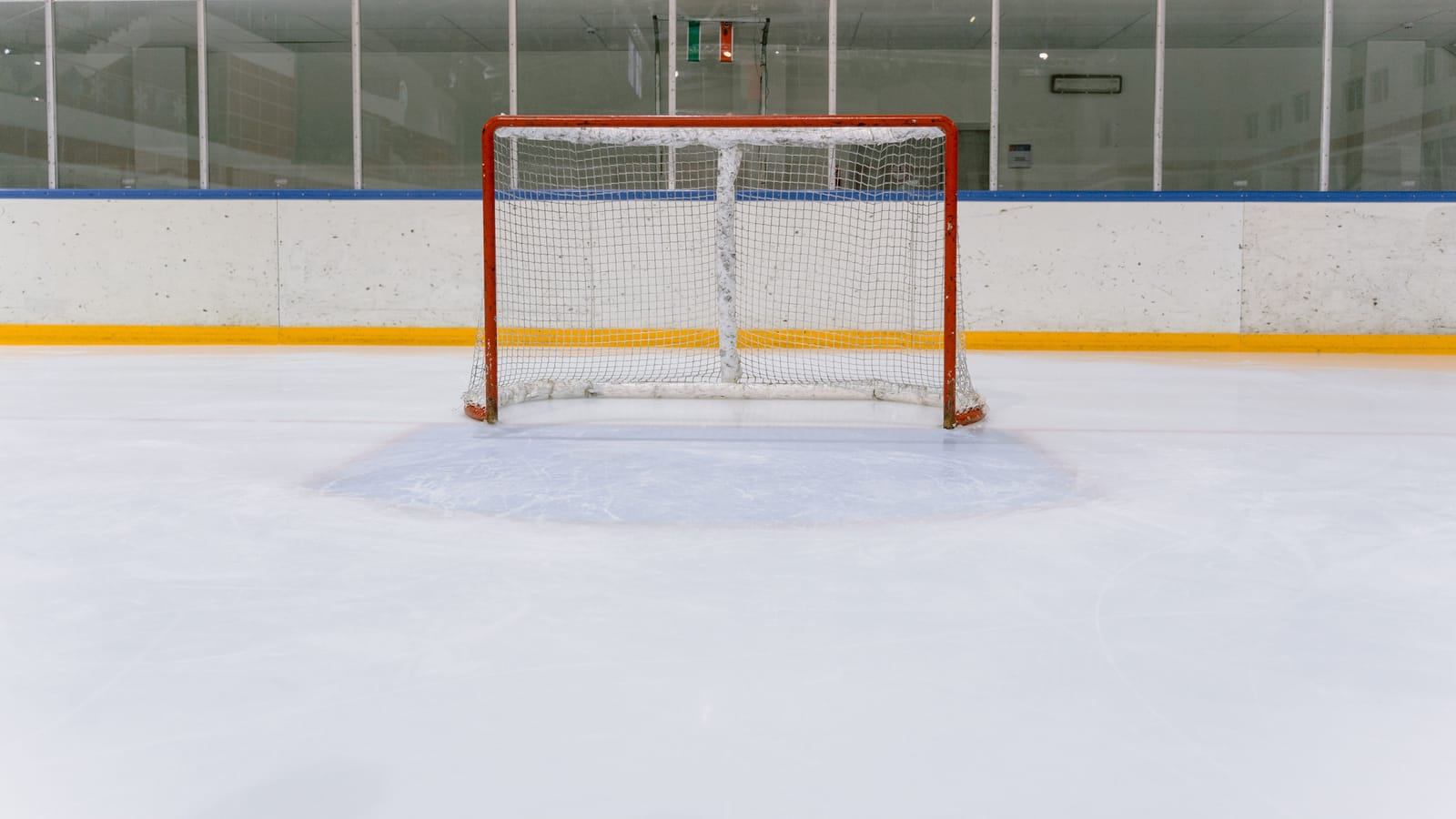
Stop watching the puck. Watch the blue line.
That's the whole trick. An NHL rink is 200 feet long and 85 feet wide, and it's divided by two blue lines into three zones. Almost every whistle you'll hear in a three-period game comes from one of three things: a puck that crossed a line at the wrong time, a player who crossed a line at the wrong time, or somebody who did something worth two minutes in a small glass room. Learn those three and you've got maybe ninety percent of the stoppages.
The rest is just hockey, which is the best-looking game there's once you can follow it.
The geography, fast
From one end board to the other: 11 feet of space behind the net, then the goal line. Then 64 feet up to the blue line. Then the 50-foot neutral zone between the blue lines. Then 64 feet, then the goal line, then 11 feet. That's the whole building.
The red line splits the rink in half at center ice. It used to matter enormously and now it matters for exactly one thing, which we'll get to. The net is four feet tall and six feet wide, which is smaller than it looks on TV and far smaller than it looks when you're a goalie.
Nine faceoff dots. One at center, four in the neutral zone, four in the ends. Where the referee drops the puck after a whistle isn't random. It's a punishment or a reward, and once you notice that, you'll start predicting the spot before the linesman skates to it.
Offside
You can't enter the attacking zone before the puck does. That's it. That's the rule.
A player is offside if both of his skates are fully over the blue line, into the attacking zone, before the puck crosses. One skate on the line keeps you legal. Since 2017 the league clarified that a skate in the air above the line counts as on the line too, which is why you'll see a winger dragging a foot back like he's testing bathwater as he flies over the boundary.
When it happens, the linesman raises an arm and doesn't blow the whistle. That's a delayed offside. Play keeps going. If every attacking player clears back out over the blue line before anyone touches the puck, the arm comes down and the game continues like nothing happened. That's the moment you hear a whole arena yell "OUT! OUT!" at grown men — they're screaming at the guy loitering near the net to skate fifteen feet backward.
If the attacking team touches the puck first, whistle. Faceoff goes back to the neutral zone, outside the line they violated. No harm, no shame, just a reset.
Coaches can challenge an offside call on a goal, and have been able to since 2015. Since 2019, if the challenge fails, the challenging team takes a minor penalty. Which means a coach betting on a frame-by-frame skate-lift now risks handing over a power play. Watch the bench during a video review. That's a man doing math.
Icing
You can't shoot the puck the length of the ice to get rid of it.
Specifically: if a team shoots the puck from behind the center red line, and it crosses the opponent's goal line untouched, that's icing. Whistle, and the faceoff comes all the way back to the offending team's own end. The worst real estate on the ice, and they earned it.
The NHL uses hybrid icing, adopted for the 2013-14 season. Instead of forcing players to race all the way to the puck and into the boards, the linesman judges the race to the end-zone faceoff dots. If the defending player gets there first, it's icing. If the attacker wins the race, play continues. It ended a category of injury that used to be genuinely ugly.
Three things wave it off. If the defending goalie leaves to play the puck, no icing. If the puck goes into the net, that's a goal, congratulations. And a team that's shorthanded can ice the puck all day long — killing a penalty buys you the right to fire it down the ice and breathe.
The part that actually decides games: since 2005-06, a team that ices the puck can't change lines. Five exhausted guys, stuck out there, starting in their own zone against fresh legs. That's the real penalty. Icing isn't a rule against laziness, it's a rule against resting.
The penalty box
Two minutes for a minor. Tripping, hooking, slashing, holding, interference, high-sticking, too many men on the ice. The offender sits, his team plays 5-on-4, and if the other side scores, he's released early. That's the deal. A double minor is four minutes, usually for high-sticking that draws blood, and a goal only wipes out the first two.
Five minutes for a major. Fighting, or a serious version of a lesser foul. Majors run the full five whether the other team scores once or three times. Ten minutes for a misconduct, which the player serves alone while his team plays full strength. A game misconduct means he's done for the night.
Two penalties at once and it's 5-on-3. Take one and give one at the same time and they offset: 4-on-4, which is the most open, most entertaining hockey in the regular season short of overtime.
A penalty shot gets awarded when a player with a clear breakaway gets fouled from behind. One man, one goalie, no defenders. It's the closest hockey comes to a free throw and it's a hundred times better.
The delayed penalty and the goalie who leaves
You'll see a referee's arm go straight up while play keeps running. That's a delayed penalty. The whistle waits until the offending team touches the puck, so the team about to go on the power play gets a free look — and they pull their goalie for a sixth attacker, because the other side can't score on an empty net without touching the puck first.
It looks like a mistake. It's the smartest six seconds in the sport.
Four things that still confuse people
The trapezoid. That painted zone behind the net, added in 2005-06. The goalie can only play the puck inside it. Wander to the corner and handle the puck, and it's a two-minute delay of game.
Puck over the glass. A defending player who shoots the puck out of play from his own zone, without a deflection, takes two minutes. Harsh, unloved, and absolutely a rule.
The two-line pass is gone. Removed in 2005-06. You can now stretch a pass from your own end all the way to the far blue line. It's why the game got faster.
Overtime isn't one thing. Regular season: five minutes of 3-on-3, then a shootout. Playoffs: full 20-minute periods, 5-on-5, sudden death, as many as it takes. That's why a Game 4 can end at one in the morning and nobody who stayed up regrets it.
Where to point your eyes
Next game, spend one full period doing nothing but watching the blue line the puck is heading toward. You'll see the winger timing his entry, the defenseman holding the line to trap somebody offside, the whole choreography that the puck cam never shows you.
Then take a kid to a rink. Not an arena — a rink, the cold kind with bad coffee and a scoreboard missing a bulb. Ten-year-olds get called offside too, and the linesman's arm goes up exactly the same way.
Marcus Vale
Editor-in-Chief
Twenty years in magazines, most of it deciding what to cut. Writes about work, discipline and the decisions that compound.

Watch
Watch how it's done
Picked for this article.
From channels we rate. Plays on YouTube.
BenchWorm | Sports Explained
What is icing? What’s an offside in hockey? [hockey 101]
Cheap Seats Sports
How Offside, Icing and Zones work in hockey | NHL 101
Read next