
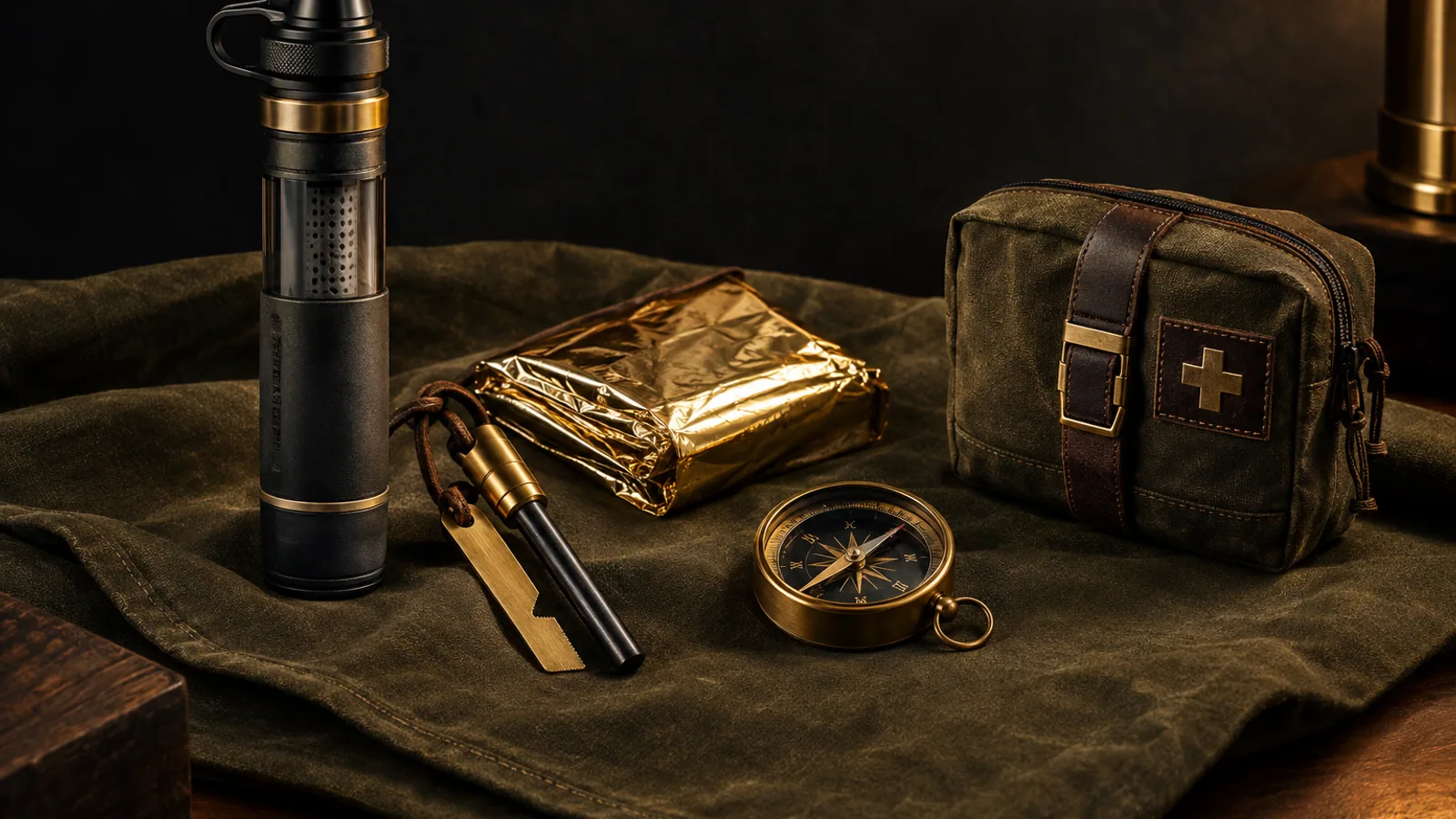
The job
Light a small campfire with a ferro rod and the spine of a knife. No lighter, no fire starter cubes, a cool evening, and a family watching. Keep it small, keep it safe, and get it done before the hot dogs go bad.
How the rookie does it
4:52 p.m. Buys a fourteen-dollar ferro rod at the register because the lanyard looked cool. Reads nothing on the package.
5:10. First strike. Nothing. Second strike. Nothing. A faint gray dust, like a sad pencil.
5:15. Drags the sharp edge of the good knife down the rod. It makes a sound that no knife should make. Still no sparks.
5:20. Sparks! Gorgeous ones. A shower. They land on a single oak leaf, which has no interest in them.
5:25. Calls the family over to witness. Strikes again for the audience. Sparks land on bare dirt and die with dignity. Eleven-year-old Maggie asks, "Dad, where's the wood?"
5:30. Leaves to find wood. A breeze takes the leaf. It was the only tinder.
5:50. Back with a fistful of damp grass and one log the size of a hip flask. The sparks land on the grass and sulk.
6:15. Kneeling in the dirt, blowing on a smolder like it's a birthday candle. Lightheaded. Maggie has quietly sorted a pile of sticks by size next to the fire ring. Nobody asked her to. She hands him a lighter from the cooler. The fire starts in two seconds.
"I was about to do that," he says.
She was right about the sticks, the wood and the lighter. He gets the marshmallow stick anyway.
How the veteran does it
Walks the site for three minutes first. Picks bare dirt, out of the wind, with no low branches overhead and no dry grass within reach.
Before touching the rod, makes four piles at arm's length. A cotton ball smeared with petroleum jelly, teased out fluffy. Sticks as thin as pencil lead. Sticks as thick as a pencil. Sticks as thick as a thumb, and a few wrist-thick pieces behind them. Everything snaps when she bends it.
She lays a few dry sticks flat as a platform, sets the cotton ball on it, and leans the thin kindling around it like a tent. The rod's coating was scraped off the night before, in the driveway.
She sets the rod's tip low against the cotton, braces the knife spine on it, and pulls the knife straight back. The rod doesn't move. Sparks drop into the fluff and it catches on the first strike.
She feeds it thin sticks, then thicker ones, in order, and leaves gaps for air. Five minutes later there's a fire the size of a hat, and the kettle's on. At the end of the evening she drowns it, stirs the ashes, and checks with the back of her hand. Cold means cold.
What the veteran knows
- Fuel before spark. Gather everything first, in piles, within reach. Then gather twice as much as you think you need. A ferro rod gives you seconds. Your fuel has to be ready for those seconds.
- New rods wear a coating. Scrape it off with the spine of your knife until you see bright, silvery metal. That's why the rookie got gray dust. Use the spine, not the edge. A spine ground square at 90 degrees bites the rod cleanly, and your edge stays sharp. Many rods come with a little steel striker. It's fine too.
- Hold the rod still. Pull the striker back. Push the rod forward and you knock the tinder over. Keep the rod low against the pile and drag the knife away from it, with your body out of the way of the blade's path. A knife is a knife. Mind where your hand and your leg are.
- Tinder is where fires are won. It must be dry and fluffy, with lots of surface. A petroleum jelly cotton ball in a zip bag costs pennies. Frayed jute twine works. So does the papery bark of a birch, where it grows. Damp grass doesn't. In wet weather, snap pencil-thin dead twigs from standing trees and shave the dry inside.
- Don't skip a size. Pencil lead, then pencil, then thumb, then wrist. Most fires that die are fires where someone jumped from twigs to a log. A flame is only as big as the next thing it can reach.
- Safety is plain, not funny. Build on bare mineral soil, with a wide cleared circle around it. Keep water and a shovel within reach. Never use gasoline, lighter fluid, or any liquid to speed things along. Keep sparks away from fuel canisters, tents, and nylon. Never leave a fire unattended, and never run one inside a tent. Burn bans and fire restrictions vary by state, county, and park. Check before you go. When you're done, drown it, stir it, and feel for heat with the back of your hand until it's cold.
- Carry a lighter anyway. A ferro rod works wet, cold, and for years. A lighter works in seconds. The veteran carries both, plus a spare lighter. The rod is the backup that doesn't run out of fuel, not a badge. If you ever need fire because you're stuck, the stakes are higher than a campout. Read what to do in the first hour you're lost in the woods. Then take a hands-on class from a qualified bushcraft or wilderness instructor. Ninety minutes with someone who can watch your hands will beat a year of videos.
Your first time, done like a veteran
- Practice in your backyard in daylight, with a hose nearby, before you ever need it.
- Scrape the new rod's coating off first.
- Check local fire rules, and the wind.
- Pick bare dirt with nothing overhead.
- Gather four piles before you strike a single spark.
- Bring a lighter. Use the ferro rod anyway, for practice.
- Hold the rod still and pull the striker back.
- Feed the fire small to large, with air between.
- Keep water close.
- Drown it, stir it, feel it. Then leave.
And if somebody in your family has already sorted the sticks by size, don't argue. Hand her the rod.
Wes Dunbar
Country & Skills
Grew up on an acreage and never quite left. Covers trucks, trades, land, and how to do the thing yourself.
Watch
Worth an hour of your evening
More from Survival & Self-Defense.
From channels we rate. Plays on YouTube.
Read next