
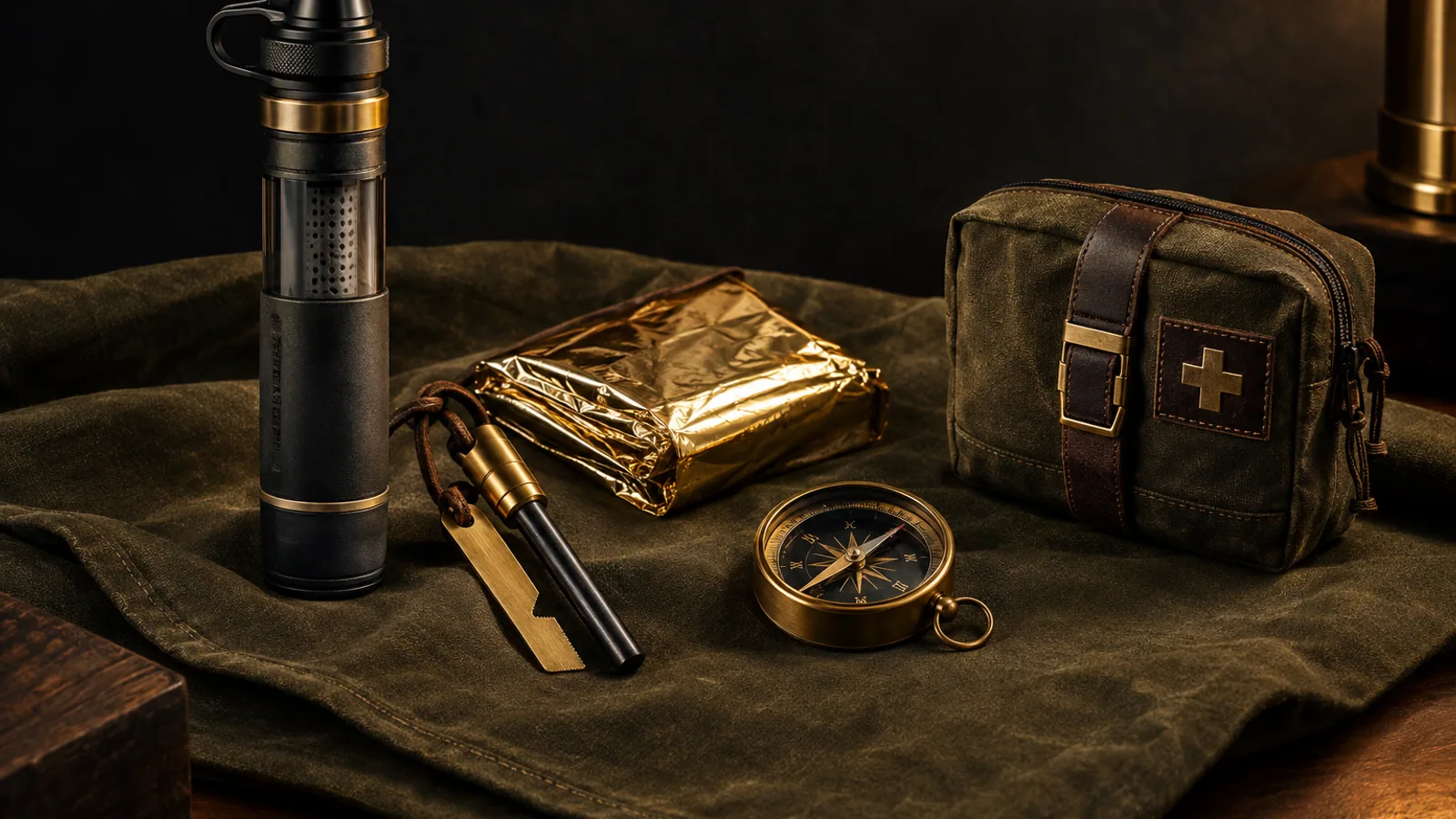
Quick answer: A week before any trip, test every light, lighter and power bank at the kitchen table. Replace whatever's weak. Carry two ways to make fire, a spare set of lithium batteries, and tell someone your route and your turnaround time.
The lighter sparks. Of course it sparks, because the flint is fine. The fuel left sometime around last March.
It's 4:50 a.m. or it's dusk on a ridge, you've got cold hands and a pile of dry tinder, and a two-dollar Bic is clicking like a ballpoint pen. Nothing about that failure was bad luck. It was a coat pocket, seven months and a habit of assuming.
Gear fails in the closet
Equipment stays in the condition you left it in. Not the condition you remember.
Batteries drain a little every week they sit. Alkaline cells can swell and leak inside the headlamp, and the corrosion they leave behind eats the contacts. Lighter fuel evaporates. Power banks lose charge on a shelf. Rubber seals dry out. The headlamp you tossed in the pack last fall got bumped on and burned its batteries to nothing in the dark of the bag.
So you load the truck picturing gear that worked in October. What you're actually loading is gear that spent the winter in a bin.
The ten-minute table test
Do this a week before you leave, not the night before. You need time to buy replacements.
Light. Switch on every flashlight and headlamp and run it on high for a full minute. A light that dims in sixty seconds will die in the dark. Pull the batteries and look for white crust. Pack a spare set in a zip bag, taped to the light or clipped to the pack, and lock the switch or flip one battery around so it can't turn itself on in transit. A decent headlamp runs $25 to $40. Lithium AAs run roughly $1.50 to $2 apiece, hold up in cold and sit on a shelf far longer than alkalines.
Fire. Carry two lighters, about $2 each, and flick both. Add a ferro rod ($10 to $15) as the backup that doesn't run out of fuel, and scrape it once so you know it throws sparks. Carry tinder in a zip bag: cotton balls with petroleum jelly, or commercial fire cubes. Butane lighters turn sluggish in deep cold, so ride them in an inside pocket against your body.
Power and navigation. Charge the power bank and check it again the morning you leave. Pack the right cable. Download offline maps for the whole area and then switch the phone to airplane mode so it isn't burning battery hunting for signal. Then carry a paper map and a compass ($20 to $35 for a good baseplate). Know how to use them. A phone is a convenience. A map is a plan.
Water. If you run a hollow-fiber filter like the popular squeeze-style ones (about $35), remember that a freeze can crack the fibers without any visible sign. If yours has been through a hard freeze, replace it. Backflush it before you go. Check the date on any purification tablets.
Shelter and clothing. Pitch the tent in the yard. You'll find the missing stake, the dead zipper and the pole section that doesn't fit, all while standing on grass instead of rock. Hose down the rain shell and see whether it still beads.
Stove. Light it at home. Shake the fuel canister and judge what's left. If you're unsure, bring a second one. Fuel is cheap and a cold dinner on a cold night is miserable.
Small stuff. A whistle on your pack strap. A knife you've sharpened. Fresh medications and any first aid items that have expired.
The firearms version of the same habit
If you hunt or carry, the discipline is identical and the stakes are higher. Owning a firearm is a right. Maintaining it, and yourself, is the responsibility that comes with it.
Do every inspection with the firearm unloaded, and verify that yourself, every time. The four rules don't pause because you're only checking a weapon light. Treat every gun as loaded, keep the muzzle in a safe direction, finger off the trigger until you're on target and have decided to fire, and know what's beyond your target. If you're not sure how to function-check your particular firearm, that's what a qualified instructor is for. Your first firearms class isn't a test you can fail, so go.
Then run the same list: batteries in any weapon light or optic, magazines that seat and feed, ammunition that's clean and dry and rotated rather than left in a hot truck all summer. Keep everything stored locked and away from children, at home and in the vehicle.
Transport rules and carry rules differ by state, province and city, sometimes between neighboring counties. Nothing here is legal advice. Check local law and talk to a qualified attorney before you cross a line you haven't researched. What your carry permit actually does at the state line is a good place to start.
The same applies at home. The light on your nightstand matters more than the one in your pack. A tested light, a spare set of batteries and a plan for who goes where is the quiet part of who goes where if someone breaks in at 2 a.m.. Avoidance and getting your family safe come first. Everything else is last.
What still goes wrong
You can't test everything, and you shouldn't try to carry two of everything. Redundancy belongs to the few things that keep you alive and oriented: fire, light, navigation, water, warmth. A second spatula isn't on the list.
Lithium batteries cost about three times what alkalines do. For a day hike with a spare set in the pack, alkalines are fine, as long as you take them out of the light between trips. For a week in the cold, buy the lithiums.
And testing isn't training. A lighter that works doesn't help a person who's never built a fire with wet wood. Take a hands-on class on navigation, fire and shelter from a qualified instructor. Many outdoor schools and local search and rescue groups offer them. If you ever end up where the first hour you're lost in the woods decides how the night goes, you'll want that practice behind you, not a good intention.
Reset on the way home
The real fix isn't the pre-trip check. It's what you do when you walk in the door.
Don't unpack onto the shelf. Dry everything. Pull the batteries from anything that'll sit. Replace what you used: the lighter you borrowed from, the tinder, the water tabs, the fuel. Hand the gear back to your future self in better shape than you took it. Same code as a borrowed truck, full tank and washed.
Tape a list to the inside lid of the gear bin. Five lines is plenty. Next season, you'll check it in ten minutes rather than rely on a memory of how you left things.
The woods don't care what you meant to pack.
Dean Shaw
Gear & Garage
Reads the warranty, the parts list and the long-term owner reviews before anything else. Trucks, tools, watches, and the cheap version that costs more.

Watch
Worth an hour of your evening
More from Survival & Self-Defense.
From channels we rate. Plays on YouTube.
Read next