

Drowning Doesn't Look Like the Movies, and It's Quiet
Real drowning has no yelling and no big splashing. Learn the quiet signs, the rescue order, and the cheap gear that keeps a good day from turning.
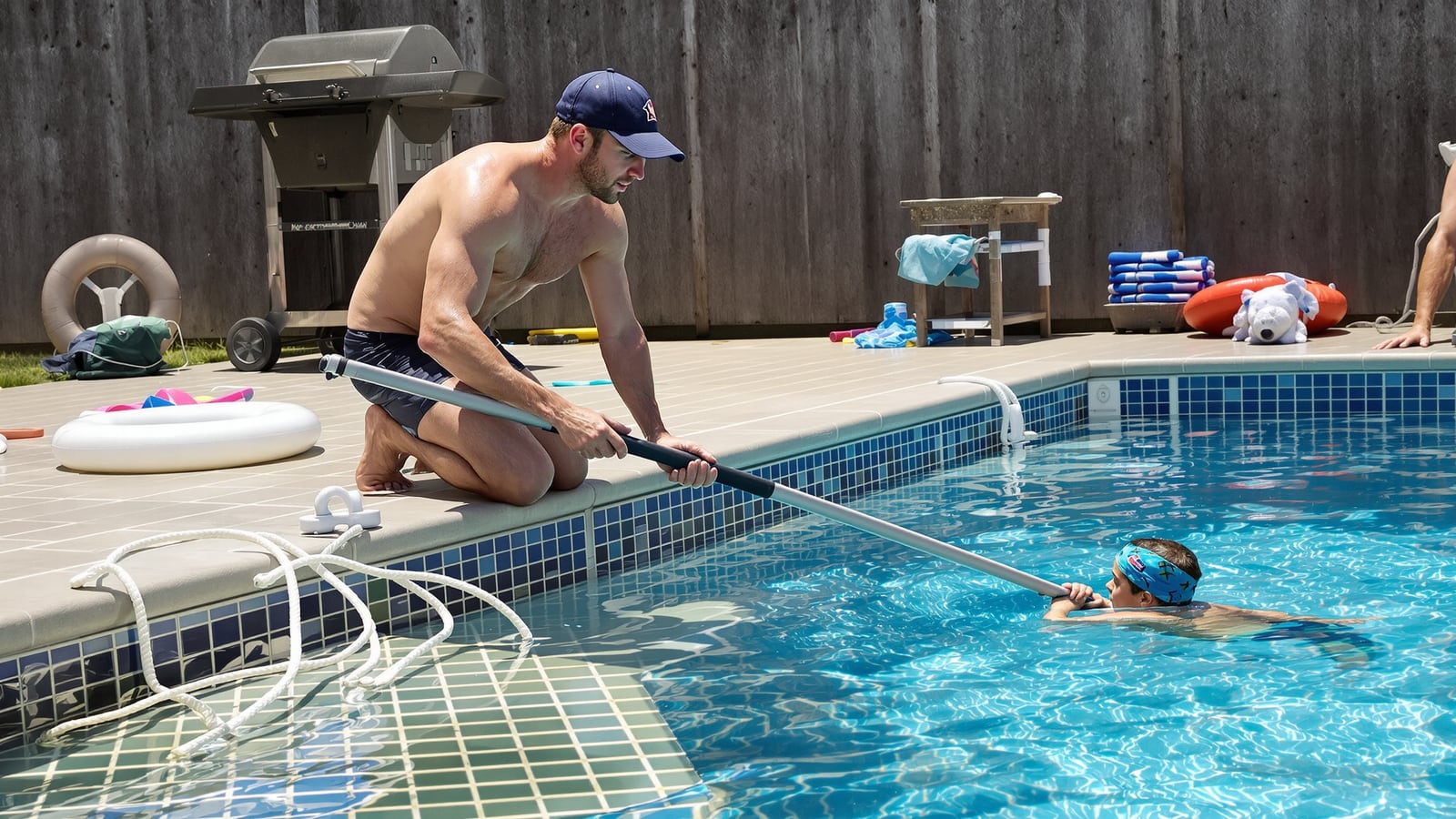
Quick answer: A person who's drowning usually can't call out or wave. Look for a vertical body, a head low in the water, and a blank stare. Reach or throw something to them. Don't swim out unless you're trained.
Picture a backyard pool party. Twenty people, music, a dad at the grill ten feet from the edge. A kid slips under the surface in the shallow-to-deep transition, and nobody turns around. Nothing happened that anybody could hear.
That's the usual shape of it. The movie version, with the thrashing and the shouting, is mostly fiction. Real drowning is quiet, and it's fast.
What it actually looks like
Lifeguard researcher Dr. Francesco Pia studied this for years and named it the instinctive drowning response. The body drops everything that isn't breathing. Commonly cited figures put the struggle at about 20 seconds for a child and 20 to 60 seconds for an adult. After that, the person goes under.
Watch for these:
- Head low, mouth at the waterline. Head may be tilted back with the mouth open.
- Upright body, no kicking. The legs aren't doing anything. They look like they're hanging.
- Arms out to the sides, pressing down on the water. It can look like climbing an invisible ladder.
- Glassy, empty eyes. Sometimes closed. Hair plastered over the forehead or eyes.
- Gasping or hyperventilating. There's no breath to spare for words.
- Going nowhere. They may seem to be swimming, but they aren't making any progress.
Notice what's missing. There's no wave and no shout. A drowning person's arms are busy trying to hold the head up, so they can't signal for help. The mouth is going under and coming back up, and speech needs air they don't have.
Why you'll miss it
Because you're looking for the wrong thing. You're listening for noise, and the loudest kids in the pool are the ones who are fine. The quiet one has stopped playing.
Here's a good test. If you see someone who's been still for a few seconds in a place where people usually move, ask them: "Are you okay?" If they answer, they probably are. If they give you a blank stare, or nothing at all, you have maybe seconds. Move.
Kids in the water deserve a rule of their own: silence is a signal. When the splashing stops, go look.
The order you do it in: reach, throw, don't go
The most common way a rescue turns into two emergencies is a well-meaning swimmer jumping in. A panicking person will grab whatever's closest and climb it. That includes you.
Work the order:
- Reach. Lie flat on the deck or bank and extend an arm, a pool noodle, a paddle, a branch, a towel. Stay anchored.
- Throw. A ring buoy, a throw rope, a cooler lid, a life jacket on a line. Anything that floats and gets to them.
- Go only if you're trained. And even then, bring something that floats between you and them.
While you do any of this, get somebody else moving. Point at a specific person and say, "You. Get emergency responders on the way, right now." Specific beats general. A crowd of twenty can wait for each other forever.
Once the person is out of the water, check breathing. If they're not breathing normally, start rescue breaths and chest compressions if you're trained, and keep the responders on the line to coach you if you aren't. Don't stop until help takes over.
Even if they cough, sit up, and say they're fine, get medical eyes on them. Someone who's had a real struggle in the water and then develops a cough, unusual tiredness, vomiting, or trouble breathing needs a medical evaluation promptly. Don't wait to see how the evening goes.
Gear that earns its place
None of this is expensive. All of it belongs where you swim.
- Throw bag or ring buoy, about $25 to $60. A throw bag with 50 to 70 feet of floating rope is the standard on rivers and lakes. Keep one by the pool or dock where you can reach it in a second, not in the garage. Practice throwing it once so the first time isn't the real time.
- Coast Guard-approved life jackets, about $30 to $60 each for a basic one. Fit matters more than brand. A kid's jacket should not ride up past the ears when you lift the shoulders. Buy for the smallest weak swimmer, not the average one.
- Whistle on the jacket, a few dollars. It carries farther than a voice and costs nothing to carry.
- A long pole or reaching hook, often around $20 to $50 at pool supply shops. For a pool, it's the best rescue tool you'll own.
- An inflatable belt or vest, roughly $80 to $150, if you paddle, fish from a boat, or wade deep water alone. It only works if you wear it.
Skip anything that claims to make a child "drown-proof." Pool toys, floaties and arm bands aren't life jackets, and they're not supervision.
One adult, phone down, eyes on the water
The best drowning prevention has no price tag. It's a designated water watcher.
Pick one adult for 15 minutes at a time. That person does nothing else. No phone, no grilling, no conversation with the neighbor. Then they hand off, out loud: "You've got the water." The handoff is the whole trick. At a party, everybody assumes somebody else is watching, and that assumption is how it goes wrong.
Layers matter, too. Fence the pool and keep the gate latched. Teach kids to ask before going near water. Get them into swim lessons early, and keep them swimming. None of that replaces a pair of eyes.
It's the same logic as any other home safety discipline. Locked storage doesn't replace teaching a child what to do when they find a gun, and teaching doesn't replace the lock. You stack the protections, because any single one can fail. If you want that approach for the firearm side, read Your Kid Should Know What To Do When They Find A Gun.
Get trained by someone who can watch you do it
Reading this gets you the signs. It doesn't get you the hands. A CPR and first aid course, often running $50 to $100 through the Red Cross, the American Heart Association or a local fire department, puts your hands on a mannequin with an instructor watching your depth and rate. If you have a pool, a boat, a lake place, or kids, that's an afternoon well spent. For anyone who wants to learn actual water rescue, a lifeguard or water-safety course is where it's taught properly.
Same principle as a first firearms class. You learn faster and safer with a qualified person correcting you in real time. Your First Firearms Class Isn't a Test You Can Fail makes that case well, and it applies here, too.
A note on law: Good Samaritan protections and duties to assist differ from state to state and province to province. Nothing here is legal advice. Check your local rules, and ask a qualified attorney if you have specific questions.
The thing to carry out of the backyard
Next time you're at the pool or the lake, pick one person in the water and watch them for a full ten seconds. Not the loud ones. Someone quiet.
You'll feel a little silly. That's fine. The dad at the grill had no idea he needed to turn around, and now you do.
Wes Dunbar
Country & Skills
Grew up on an acreage and never quite left. Covers trucks, trades, land, and how to do the thing yourself.

Watch
Worth an hour of your evening
More from Survival & Self-Defense.
From channels we rate. Plays on YouTube.
Read next