

Pull it straight up, and skip the matches
Fine-tipped tweezers, a steady hand and about thirty seconds. What to carry, what never to try, and the signs a bite needs a doctor.
Quick answer: Grip the tick with fine-tipped tweezers as close to the skin as you can. Pull straight up with steady pressure. Don't twist, squeeze or burn it. Clean the bite, watch it for a month, and see a doctor if a rash or fever shows up.
The scene you'll recognize
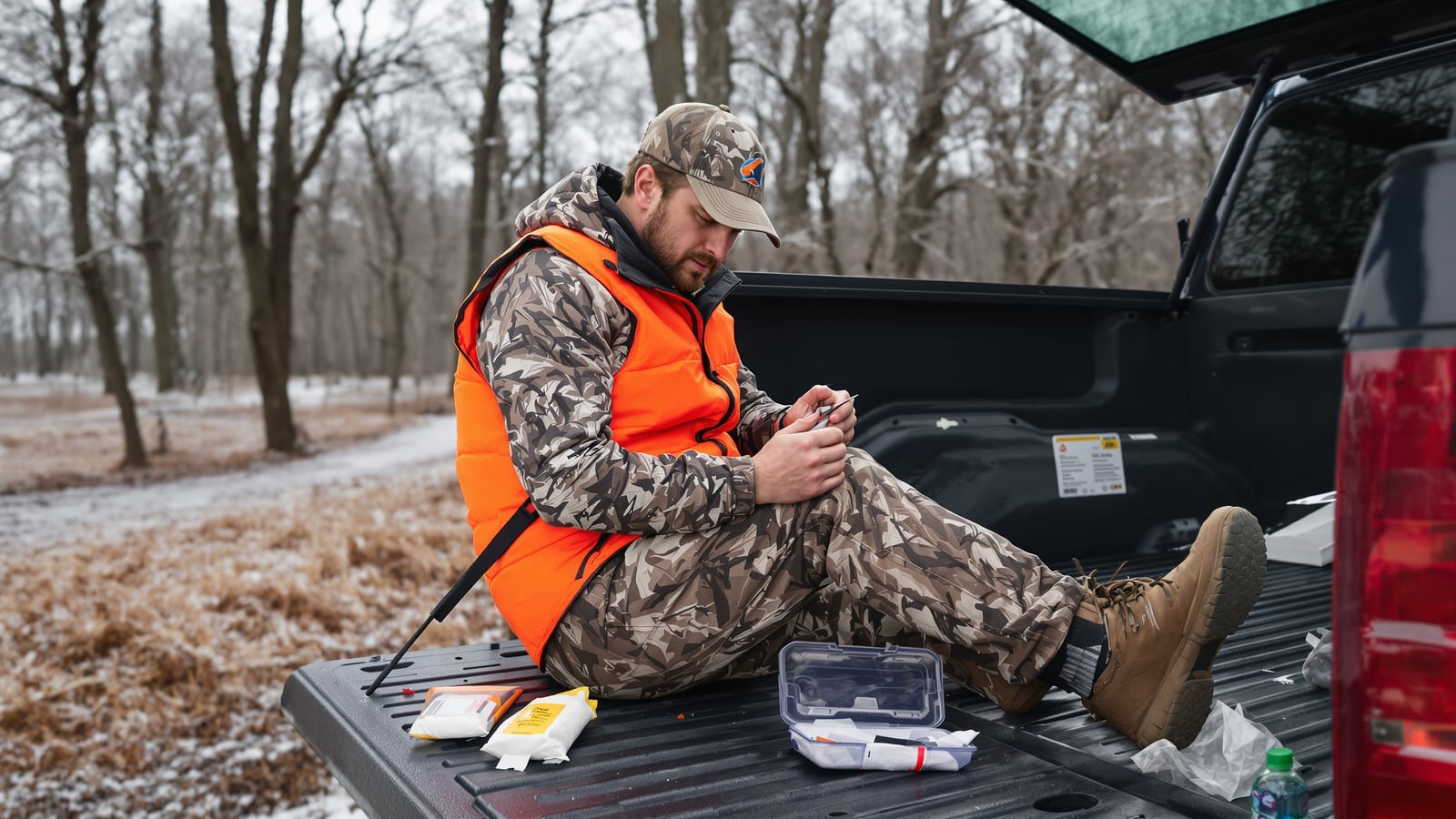
You've been in the woods since before daylight. The deer is down, field dressed and in the truck. You're pulling off your jacket at the tailgate when you feel something small and stubborn behind your knee.
It's a tick. It's already head-down in your skin.
What you do in the next minute matters more than most people think, and most of what people have heard about it is wrong.
The right way
You need one tool, and it costs about five dollars: fine-tipped tweezers, the pointed kind, not the flat-ended slant kind from a bathroom drawer. Slant tips grab the tick's swollen body. That's the part you don't want to squeeze.
- Get the tweezers down to the skin. Grip the tick by the head or mouthparts, as close to your skin as you can.
- Pull straight up, slowly and evenly. Think of lifting a splinter out, not yanking a weed.
- Don't twist. Twisting is how mouthparts snap off and stay behind.
- Wash the bite and your hands with soap and water, or use rubbing alcohol.
- Drop the tick in a small zip bag, or tape it to an index card with the date. If you get sick, a doctor can use the date and a photo.
If the mouthparts do break off, don't dig for them with a pocketknife. Clean the area and leave it. Skin pushes out small fragments on its own, like a splinter. A bite you've gouged is an infection waiting to happen.
Some people prefer a tick key or a tick spoon, a small notched tool that slides under the tick. They run a few dollars and clip to a key ring. They work well, especially on a tick tucked under a hairline. Tweezers are still the standard, and they're probably already in your first aid kit.
The wrong way
Every old-timer has a method. Most of them make things worse.
- Petroleum jelly or nail polish. The idea is to smother the tick so it backs out. A tick doesn't breathe fast enough for that to work, and it stays attached the whole time you wait.
- A hot match or a lit cigarette. You'll burn yourself, and you may stress the tick enough that it spits more of what's inside it into the bite.
- Squeezing the body with your fingers. You're squeezing the tick's contents toward the wound.
- Rubbing alcohol on the tick first. Same problem. Pull first, clean after.
- Waiting for it to drop off. It will, in a few days. You don't want it there that long.
The common thread is time. Every home remedy keeps the tick attached longer, and attachment time is the number that counts.
Why speed counts
For Lyme disease, the CDC says the blacklegged tick, the one most people call a deer tick, generally has to stay attached for 36 to 48 hours or more before it can pass the bacteria on. That window is why daily checks work. A tick you find at supper on day one is a nuisance. A tick you find on day three is a different conversation.
It's not the same for every germ. Powassan virus can be passed in a much shorter time, in some reports as little as 15 minutes. That's rare, but it's why you don't shrug at a tick just because it's small.
Ticks carry more than Lyme. Rocky Mountain spotted fever, anaplasmosis and ehrlichiosis all ride the same way, and which ones you meet depends on where you live and hunt. Your state health department posts a local tick map. Look it up before the season, not after the bite.
The one hunters get
If you hunt, there's a bite worth knowing about. The lone star tick can cause alpha-gal syndrome, an allergy to red meat that some people develop after being bitten. It's a real condition, and it's an odd one for a man with a freezer full of venison. If you get unexplained hives or stomach trouble hours after eating red meat, tell your doctor about your tick history.
Ticks also don't ride out with the carcass. As a deer cools, ticks on the hide go looking for a warmer host. Often that's you, dragging it out. Check yourself before you get in the truck.
The check you actually do
The tick check is the whole game, and it only works if it's routine.
- Shower within a couple of hours of coming in. It washes off the ones that haven't latched and gives you a chance to look.
- Run the clothes through the dryer on high heat for about ten minutes before they hit the hamper. Dry heat kills ticks. If the clothes are wet, give them longer. A wash alone won't do it.
- Check the hidden spots. Behind the knees, the armpits, the hairline, behind the ears, the belt line, the waistband and the sock tops. Use a mirror, or let your wife do it. Do the same for your kids.
- Check the dog. And don't forget the gear. Packs and blaze orange vests carry them home.
Keep them off in the first place
Treat your hunting and hiking clothes with permethrin. A 0.5 percent spray runs roughly fifteen to twenty-five dollars a bottle and lasts through several washes. Spray the clothes and boots outdoors, let them dry completely, then wear them. Permethrin goes on clothing and gear only, never skin, and it's dangerous to cats until it's dry. Follow the label.
Pre-treated shirts and socks cost more up front and save the spraying. On exposed skin, use an EPA-registered repellent such as DEET or picaridin, again per the label.
Wear long pants tucked into your socks when you're in brush. You'll look a little silly. It works.
The infection you don't want
The sign most people watch for is the rash. An expanding red patch, often at the bite site, that shows up anywhere from three days to a month after. The classic bullseye isn't guaranteed. It can look like a plain red blotch, and on darker skin it can be harder to see. Not everyone gets one.
Other early signs are fever, chills, a bad headache, deep fatigue and aching muscles or joints. They look like the flu, and that's the trap. In summer or fall, with a recent tick in your history, flu symptoms are worth a phone call to your doctor.
Untreated Lyme can spread to the joints, the heart and the nervous system. Caught early, it's usually treated with a course of antibiotics. In some situations a doctor may offer a one-time preventive dose after a high-risk bite. That's a decision for a clinician, and the window is short, so call quickly if you think you're in one of those situations.
Don't wait on a rash that may never come. If you've been bitten and you feel off, say so and tell the doctor about the tick.
This is general information, not medical advice. Your doctor or local health department can tell you which ticks and diseases are in your area.
Carry the tools
Put tweezers, a few alcohol wipes and a zip bag in your hunting pack and in the truck's glovebox. If you spend real time in the backcountry, a weekend wilderness first aid course will teach you hands-on what a page can't. It's also worth reading the first hour if you're lost in the woods before you head deep, because the same habit applies. Plan before you go, and the small problems stay small.
A tick is easy to remove when you're ready for it. It takes thirty seconds and a five-dollar tool. The trouble starts when you're out of both.
Wes Dunbar
Country & Skills
Grew up on an acreage and never quite left. Covers trucks, trades, land, and how to do the thing yourself.

Watch
Worth an hour of your evening
More from Survival & Self-Defense.
From channels we rate. Plays on YouTube.
Read next