Get the CDL while you're still carrying the toolbag
A commercial license can make you the apprentice who gets sent, not the one who stays behind. Here's the path, the traps, and what it asks of you.
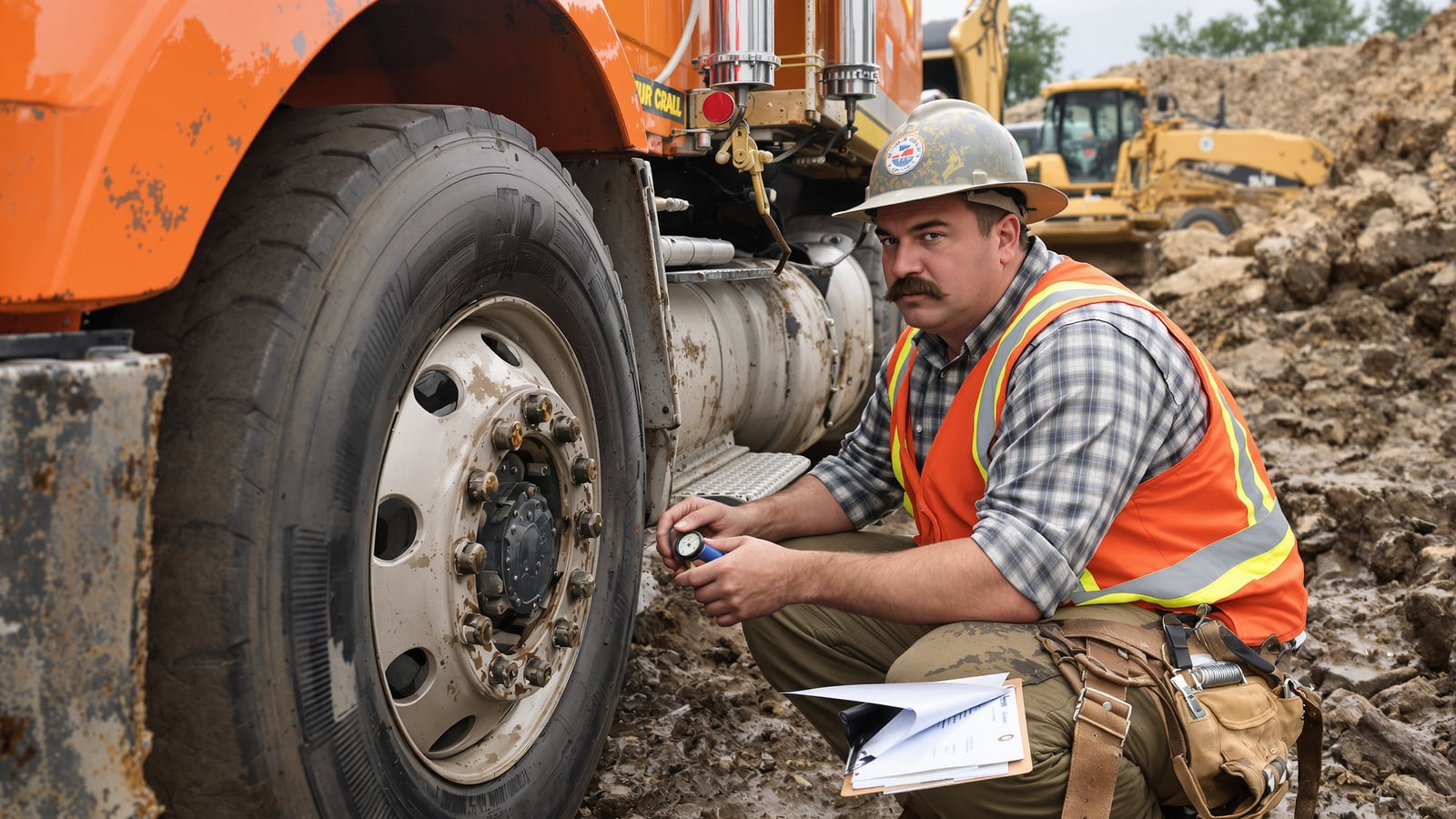
Quick answer: If your trade puts you near anything over 26,000 pounds, a CDL makes you the apprentice they can send. Get the permit, take the federally required training from a registered provider, and test in the kind of truck you'll actually drive. Rules and costs vary by state, so check yours first.
The guy who can drive it
Picture a second-year apprentice on an excavation crew. The foreman needs the tandem dump moved to the other side of town before lunch. Three guys on the site can lift, dig and read a grade stake. One can legally drive the truck. Guess who's getting the call, the overtime and, eventually, the better wage.
That's the whole argument. A trade makes you useful on the job. A CDL makes you useful between jobs, and the gap between those two is where a lot of foremen get made.
It isn't a fit for every trade. A plumber in a cargo van doesn't need one. But dump trucks, water trucks, equipment haulers, concrete, line work and heavy site work all lean on drivers. If your crew keeps waiting on somebody else to move the iron, that's your signal.
Do you actually need one?
It comes down to weight, and the number is 26,001 pounds.
- Class B: a single vehicle over 26,000 pounds gross vehicle weight rating. Dump trucks, straight trucks, larger service bodies.
- Class A: a combination with a gross rating over 26,000 pounds, where the thing you're towing is rated over 10,000 pounds. A tractor-trailer, or a heavy equipment trailer behind a big truck.
Read the rating on the door sticker, not the weight of what's actually in the bed. And don't guess about the trailer. A skid steer on a heavy-duty tandem axle can push a rig into Class A territory faster than most guys expect. Ask your employer, then confirm with your state's motor vehicle agency.
Some states carve out exceptions for certain work, like farm use. Don't assume you're covered by one because a buddy said so.
The path, in order
- Check the age rules. Generally you can hold a CDL at 18 for driving within your state. Driving across state lines or hauling hazmat takes 21. States differ on the details.
- Get a DOT medical card. You'll need an exam from a medical examiner listed on the federal registry. Vision, blood pressure and hearing all count. If you have a condition, find out now rather than after you've paid for school.
- Pass the knowledge tests for a learner's permit. That's your commercial learner's permit, or CLP. The general knowledge test comes first. Add air brakes if the truck has them.
- Complete entry-level driver training. Since February 2022, federal rules require this for a first Class A or B license. The training has to come from a provider listed on the FMCSA Training Provider Registry. A school that isn't on it can't qualify you, no matter how good the sales pitch sounded.
- Wait out the 14 days. You must hold the CLP at least 14 days before the skills test.
- Pass the skills test. That's a pre-trip inspection, basic control skills in a lot, and a road test.
Pick the training on purpose
Start with your employer, not a billboard. Some contractors will pay for the training, send you with an in-house driver, or reimburse you after you've stayed a set time. Ask before you spend a dime. Some apprenticeship programs have these arrangements too, and it's one of the real differences when you weigh union against non-union work. If there's a repayment clause, read it. A "free" license that you owe back with interest if you leave isn't free.
If you pay yourself, get quotes from more than one registered school. Costs run well into the thousands in many areas, and the cheap option that sends you to the test in the wrong truck costs you twice.
Test in the truck you'll drive. Two restrictions trip people up:
- Test in a truck without air brakes and your license carries an air brake restriction. In a trade that runs air-brake trucks, that restriction makes the license nearly useless.
- Test in an automatic and you can be restricted from driving a manual.
The pre-trip inspection is where most people stumble. You'll have to walk the truck and name components out loud, in order, without a cheat sheet. Practice it on a real truck until it's boring. It should be boring anyway. It's the same walk-around you'll do every morning for the rest of your driving life.
What the license costs you besides money
A CDL puts you under a stricter set of rules than a regular driver's license. Know them before you sign up.
Drug and alcohol testing. Employers who run CDL drivers test, and they check a federal database for violations. Marijuana remains prohibited for CDL holders under federal rules, even where your state has legalized it. A positive test can sideline you from driving, and the record follows you.
Your personal driving counts. A DUI conviction can disqualify you from commercial driving for a year, even if you were in your own pickup on a Saturday night. Serious speeding and reckless driving convictions in any vehicle can pile up against you. The license asks for the same discipline off the clock that you show on the job.
The medical card expires. Keep track of the date. Letting it lapse can downgrade your license on the spot.
Hours rules. Depending on the work, federal limits on driving time and logs may apply. A construction crew often has different rules than a long-haul fleet, but ask which ones cover you.
None of that's a reason to skip it. It's a reason to treat the license as something you protect, the way a good tradesman protects his name.
When to do it
Not the first week. Your first year is for learning the trade: the tools, the codes, the pace, the habits that keep you safe. Our list of the tools a first-year apprentice should actually buy is a better use of that first paycheck than a driving school.
Somewhere around year two, once you're not a liability on the job, make your move. By then your employer knows you're serious, and you can ask for help paying for it without sounding like you're shopping for a way out.
If you're eyeing line work, it matters even more. Crews run heavy trucks and equipment, and the work and the paycheck come with a price. The lineman paycheck is real and so is the price lays that out plainly.
Wages for CDL work depend on your state, your trade, union scale and your employer. Look at your state's wage data and the federal Bureau of Labor Statistics occupational outlook for the specific job before you decide what the license is worth to you.
Drive it like it's not yours
Whatever truck they put you in, leave it better than you found it. Do the pre-trip every morning, even when nobody's watching. Fill the tank if you drained it. Knock the mud out of the cab. Report the thing that's rattling before it becomes the thing that's broken.
That habit is why the keys keep getting handed to the same guy. The license gets you in the seat. How you treat the truck decides whether you stay there.
Ade Fisher
Young Men
Teaches the trades intake at a community college. Writes the manual he wishes his students arrived with.

Watch
Worth an hour of your evening
More from Trades.
From channels we rate. Plays on YouTube.
Read next