

When a seat fee is worth it and when it's a trap
Some seat charges buy you real space. Others sell you what you'd get free at check-in. Here's how to tell them apart before you pay.
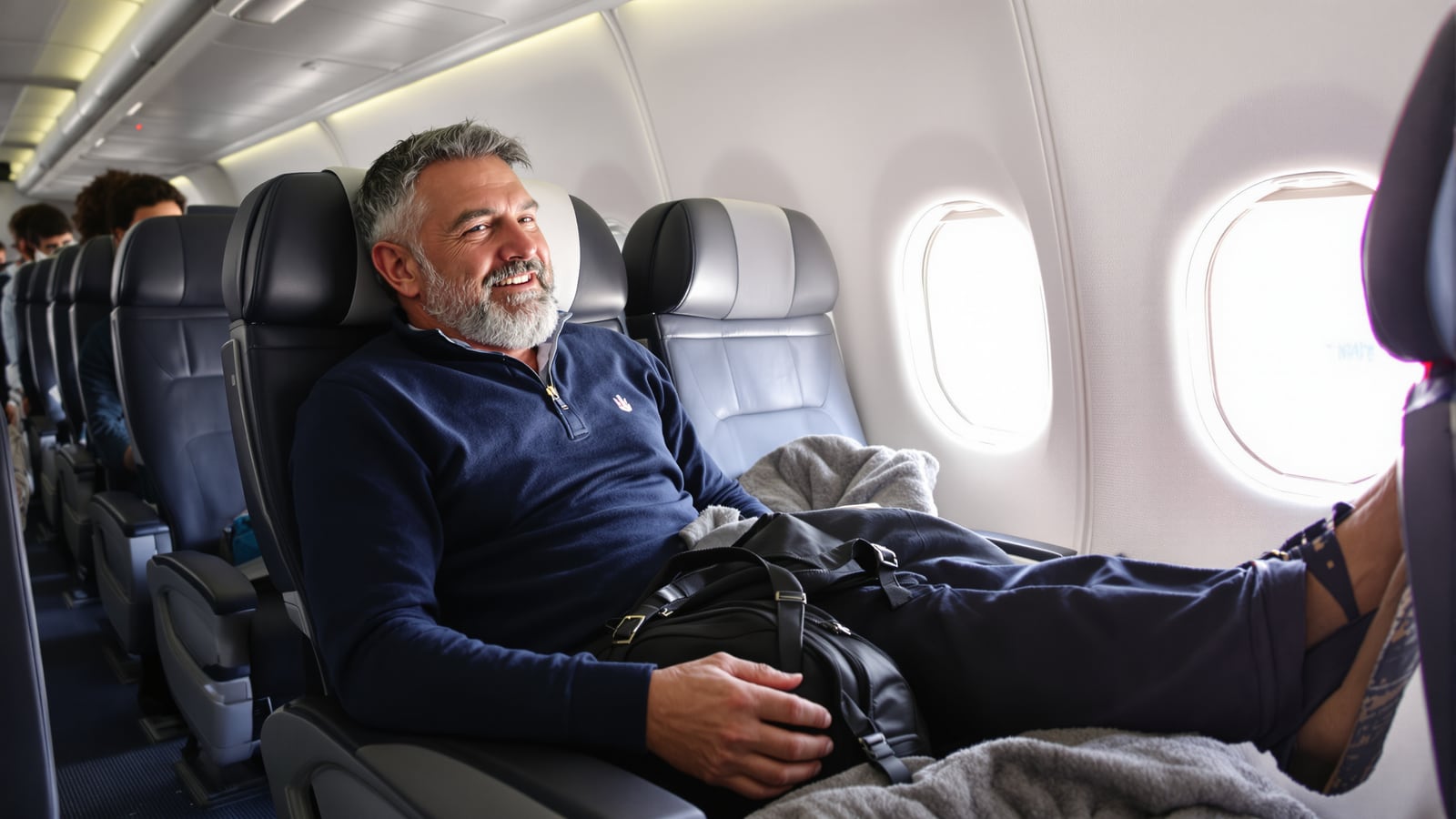
Quick answer: On a regular economy fare at most big U.S. carriers, picking a standard seat is free. Paying makes sense for real extra legroom on a long flight, or to guarantee a family sits together. On a short solo flight, skip it and keep checking the seat map.
You book a 6:10 a.m. flight, and before the confirmation email lands, a seat map asks for money. Little gray squares, little price tags, and one free seat in the last row next to the lavatory. It's designed to make you flinch.
Most people pay. Some of them needed to. A lot of them bought something the airline would have handed over free at check-in.
Three different things are for sale
Airlines blur these together on purpose, so pull them apart.
Seat location. Window versus aisle, front versus back. On most regular economy fares, you pick a standard seat free after booking. Basic economy is the exception. More on that below.
Extra space. Exit rows, bulkheads, and the extra-legroom sections with names like Comfort+, Main Cabin Extra and Economy Plus. Those are always paid, and the space is real.
Bundled perks. Some paid seats come with earlier boarding or overhead bin priority. Nice, but check what's actually included before you count it as value.
Policies change, and each airline words things differently. Read the fare rules for your ticket. Five minutes with them beats a surprise at the airport.
What's free, and worth doing
Check the map right after booking. You'll usually need your confirmation code and the airline's own site or app. If you booked through a third party, the seat map may be blocked until you pull up the reservation on the airline's side.
Check again at 24 hours out. Check-in opens then, and so does a wave of seat changes. Frequent flyers get upgraded, seats release, and decent ones appear that weren't there yesterday. Set a reminder. Check a third time a few hours before departure.
Ask at the gate. Agents can see seats you can't. Be polite, be brief, and have a reason that isn't "I'd just prefer it." A parent trying to sit beside a child gets a hearing. A man who simply wants the aisle usually gets a smile and a no.
Try the middle-seat gamble. Traveling as a couple on a plane with three-seat rows? Book the window and the aisle, and leave the middle open. The middle sells last. If it stays empty, you've got a row with room to spare. If someone does land there, they'll almost always trade for your window or aisle, since you're offering something better. This falls apart on a full flight, so don't try it on the Sunday after Thanksgiving.
Look at the card in your wallet. Some airline credit cards include free preferred seats or early boarding for the cardholder. If you fly one carrier a lot, check whether yours does before you pay for anything. Points are their own subject, and points travel that doesn't eat your weekends covers how to keep it simple.
When paying is the right call
Pay when being wrong costs you more than the fee. That's the whole test. Here's where it usually does.
- Long flights. Over five hours, or overnight, an aisle or extra legroom changes how you arrive. That's a real return.
- You're tall. If your knees touch the seat in front before takeoff, extra legroom is not a luxury. It's the difference between a flight and an ordeal.
- A tight connection. A seat near the front gets you off the plane sooner. If you have thirty-five minutes to make the next gate, that's worth money.
- Kids. If a seven-year-old might end up three rows from you, pay, or at least check your airline's family seating policy first. Many airlines say they'll try to seat families together, but "try" isn't a guarantee. Flying with small kids without the day falling apart goes into the rest of that day.
And when you shouldn't pay: a one-hour hop, flying alone, with a standard fare that already lets you choose. You'll sit down, you'll stand up, and the fee will have bought you nothing but a better story about 14C.
Seats that cost extra and disappoint
Not every paid seat is a good one.
Bulkhead rows. More legroom feels right, but there's no under-seat storage, so your bag goes overhead for the whole flight. On many planes the tray tables fold out of the armrests, which makes the seat a bit narrower.
The row in front of an exit row. Often it won't recline, and the exit row itself can be fixed too. If you sleep in the seat, check this.
Exit rows, with conditions. You must be willing and able to assist in an emergency, and children can't sit there. If your family includes a child, forget it. If you can't lift a heavy door, forget it.
The last rows. Limited recline, lavatory traffic, and the galley noise. Also the last to board, which means the bins above you are full when you get there.
Seats with a quirk. A "window" seat with no window, or a seat whose under-seat space is taken by equipment. Pull up the seat map on the airline's site and read the legend before you buy. Don't buy on looks.
The basic economy math
Basic economy fares often charge for seat selection or assign seats only at check-in. Sometimes that's a fine deal. Sometimes it's a trap with a lower number on the front.
Run it with real prices on your trip. Say the basic fare is forty dollars cheaper each way. Then add the seat fee both ways, a checked bag if you need one, and the cost of any change you might have to make, since basic fares are often the least flexible. If the savings disappear, buy the regular fare. If you're a solo traveler with a carry-on and a rigid schedule, basic can win.
Bags change the math more often than seats do. Our piece on one bag, one week, and nothing you don't use is the cheapest way to keep a basic fare honest.
Two things worth saying
If you paid for a seat and the airline moves you out of it, ask for the fee back. Do it in writing if you can. Don't assume it comes back on its own.
And a bit of manners. If a parent is stuck three rows from a small child, offer your seat. That's easy when it's an aisle for an aisle. If you paid for extra legroom and they're offering a middle seat at the back, you're allowed to say no, kindly. Serving the stranger is a good habit. So is keeping what you paid for.
Whichever seat you end up in, leave it cleaner than you found it. Take your trash. Pick up the kid's crayon. The next passenger didn't ask for your mess.
Nobody remembers a trip for seat 34B. They remember who they were sitting next to.
Dean Shaw
Gear & Garage
Reads the warranty, the parts list and the long-term owner reviews before anything else. Trucks, tools, watches, and the cheap version that costs more.

Watch
Worth an hour of your evening
More from Travel.
From channels we rate. Plays on YouTube.
Read next