

100 Things Every Man Should Know About Protecting His Family's Future
Wills, insurance, locks, habits and the things a good father does while he's still around to do them. Start with the first ten this month.
The future doesn't announce itself. It shows up as a layoff, a diagnosis, a burst pipe, or a Tuesday night when you don't come home. This list is for the man who'd rather be ready and bored than surprised and sorry.
Do the first ten this month. Everything else can wait for a Saturday.
The paperwork nobody wants to do
- Write a will. Without one, your state decides who gets what, and the state doesn't know your family.
- Name a guardian for your kids. Ask the person first. Then ask their spouse.
- Name a backup guardian. People move, get sick and change their minds.
- Check the beneficiary on every retirement account and life policy. Those designations usually override your will.
- Sign a durable power of attorney so someone can pay your bills while you're in a hospital bed.
- Sign a healthcare directive. Your wife shouldn't have to guess what you'd want.
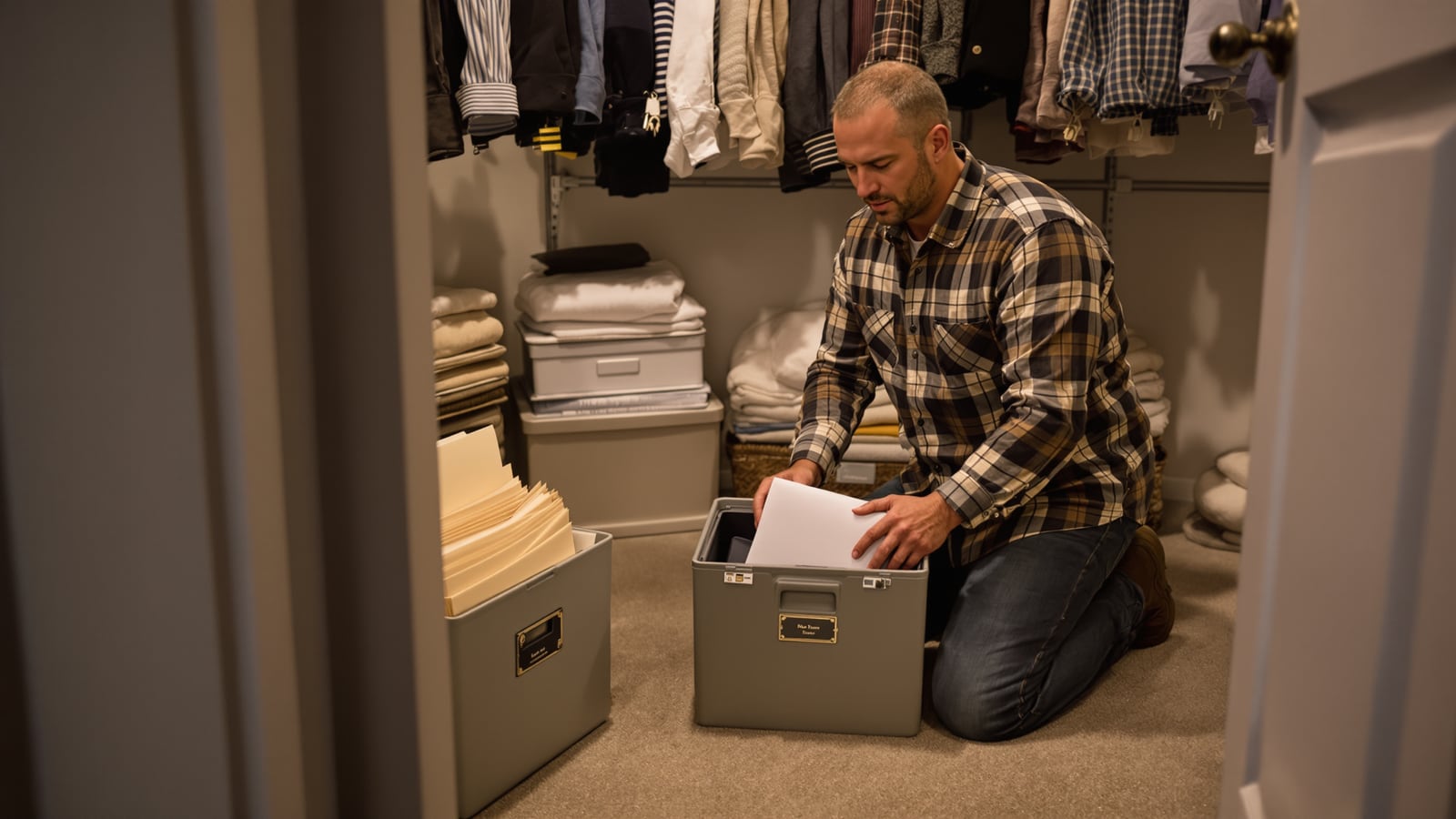
- Keep originals in a fireproof box and copies with someone you trust. A safe nobody can open is just furniture.
- Write a one-page "if I'm gone" sheet: accounts, mortgage, insurance agent, lawyer, who to call first.
- Use a password manager, and make sure your wife can open it.
- Redo all of it after a birth, a move, a death or a big raise. A local estate attorney can tell you what your state requires.
Money that holds under pressure
- Build one month of expenses in cash first. Then three. Then six.
- Keep that fund in a boring savings account you can reach by Friday.
- Card debt at double-digit interest is a leak in the hull. Plug it before you invest a dime.
- Never co-sign a loan you couldn't pay off yourself.
- Know your family's bare-minimum month to the dollar. That's the number your whole plan rests on.
- Live on less than you make. The gap is the plan.
- Take the full employer 401(k) match. Skipping it's a pay cut you gave yourself.
- Broad, low-cost index funds, left alone, beat most men's cleverness. Checking them daily mostly produces bad decisions.
- Walk your wife through every account. A plan that lives only in your head dies with you. (The newlywed money conversations are a decent place to start.)
- Sit down monthly for twenty minutes, with coffee, and go over the numbers together.
Insurance and the bad week
- Term life insurance is the plain, affordable kind. Ask a licensed agent how long you'd need it: until the kids are grown and the house is paid.
- Count the mortgage, tuition and the years your wife would need replacement income. Then buy to that number.
- Insure the stay-at-home parent too. Replacing a mom's work costs real money.
- A paycheck that stops for a year is a bigger risk than most men admit. Ask about disability coverage.
- Read the exclusions. The brochure sells. The exclusions tell you what you actually bought.
- Raise your deductible to lower the premium, then keep the difference in cash.
- Ask your agent about umbrella liability coverage. It's cheap protection against a lawsuit after a bad accident.
- Film every room of the house, closets open, and store the video off-site. Insurance claims run on proof.
- Know what your homeowner's policy leaves out. Flood damage is usually a separate policy.
- Review every policy once a year on the same day. Pick your anniversary and make it a ritual.
The house itself
- Know where the main water shutoff is. So should everyone old enough to turn it.
- Label the breaker panel and find the gas shutoff. Don't learn either one in the dark.
- Put smoke alarms on every level and in every bedroom. Test them when the clocks change and replace them at ten years.
- Put carbon monoxide alarms near the bedrooms.
- Make sure there are two ways out of every bedroom, and pick a meeting spot outside. Run the drill once. Kids will treat it like a game.
- Keep a fire extinguisher in the kitchen and the garage, and learn to use it before you need it.
- Store two weeks of shelf-stable food and water. A storm or a long outage is when you'll be glad.
- Fix the small leak. A drip turns into a rotten subfloor.
- Don't buy more house than your income carries. The mortgage you can sleep on beats the one the bank approved.
- Cut the dead tree before the storm does it for you.
Safety, and the right to defend your own
- Use deadbolts and three-inch screws in the strike plate. A kicked door usually fails at the frame.
- Light every side of the house. It costs little and works better than most gadgets.
- If you own firearms, own them as a right and a responsibility. Both words matter.
- Take a real class, then train on a schedule. A gun in the closet isn't a plan.
- Store guns where you can reach them fast and a curious kid can't reach them at all. A quick-access safe does both.
- Teach your kids the rules early, matter-of-factly. Mystery is what gets kids hurt.
- Read your state's laws on carry, transport and self-defense. Read the statute, not the forum post.
- Decide ahead of time who calls the police, where your wife and kids go, and who's holding the flashlight.
- Keep a flashlight by the bed and another in every car.
- Take a stop-the-bleed course. One Saturday morning teaches you to use a tourniquet.
Staying alive and useful
- Book the yearly physical before you feel bad. (Our list on men's health covers the rest.)
- Write down your family's medical history and give it to your doctor.
- Ask your doctor which screenings fit your age, and put the dates on the calendar.
- A man who's strong at fifty-five is a gift to the people who'd otherwise be carrying him. Lift, walk, keep at it.
- Wear the seatbelt, every trip, and make everyone in the car do the same.
- Put the phone out of reach while you drive. Your kids are in that seat for a reason.
- If you've been drinking, you're not driving. Call a ride. Pride is cheaper than a funeral.
- Learn CPR and renew it every couple of years.
- If your wife has mentioned your drinking twice, it's already a problem. Deal with it now.
- Say it out loud when something's wrong. A lump, a chest ache, a dark stretch you can't shake: tell your wife, see a doctor, and talk to a friend or your pastor. Carrying it alone isn't strength.
Work and income
- Your skills are your best asset. Add one that pays every year.
- Keep your résumé current while you're happy at work.
- Have coffee with people in your field once a quarter. They're your insurance policy.
- Don't let one client or one boss's goodwill carry your whole income.
- A small second income turns a layoff from a crisis into a rough month.
- Show up early, do what you said, and leave the job better than you found it.
- Don't quit before you've got the next thing in writing.
- Read every page of a contract. Ask before you sign, not after.
- Keep a running file of your wins. Raise conversations go better with dates and numbers.
- Use your vacation days. Your kids will remember the trip, not the promotion.
Marriage, the foundation under everything else
- Your kids get most of their security from two parents who are solid. Protect the marriage first.
- Be the first to say sorry. It's not a loss.
- Take her out every week or two. Pay the sitter without grumbling.
- Thank her for the ordinary stuff: the dinners, the laundry, the calendar she keeps in her head.
- Take divorce off the table as a threat, even in the middle of a fight.
- No secret purchases and no secret accounts. Hidden money breaks trust faster than a big mistake in the open.
- Watch for the quiet drift: long hours, phones at the table, evenings in separate rooms. Fix it early.
- Your wife comes before your buddies, your hobbies and your own mother. Say it kindly, and mean it.
- Never talk her down to anyone. Praise her when she's not in the room.
- Ask her, "What's one thing I could do this week that would help?" Then do it.
Fatherhood
- Be there. Presence beats presents every time.
- Eat dinner together most nights, phones in another room.
- Teach your kids to work. Chores first, a lawn route or a first job later.
- Give them real money and let them make small mistakes while the mistakes are small.
- Know their friends. Then meet the friends' parents.
- Hold the line on screens. A kid can survive being the last one in his class with a phone.
- Keep your word to your kids, especially on the small promises.
- Show your son how to be a man, and show your daughter how a man treats a woman. She'll know what to accept.
- Discipline calmly, consistently, and never while angry.
- Say "I'm proud of you" and "I love you" out loud. Don't assume they know.
What you leave behind
- Know your neighbors by name. In a bad week, they get there before anyone else.
- Keep the old traditions: Sunday dinner, the holiday routines, the services your family has always attended. Kids borrow stability from ritual.
- Write each child a letter to open on their eighteenth birthday. Start it now and add to it.
- Record your parents and grandparents telling their stories while you still can.
- Hand down one real skill to each kid: changing a tire, fishing, balancing a checkbook. (If you'd rather start outdoors, try 100 things every outdoorsman should know.)
- Show up to the school board and town meetings. It's cheaper than repairing the damage later.
- Give regularly, even when money's tight. Your kids are watching where your dollars go.
- Leave it better than you found it. Return the borrowed truck washed with a full tank, and let your kids see you do it.
- Hold the line. Say no to the bad deal, the bad crowd and the bad idea, even when it costs you.
- Be the man you'd want your son to become and your daughter to marry.
Marcus Vale
Editor-in-Chief
Twenty years in magazines, most of it deciding what to cut. Writes about work, discipline and the decisions that compound.

Watch
Watch how it's done
Picked for this article.
From channels we rate. Plays on YouTube.
Fidelity Investments
Estate Planning: The Four Documents You Need | Money Unscripted | Fidelity Investments
New York Life
Estate planning for families with children | New York Life
Read next