The Signs a Teacher Sees Before Anyone Else Does
Attendance patterns, a second phone, a much older boyfriend. What school staff should notice, what to write down, and exactly who to call.
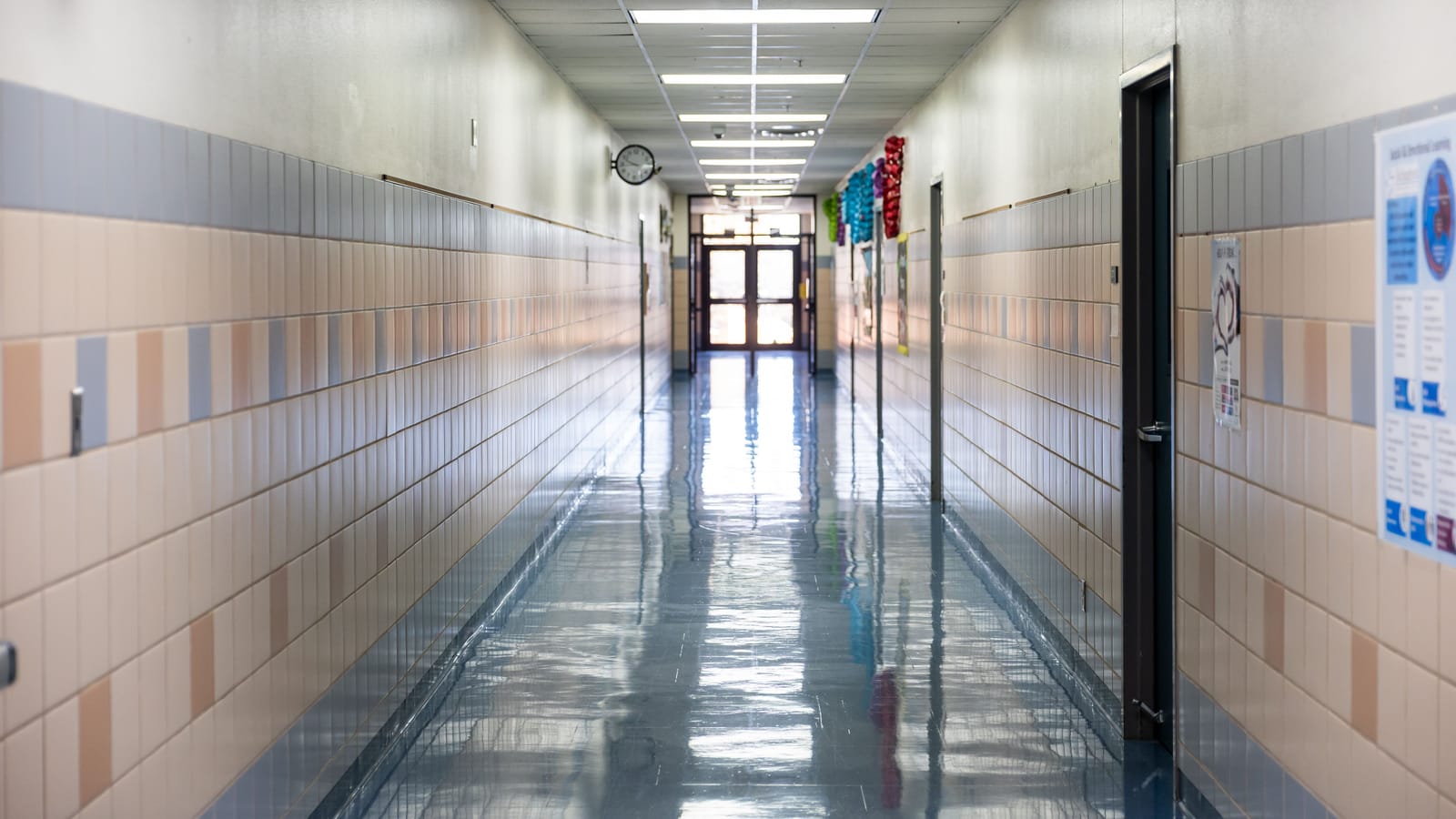
A sophomore who used to turn in every assignment starts missing Mondays. Then Mondays and Thursdays. She's got a phone you've never seen her with before, and when you ask about the weekend she gives you an answer that sounds rehearsed, like she practiced it in the car.
That's the whole thing, right there. Not a dramatic disclosure. A pattern that doesn't fit the kid you've known since August.
Teachers, aides, bus drivers, coaches and cafeteria staff are in a position almost nobody else has. You see the same child five days a week, at the same hours, for months. You know what normal looks like for that specific kid. Investigators get a snapshot. You get the film.
Start with the change, not the checklist
Every indicator list you'll read has the same problem: taken alone, most items on it describe a perfectly ordinary teenager. Tired. Moody. Secretive about a phone. New sneakers.
What matters is change over time, and clusters. The Department of Homeland Security's Blue Campaign, which publishes indicator guidance for educators and the public, frames it that way on purpose. One sign is a question. Four signs in the same month is a pattern worth reporting to someone whose job it's to look.
So watch for the delta. The kid who was a steady B student and now sleeps through second period. The eighth grader who never had money and now has a phone plan, a designer bag and no explanation. The girl who used to walk out with the same three friends and now leaves alone, fast, to a car you don't recognize.
What actually shows up in a school building
Some of these point toward trafficking. Some point toward abuse, neglect or a bad home situation. You don't have to know which. That's not your job.
- Attendance that follows a schedule. Not random absence. Same days, repeating. Or a kid who disappears for a week and comes back with a story that doesn't hold.
- A much older "boyfriend" or "girlfriend." An adult dating a middle or high schooler isn't a relationship. Polaris Project, which operates the National Human Trafficking Hotline, has long described romantic recruitment as one of the most common ways minors are drawn in.
- Someone else controls the details. The student can't say where they're living, doesn't hold their own ID, doesn't decide when they leave or when they eat. A person outside school insists on speaking for them.
- Scripted answers. Ask an open question and get a memorized one. Ask it again a week later and get the same sentences in the same order.
- A second phone, or a phone the student hides, or constant messages they're clearly afraid to ignore.
- Unexplained money, gifts, hotel keycards, new clothes the family plainly couldn't afford.
- Exhaustion, hunger, untreated injury, or wearing the same clothes for days in a kid whose family life used to look stable.
- Fear of one specific adult, or flinching at a name.
- Withdrawal from everything. Quit the team. Dropped the friend group. Stopped answering in class.
- Labor signs. Long hours on a work crew, a student who says the family "owes" someone, a kid pulled out of school to sell things door to door with adults who aren't relatives.
Tattoos or markings placed by another person are on DHS's indicator list too. Don't go looking for them. Just don't dismiss it if a student volunteers something odd about one.
The myth that gets in the way
The stranger in the van at the mall parking lot is the story everybody shares online, and it's the version that costs kids the most, because it trains adults to watch the wrong door.
The Department of Justice has reported for years that children are far more often harmed by someone they already know than by a stranger. Trafficking follows the same shape. A boyfriend. A relative. A friend's older brother. A coach or mentor figure who made the kid feel chosen. And increasingly, someone who met them on a game, a chat app or a social platform and spent weeks being the only adult who seemed to listen.
The National Center for Missing & Exploited Children has reported that online enticement is among the fastest-growing categories of report it receives on the CyberTipline. The FBI and NCMEC have both issued public warnings about financially motivated sextortion, where an offender poses as a peer, obtains an image and then demands money. Teen boys have been targeted heavily in those schemes, which is worth saying out loud in a building where everyone's eyes default to the girls.
The recruiter is almost never a shadow in a parking lot. He's a contact in the phone.
What to do in the ten minutes after you notice
Don't interrogate. You're not the investigator, and a clumsy conversation can burn the only trust the child has. Ask open, non-leading questions if the moment is already happening. "You seem tired lately. How are things?" Then stop talking and let silence do the work.
Don't promise secrecy. If a student says "promise you won't tell anyone," the honest answer is that you'll tell only the people whose job it's to help, and you'll tell the student who those people are. Kids can handle honesty. They can't handle being betrayed twice.
Don't confront the adult. Not the boyfriend, not the uncle, not the man idling by the gate. You could put the child in more danger and you could wreck a case.
Write it down immediately. Date, time, location, who else was present, and what the student said in their own words, in quotation marks. Not your conclusions. Your observations. Contemporaneous notes are worth ten times what a memory is worth six weeks later.
Who you tell, and the part people get wrong
Tell your school counselor, social worker or designated child protection lead, and tell your administrator. Then here's the piece that trips people up.
In most U.S. states, mandatory reporting is a personal legal duty, not a departmental one. Handing it to your principal doesn't always discharge it. Some states require the individual who suspects to make the report themselves. Look up your own state's statute, or ask your district's legal counsel or your union representative to walk you through it before you ever need it. In Canada, the duty to report a child in need of protection sits with every person who suspects, under provincial and territorial law.
Then close the loop. Ask whether the report was made, get the reference or case number, and keep your own dated record that you reported. Schools are staffed by good people who are also drowning in email. Follow up anyway.
And if a child is in danger right now, you don't wait for a meeting. You call.
The numbers to put in your phone tonight
In the United States: For immediate danger, call 911. For suspected trafficking, call the National Human Trafficking Hotline at 1-888-373-7888, or text 233733. To report online exploitation, use the NCMEC CyberTipline at report.cybertip.org or call 1-800-843-5678.
In Canada: For immediate danger, call 911. Otherwise call the Canadian Human Trafficking Hotline at 1-833-900-1010.
If your building wants training, the DHS Blue Campaign publishes free educator materials, and the Canadian Center to End Human Trafficking publishes resources on the Canadian side. Both are free. Both take less time than a staff meeting about the copier.
Before you give money or volunteer hours to any group working in this space, check it first. In the U.S., look the organization up on the IRS Tax Exempt Organization Search and on a rating service like Charity Navigator or GuideStar, and read the actual Form 990 to see what share goes to program work. In Canada, use the Canada Revenue Agency's List of Charities. Groups that won't show you their finances don't get your paycheck.
Put the hotline in your contacts under a name you'll find at 6 a.m. on a Tuesday. The day you need it, you won't be in a state to go searching.
Nina Castellan
BRO for Her
Runs the women-facing desk. Same standard, same tools, written for a different reader — not a softer one.

Watch
Watch how it's done
Picked for this article.
From channels we rate. Plays on YouTube.
The John J. Brunetti Human Trafficking Academy
Human Trafficking and Our Schools
NBC10 Philadelphia
‘See Us Safe' provides important tips for educators, students to stop trafficking and abuse
Read next