Three Men Who Kept Their Integrity Far From Home
Joseph in Egypt, Daniel in Babylon, Nehemiah in Susa. None of them chose the culture they worked in. All three decided in advance what they wouldn't do.
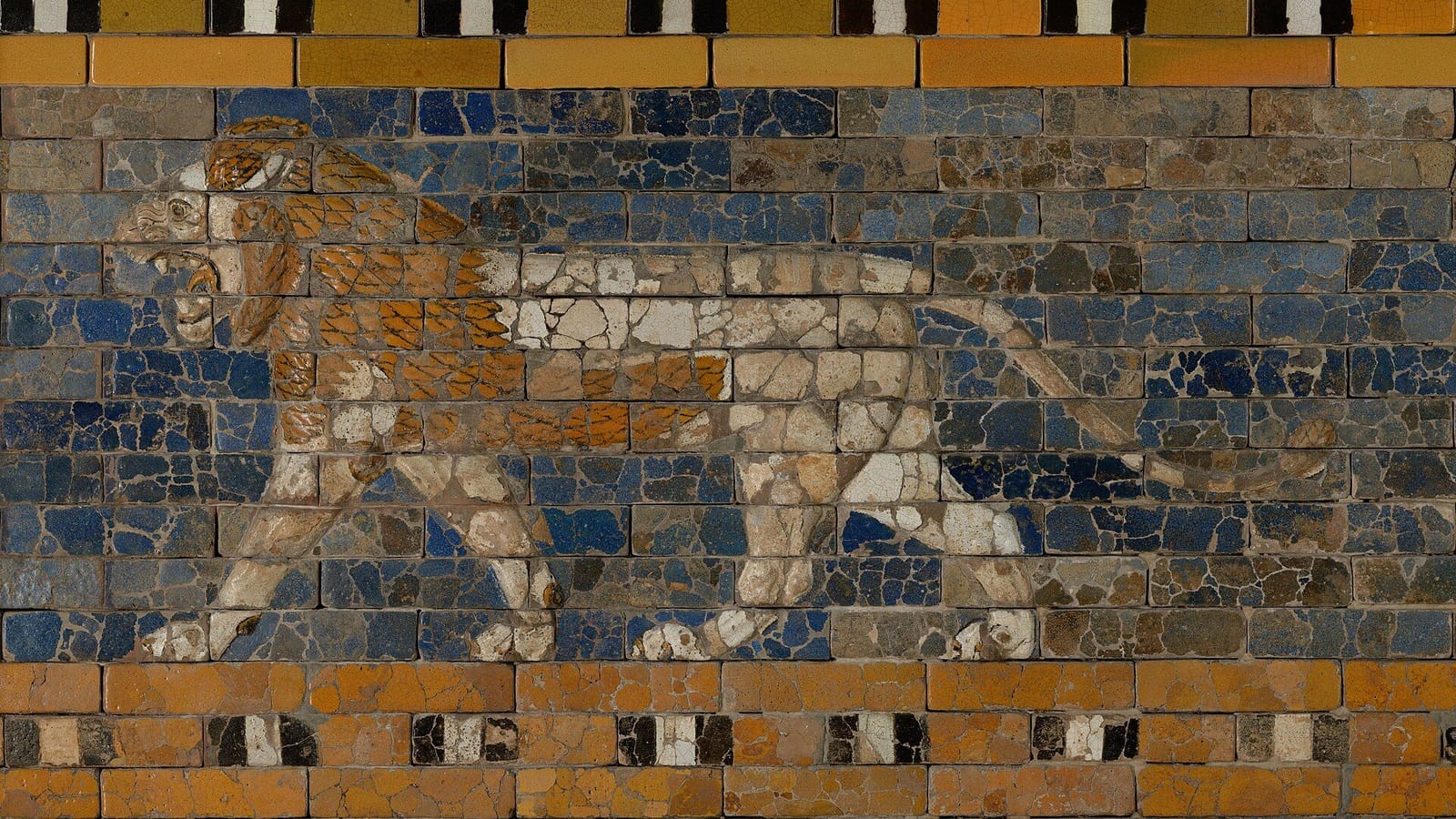
Daniel had been in government service since Nebuchadnezzar. By the time the satraps set their trap, he was an old man with a long résumé and everything to lose. The new law said no one could petition any god or man except the king for thirty days. Daniel's response takes one verse.
"When Daniel knew that the document had been signed, he went to his house where he had windows in his upper chamber open toward Jerusalem. He got down on his knees three times a day and prayed and gave thanks before his God, as he had done previously" (Daniel 6:10, ESV).
Read that last clause again. As he had done previously. The lions' den decision wasn't made when the law passed. It was made every single day for decades before it, at the same window, at the same hours, when nobody cared.
That's the thread running through three of the most useful men in the Old Testament. Joseph in Egypt, Daniel in Babylon, Nehemiah in Susa. Three empires, three foreign payrolls, three men who never got a vote on the culture they lived in. If you work somewhere that doesn't share your convictions, these are your guys.
Joseph: the line he named out loud
Joseph got to Egypt in the worst possible way. His brothers sold him. He lands in Potiphar's house as property, and Genesis tells us plainly that he thrived there: "The LORD was with Joseph, and he became a successful man" (Genesis 39:2, ESV).
Then Potiphar's wife makes her move, repeatedly. Joseph's refusal is worth memorizing, because of where he puts the emphasis: "How then can I do this great wickedness and sin against God?" (Genesis 39:9, ESV).
He doesn't say it would be bad for his career. He doesn't run a risk calculation. He names the offense as being against God first, and he says it out loud, to her face, in advance. That's the practical lesson. A line you've never spoken is a line you'll negotiate.
And it cost him. That's the part we rush past. Saying no landed Joseph in prison, where he interpreted a dream for Pharaoh's cupbearer and asked the man to remember him. "Yet the chief cupbearer did not remember Joseph, but forgot him" (Genesis 40:23, ESV). The next verse opens the next chapter: "After two whole years..." (Genesis 41:1, ESV).
Two years. Integrity isn't a lever you pull to make good things happen on your schedule. Sometimes it's the reason you're still in the cell.
When Joseph finally stands in front of Pharaoh, the first thing out of his mouth is a disclaimer of credit: "It is not in me; God will give Pharaoh a favorable answer" (Genesis 41:16, ESV). He'd been forgotten for two years and he still wouldn't take a bow he hadn't earned.
Daniel: excellence as armor
Daniel arrives in Babylon as a teenager in a training program designed to erase him. New language, new literature, new name. The one thing he refuses is the menu.
"But Daniel resolved that he would not defile himself with the king's food, or with the wine that he drank" (Daniel 1:8, ESV).
Christians in good faith read that refusal differently. Some say it's about the dietary laws of Leviticus. Some point out that vegetables and water wouldn't solve every kosher problem, and that the deeper issue was food offered to idols, or the covenant loyalty implied by eating at the king's table. The text doesn't spell out his reasoning. What it does spell out is his method, and that part isn't disputed: he asked permission, he proposed a ten-day test, he gave his supervisor a way to say yes without losing his own head (Daniel 1:12-13).
Daniel didn't stage a protest. He made a request, offered evidence, and accepted supervision. Write that down.
The other half of his defense was his work. When his rivals went hunting for dirt, they came up empty: "they could find no ground for complaint or any fault, because he was faithful, and no error or fault was found in him" (Daniel 6:4, ESV). They had to invent a religious law to catch him, because his timesheets were clean.
That's the most transferable thing in the book. If you're going to be the guy who won't do a certain thing, be the guy whose reports are always right, whose numbers reconcile, who shows up early. Sloppiness hands your critics the easy shot. Competence forces them to attack you for the faith itself, and that's a fight worth having.
His three friends give us the other side of the coin. Facing the furnace, they tell Nebuchadnezzar that God is able to deliver them, and then: "But if not, be it known to you, O king, that we will not serve your gods or worship the golden image that you have set up" (Daniel 3:18, ESV).
But if not. Obedience that doesn't depend on the outcome.
Nehemiah: the perk he turned down
Nehemiah is the corporate one. He's cupbearer to Artaxerxes in the winter palace at Susa, roughly the fifth century before Christ, which means he has daily access to the most powerful man alive and a great deal to lose.
News comes that Jerusalem's walls are rubble. He weeps, fasts and prays for days (Nehemiah 1:4). Then he waits months for the right moment, and when the king notices his face and asks what's wrong, watch what happens in the gap between two sentences: "Then the king said to me, 'What are you requesting?' So I prayed to the God of heaven. And I said to the king..." (Nehemiah 2:4-5, ESV).
He prayed mid-conversation. A silent second before he opened his mouth to the king. You can do that in a meeting today and nobody will know.
But the line that should haunt anybody with an expense account is in chapter five. For twelve years as governor, Nehemiah declined the food allowance the job entitled him to. Previous governors had taken it, plus forty shekels of silver, and let their servants push people around. Nehemiah's explanation is four words: "because of the fear of God" (Nehemiah 5:15, ESV).
He was legally entitled to it. He skipped it anyway, because the people were already squeezed and he knew what it would look like. Legal and right aren't the same category.
And when his enemies tried to pull him off the wall for a "meeting" in the plain of Ono, he sent the best refusal in scripture: "I am doing a great work and I cannot come down" (Nehemiah 6:3, ESV).
What to actually do with this
Decide your lines while the stakes are low and say them out loud to somebody. Joseph had his answer ready before the door closed.
Build the habit before you need it. Daniel's window was open for decades before it became evidence against him.
Be good at your job. It's the cheapest protection you have, and it's the one Daniel's enemies couldn't get past.
Ask, don't grandstand. A test, a carve-out, a quiet word with your manager. Daniel got his exemption by making it easy to grant.
Turn down something you're allowed to have. Start smaller than Nehemiah did. It trains the muscle.
And hold the outcome loosely. Joseph sat in a cell for two more years after doing the right thing, and he still ended up telling his brothers, "you meant evil against me, but God meant it for good" (Genesis 50:20, ESV). He could only say that at the end. In the middle, he just had to keep saying no.
Christians differ on how far to push in a hostile workplace. Some read Jeremiah 29:7 and lean into seeking the city's welfare and staying put. Others hit a line and walk. Both instincts are faithful, and your pastor knows your situation better than any article does.
The window, though. The window isn't negotiable. Open it before the law gets signed.
Josh Halloran
Christian Bro
Leads a mid-week mens group and has done for eleven years. Writes about faith as a practice rather than a position.

Watch
Watch how it's done
Picked for this article.
From channels we rate. Plays on YouTube.
The Gospel Coalition
Rebuild Part 4 | Nehemiah 5–6 | Nancy Guthrie
Read next