
Getting your motorcycle license and choosing a first bike
The weekend course, the endorsement, the gear budget, and the short list of bikes that won't put a new rider in a ditch.
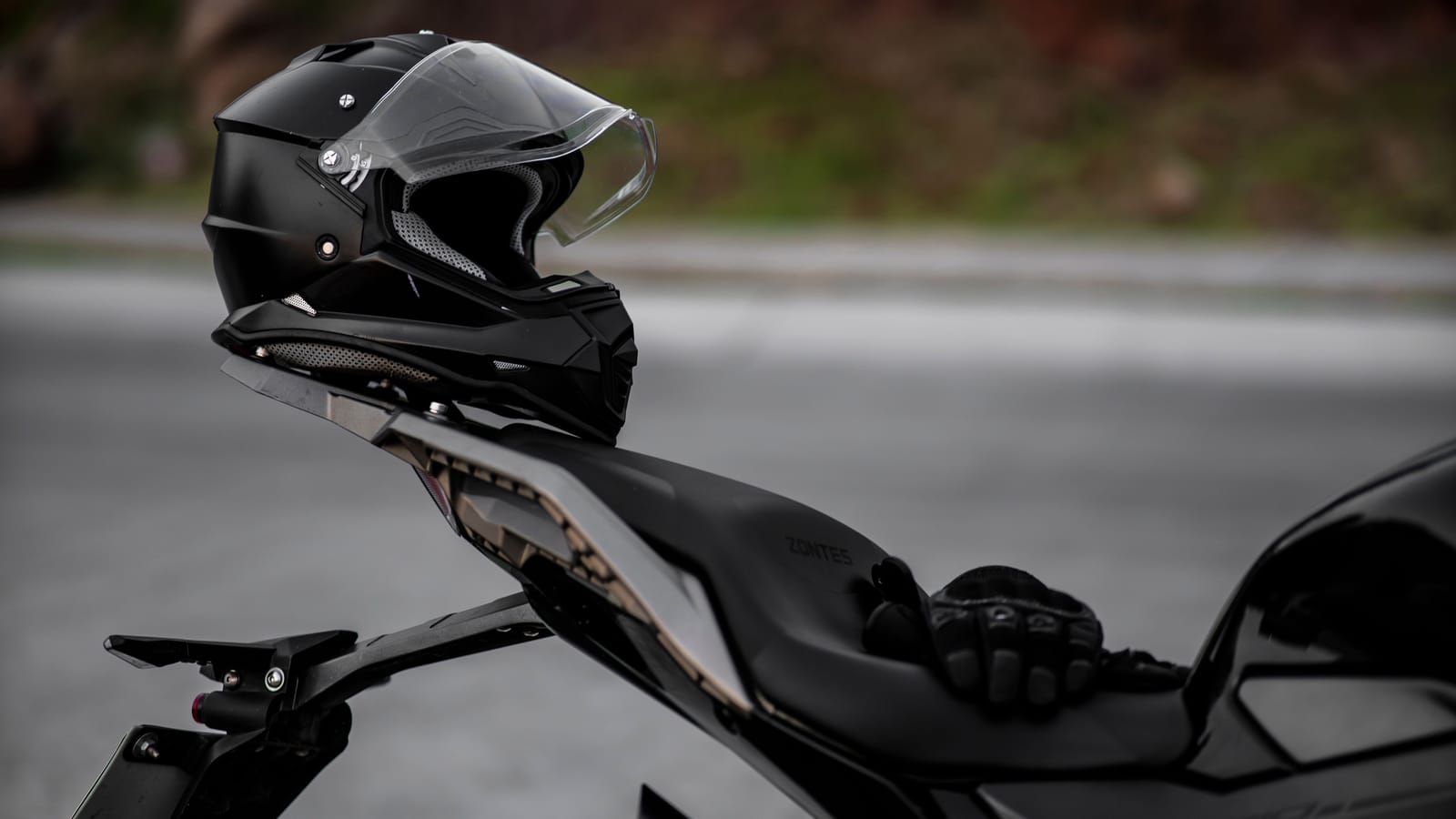
Book the rider course before you look at a single listing on Marketplace. Most states run a version of the Motorcycle Safety Foundation Basic RiderCourse: one evening in a classroom, two mornings on a closed range, usually on a borrowed 250 with scuffed crash bars and a clutch a thousand strangers have already abused. Cost varies a lot by state, from free in a few places to a few hundred dollars in most. Seats fill in March. If you wait until the first 70-degree Saturday, you're riding in August.
The reason to do it first is simple. In a majority of states, passing the course earns you a waiver of the DMV skills test, and your insurance company may knock something off the premium. You also find out, on somebody else's motorcycle, whether you actually like this.
The paperwork, in order
The sequence is roughly the same everywhere, and your state's DMV page is the only authority that matters.
- Permit. Written test, vision test, small fee. Restrictions usually include no night riding, no passengers, no interstates.
- Training or skills test. Either the range course with the waiver, or you show up at the DMV on your own bike and ride the cone pattern for an examiner.
- Endorsement. It's not a separate license. It's a letter added to the one in your wallet, usually an M. You'll pay a small fee and get a new card.
Under 18, expect a mandatory course and parental consent. Over 40 and coming back after twenty years off, expect to be humbled by the cone weave.
What the weekend actually costs you
The riding part isn't hard. It's slow. Almost everything in the course happens under 20 mph, because almost everything that drops a bike happens under 20 mph.
The two skills that fail people are the U-turn inside the painted box and the emergency stop. Both come down to the same thing your instructor will yell about a dozen times: look where you want to go. Not at the cone. Not at the curb. Turn your head, all the way, and the bike follows. Riders who stare at the thing they're trying to miss go straight into it with impressive consistency.
The other one worth practicing is the friction zone. That's the sliver of clutch travel where the bike is moving but the throttle barely matters. Master that and parking lots, driveways and stop-and-go traffic stop being frightening.
Bring earplugs, sunscreen and a lunch. Range days run long and the asphalt reflects heat like a griddle. Any broad-spectrum SPF 30 or higher beats skipping it, but a mineral one with zinc oxide, like Blue Lizard Sensitive Mineral SPF 30 or Thinksport SPF 50, is gentler on sensitive skin.
Buy the gear before you buy the bike
This is where new riders get the order wrong. They spend everything on the machine and show up in sneakers.
Budget for the full set and treat it as part of the purchase price. A DOT-certified helmet that fits properly, gloves with real palm protection, a jacket with armor in the shoulders and elbows, over-the-ankle boots, and riding pants or armored jeans. Plan on somewhere around $700 to $1,000 for gear that isn't junk, less if you're patient with closeouts and last year's colors.
Fit matters more than the badge on the side. A helmet should be snug enough that your scalp moves with it when you grab the chin bar and twist. If it rocks, it's too big. Buy that one in person, from a shop where somebody measures your head.
Skip a used helmet. You don't know what it's been dropped on.
And here's the part nobody enjoys hearing: wear all of it, every ride, including the four-block run to the hardware store. Most crashes happen close to home at low speed, and pavement doesn't grade on difficulty.
What makes a good first bike
Weight, seat height, and power delivery. In that order.
Weight. Under 400 pounds wet is a reasonable ceiling. You will drop your first bike. In a driveway, on gravel, at a gas pump. The question is whether you can pick it back up alone.
Seat height. Both feet flat on the ground, or close to it. Tiptoes look fine in the showroom and get ugly at a stoplight on a crowned road.
Power. Something in the 300cc to 650cc range, twin-cylinder, with torque low in the rev range. Enough to hold 70 on the highway without screaming. Not enough to loop the bike when you're startled.
Avoid three categories entirely for year one. Anything over about 800cc. Any 600cc supersport, which is a racing engine with turn signals. And any bike somebody is selling because "it just needs a carb clean."
The short list
These names keep coming up because they keep working.
- Honda Rebel 500. Low seat, forgiving, easy to flat-foot. The default recommendation for a reason.
- Kawasaki Ninja 400 or 500. Light, quick enough to be fun forever, cheap to insure.
- Yamaha MT-03. Same idea without the plastics, upright bars, good visibility in traffic.
- Suzuki SV650. The one that outgrows nothing. Heavier and faster than the others, and the standard answer for a bigger rider who commutes.
- Honda CB500X or NX500. Taller, comfortable, good if your riding involves 200-mile Saturdays.
- Royal Enfield Hunter 350. Slow in the best way. Charming, simple, hard to get in trouble on.
Buy used. A three-year-old example of any of these, with under 8,000 miles, saves you real money and the sting of the first scratch. Look for even tire wear, a chain that isn't rusted stiff, clean fork tubes with no weeping oil, and a title in the seller's name. Cold-start it yourself. Sellers who warm the bike up before you arrive are hiding something.
Where the advice bends
If you're 6'3" and 250 pounds, a Ninja 400 will feel like a bicycle and you'll be uncomfortable enough to ride badly. Start at the SV650 end of the range. Same if your only realistic route to work is 25 miles of interstate.
And if money is tight, a clean 20-year-old Honda Shadow or Suzuki Boulevard does the job fine. Older, heavier, no ABS, but mechanically simple and cheap to fix. The trade-off is real: modern ABS on a new rider is one of the better safety features ever bolted to a motorcycle. Skip it knowingly, not by accident.
The first thousand miles
Ride a parking lot for two hours before you ride a road. Figure eights, slow circles both directions, hard stops from 25. It's boring and it's the difference between a rider and a guy on a bike.
Then build up in stages. Neighborhood streets. Then a two-lane at 45. Then the highway, midday, dry, no wind. No passenger until you've got a few thousand miles and your spouse has watched you ride. Rain and night are separate skills, learned separately.
Assume every left-turning car hasn't seen you, because most of them haven't. Cover the brake at intersections. Ride where a driver's mirror puts you, not in the blind spot next to a pickup bed.
The conversation to have at home
Per mile traveled, federal crash data has motorcyclists dying at a rate many times that of people in cars. That's not a reason not to ride. It's a reason to ride like the family budget and four people's Saturdays depend on you coming home, because they do.
Call your insurance agent before you buy, not after, and ask what an endorsement and a new bike do to your rates. If you've got kids and a mortgage, ask a licensed agent whether your life coverage still makes sense with a motorcycle in the garage. Ten minutes on the phone. Do it while the bike is still a listing you've bookmarked.
Then go ride the course. Worst case, you spend a Saturday on a 250 and decide it's not for you, which is the cheapest possible way to learn that.
Dean Shaw
Gear & Garage
Reads the warranty, the parts list and the long-term owner reviews before anything else. Trucks, tools, watches, and the cheap version that costs more.

Watch
Worth an hour of your evening
More from Cars.
From channels we rate. Plays on YouTube.
Read next