Get a table where they know your order
An expensive postcode charges you for everything. A neighborhood Italian place with a short menu and a memory is the one bargain on the block.
Quick answer: Pick one family-run Italian place within a ten-minute walk. Go on the same night, at the same hour, about twice a month, and tip like you mean it. By the fourth visit, you'll have a regular's table.
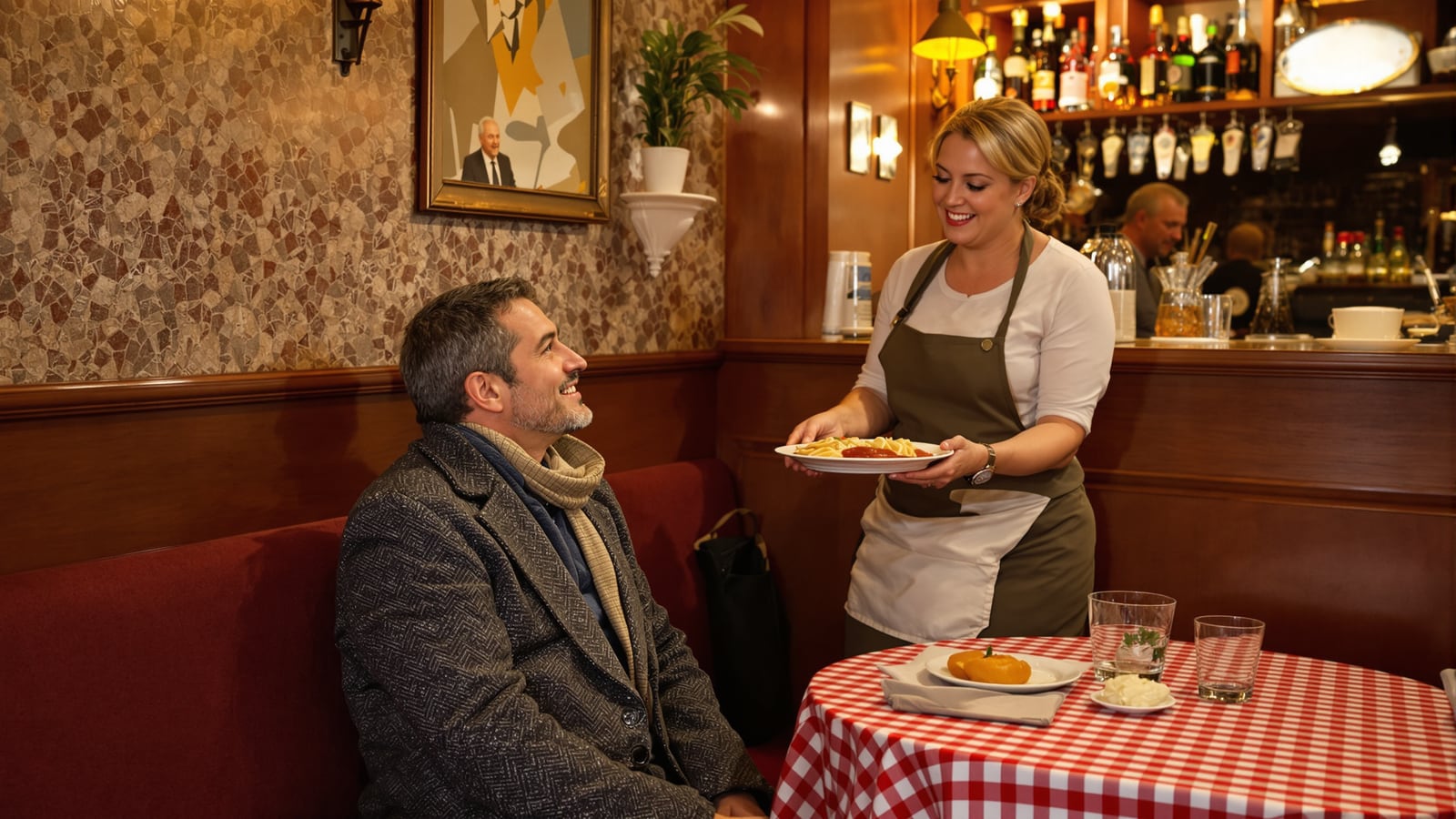
It's a Tuesday at 6:30. You push the door, and the guy behind the bar nods before you've unwound your scarf. Your server doesn't ask what you want. She asks if it's the rigatoni again, and whether you'd like it the way you had it last time, with the sauce on the side and extra cheese. It arrives that way.
Nothing you did to earn this was clever. You showed up.
In a city where rent is the first thing you pay and the last thing you stop thinking about, this is the cheapest thing you can buy. A place that knows you.
Choose on purpose
Don't pick the place with the best photos. Pick the one most likely to still be there in five years.
- Someone with a stake is on the floor. The owner, the owner's daughter, a nephew. If the manager changes every season, so will your welcome.
- The menu is short. Twelve dishes done daily beat sixty done by a freezer.
- You see the same faces twice. Stand outside on a Thursday and watch. Do the staff greet people by name? Do older couples occupy the same two-tops?
- It's close. If it takes a train ride, you'll go twice a year. A regular lives within walking distance.
- You can afford it often. Forty dollars a head twice a month beats a splurge once a year. A place that's out of your range will never learn your order.
Skip anywhere with a line around the block and a hashtag on the awning. They don't need you, and they'll act like it.
How a stranger becomes a regular
It takes less than people think, but it takes consistency.
Be predictable. Same night, same hour, same section if you can manage it. Staff remember patterns before they remember faces. Tuesday at 6:30 gets known fast.
Give your name. Say it on the first visit and again on the second. Ask theirs. Use it. This sounds obvious until you notice that most people in a big city go years without saying either.
Say what you like, plainly. "I'd like the pasta a little firmer." "No cream, ever." Short, friendly, once. A good kitchen writes it down. Don't make a performance of it, and don't send a dish back to prove you can.
Put the phone away. You can't be known by someone you won't look at. Keep it in your pocket until the check comes.
Order the meal. An appetizer, a main, maybe dessert if the owner pushes it. A table that sits for two hours with one water and a side salad isn't a regular. It's a squatter.
Tip twenty percent, and more when they've gone out of their way. The people carrying your plates are earning a living in the same expensive postcode you are. Tip like you know that.
What it actually gets you
Not freebies. Don't expect them, and never ask. The first time you hint at a discount, you've turned a friendship into a transaction.
What you get is quieter and worth more.
A table on a full Friday, because someone looks at you and finds a way. A place to take your parents when they visit, where the owner comes out and shakes your father's hand. A first date, a client dinner, a Sunday with friends, all in a room where you're relaxed and the room is on your side.
You also get the block. Owners know the neighborhood: which landlord fixes things, who the good plumber is, what's opening next door, who's hiring. The regular on the next stool might run a firm you'd like to work for. That's networking without a name tag, and it's the kind I'd take over working a room any day, because nobody's performing.
And you get a piece of the city that feels like yours. If you've been treating the place you live like a long business trip, this is the fastest cure I know. One door where you're not a stranger changes how the whole street feels.
The honest downsides
You'll eat a lot of the same food. That's the point, but it's still a trade. Some weeks you'll want the new place everyone's talking about. Go. A regular can have an affair with a tasting menu now and then. Just don't do it every week and then expect to be known.
The place might also be wrong. Maybe the pasta's fine and the service is cold, or the owner's friendly and the kitchen's inconsistent. Give it three visits. If nothing warms up, move on without drama. It isn't a marriage.
And places close. Margins are thin, and a good neighborhood restaurant can vanish with a rent increase. That's one more reason to show up. They run on repeat customers. You're not just a diner. You're part of what keeps the lights on.
Leave it better than you found it
The old code applies here as much as anywhere.
- Be on time for your reservation, and call if you're running late.
- Don't camp at your table after the room has emptied and the chairs are going up. Settle up and say good night.
- Bring people who treat staff well. Your guests reflect on you.
- If something's off, tell your server quietly and kindly. If it's a pattern, tell the owner, in person, once.
- At the holidays, leave something extra for the staff, with a card. A handwritten line goes further than the amount.
- Pay the tab in full, the same night. No arguments over a line item.
Be the table they're glad to see coming. Serve first, and hold your line without making a scene. If they get your order wrong and it's a mess, say so politely. If a place consistently treats you or your date badly, take your business elsewhere. Respect goes both ways.
Start this week
Find the closest Italian place with an owner on the floor. Go on a weeknight. Say your name. Tip well. Go back in two weeks, same night.
By the third visit, somebody will ask if you're having the usual. You won't have one yet, so make one up. Pick the dish you'd happily eat for a year.
In a city that wants a monthly fee for everything, being known is still free. It just takes showing up on a Tuesday.
If you're still sorting out where you live, the way you rent matters too. Start with the lease, not the rent, then find your table.
Marcus Vale
Editor-in-Chief
Twenty years in magazines, most of it deciding what to cut. Writes about work, discipline and the decisions that compound.

Watch
Worth an hour of your evening
More from City Bro.
From channels we rate. Plays on YouTube.
Read next